Loading...
Done
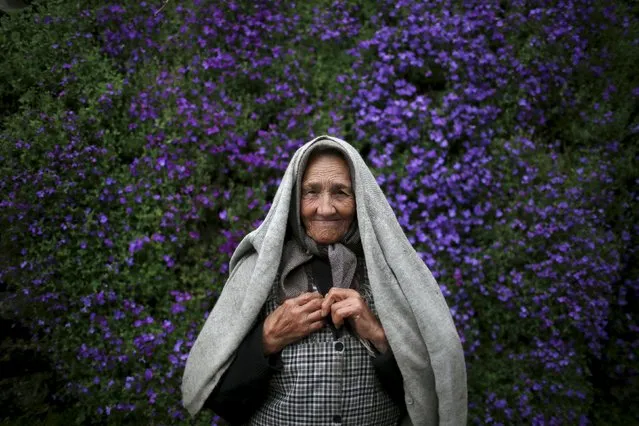
Zulmira Jesus poses for a portrait at a street in Povoa de Agracoes, near Chaves, Portugal April 19, 2016. (Photo by Rafael Marchante/Reuters)

Zulmira Jesus poses for a portrait at a street in Povoa de Agracoes, near Chaves, Portugal April 19, 2016. In the villages of Agracoes and Povoa de Agracoe, the steady drip-drip of emigration has brought down population numbers from more than 50 residents to fewer than a dozen each. These remaining villagers share the same glum acceptance that, after they have gone, their villages will die out too. It is the same desolate picture in scores of other backwater settlements in Portugal's interior, north to south. (Photo by Rafael Marchante/Reuters)
Details
29 Apr 2016 12:05:00
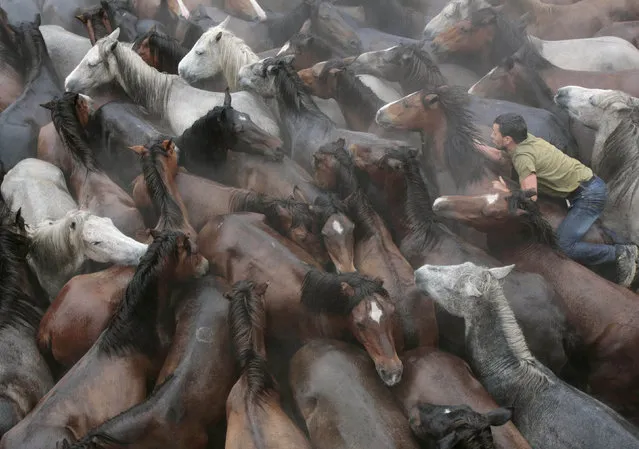
A reveller tries to hold on to a wild horse during the “Rapa Das Bestas” traditional event in the Spanish northwestern village of Sabucedo July 5, 2014. (Photo by Miguel Vidal/Reuters)

A reveller tries to hold on to a wild horse during the “Rapa Das Bestas” traditional event in the Spanish northwestern village of Sabucedo July 5, 2014. On the first weekend of the month of July, hundreds of wild horses are rounded up, trimmed and groomed in different villages in the Spanish northwestern region of Galicia. (Photo by Miguel Vidal/Reuters)
Details
07 Jul 2014 12:58:00
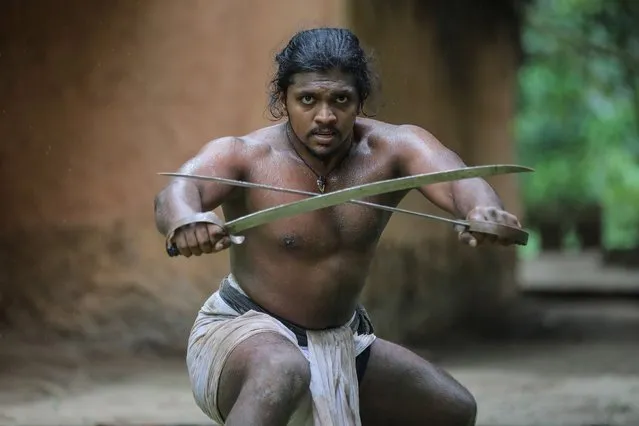
A student of the Sri Lankan ancient martial art “Angampora” performs during a practice session at the angam maduwa or fighting field, in Korathota, a suburb of Colombo, Sri Lanka, 07 September 2022. Sri Lanka's ancient martial art, Angampora, is thought to be thousands of years old. Anga translates to “body parts” and Angampora is a fighting art that uses body parts. Martial arts practitioners in Angampora were mostly in the king's service, and they were tasked with protecting the king and his kingdom. Angampora was practiced in secret for most centuries because the British, who colonized Sri Lanka, banned it in 1818 after seeing it as a threat. (Photo by Chamila Karunarathne/EPA/EFE)

A student of the Sri Lankan ancient martial art “Angampora” performs during a practice session at the angam maduwa or fighting field, in Korathota, a suburb of Colombo, Sri Lanka, 07 September 2022. Sri Lanka's ancient martial art, Angampora, is thought to be thousands of years old. Anga translates to “body parts” and Angampora is a fighting art that uses body parts. Martial arts practitioners in Angampora were mostly in the king's service, and they were tasked with protecting the king and his kingdom. Angampora was practiced in secret for most centuries because the British, who colonized Sri Lanka, banned it in 1818 after seeing it as a threat. (Photo by Chamila Karunarathne/EPA/EFE)
Details
14 Oct 2022 04:47:00
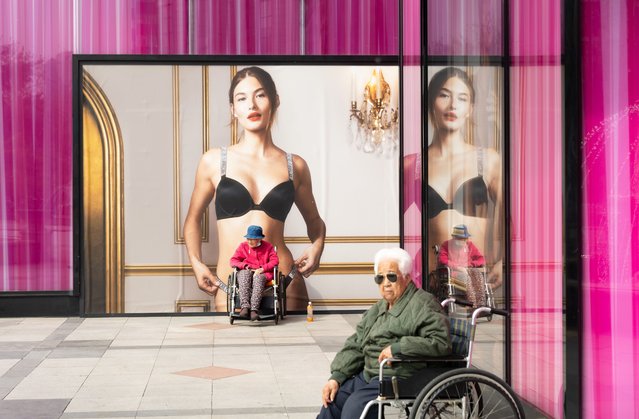
Senior citizens sit outside US retailer Victoria’s Secret in Beijing, China, 08 April 2025. On 07 April, 2025, US President Donald Trump threatened China with an additional 50 percent tariff on goods imported into the US if it does not withdraw a 34 percent tariff it imposed on US imports into China. The 34 percent tariff China set was in response to Trump’s earlier 34 percent tariff on Chinese imports into the US. Trump gave China a deadline of 08 April to withdraw its tax, or it will face the 50 percent additional tax. (Photo by Jessica Lee/EPA/EFE)

Senior citizens sit outside US retailer Victoria’s Secret in Beijing, China, 08 April 2025. On 07 April, 2025, US President Donald Trump threatened China with an additional 50 percent tariff on goods imported into the US if it does not withdraw a 34 percent tariff it imposed on US imports into China. The 34 percent tariff China set was in response to Trump’s earlier 34 percent tariff on Chinese imports into the US. Trump gave China a deadline of 08 April to withdraw its tax, or it will face the 50 percent additional tax. (Photo by Jessica Lee/EPA/EFE)
Details
28 Apr 2025 02:35:00
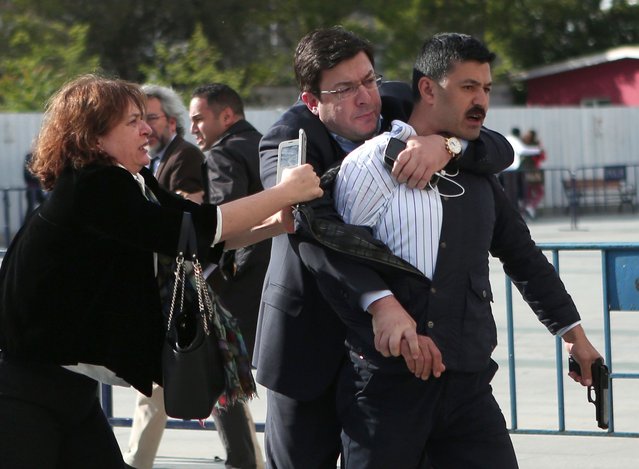
This picture released by Turkish Cumhuriyet Daily newspaper shows Dilek Dundar (L), the wife of editor-in-chief of Turkish newspaper Cumhuriyet daily Can Dundar, trying to stop a gunman who is also being held back by a man on May 6, 2016 in Istanbul. Turkish opposition journalist Can Dundar escaped a shooting on May 5 outside a courthouse in Istanbul where he is on trial, adding police detained the assailant. (Photo by AFP Photo/Cumhuriyet Daily Newspaper)

This picture released by Turkish Cumhuriyet Daily newspaper shows Dilek Dundar (L), the wife of editor-in-chief of Turkish newspaper Cumhuriyet daily Can Dundar, trying to stop a gunman who is also being held back by a man on May 6, 2016 in Istanbul. Turkish opposition journalist Can Dundar escaped a shooting on May 5 outside a courthouse in Istanbul where he is on trial, adding police detained the assailant. Dundar, who was unharmed, was outside the courthouse during a break as the court prepared to deliver its verdict in his trial for allegedly revealing state secrets in a newspaper story. (Photo by AFP Photo/Cumhuriyet Daily Newspaper)
Details
07 May 2016 13:30:00
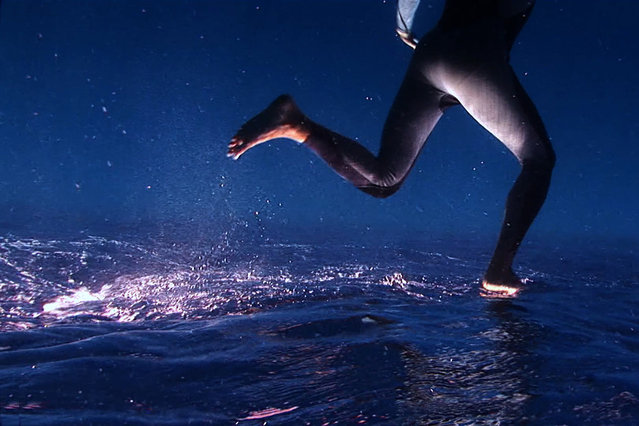
A freediver uses weights, yoga and camera tricks to create the illusion of walking underwater for a film which took three years to shoot and was completed in 2013 in El Hierro, Canary Islands. Like a scene from a Hollywood science-fiction movie, this trick footage shows a man apparently walking on water. The underwater film was shot by biologist Armiche Ramos and brothers Armando and Francisco del Rosario, who used their expertise in freediving to create the illusion. (Photo by Ocean Brothers/Barcroft Media/ABACAPress)

A freediver uses weights, yoga and camera tricks to create the illusion of walking underwater for a film which took three years to shoot and was completed in 2013 in El Hierro, Canary Islands. Like a scene from a Hollywood science-fiction movie, this trick footage shows a man apparently walking on water. The underwater film was shot by biologist Armiche Ramos and brothers Armando and Francisco del Rosario, who used their expertise in freediving to create the illusion. No computer graphics were involved in the production, with the team relying solely on their own skills – and a few hidden secrets. (Photo by Ocean Brothers/Barcroft Media/ABACAPress)
Details
25 Nov 2014 11:05:00
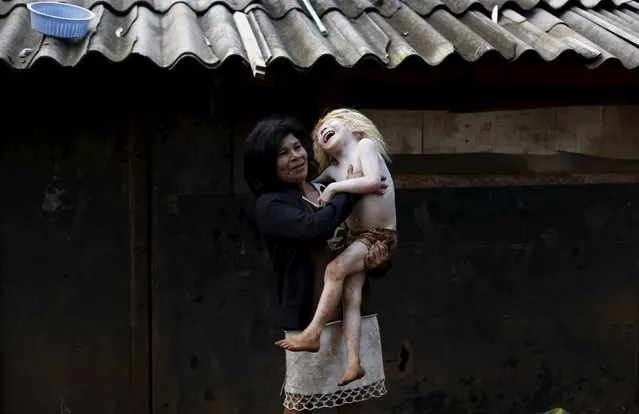
A Guarani Indian woman jokes with her son in the village of Pyau at Jaragua district, in Sao Paulo April 27, 2015. The National Indian Foundation (FUNAI) has recognised 521 hectares of this area as indigenous territory, making it the smallest indigenous reserve in Brazil. Members of the Guarani community have now established a new village outside the demarcation and are being threatened with an eviction through a court order. (Photo by Nacho Doce/Reuters)

A Guarani Indian woman jokes with her son in the village of Pyau at Jaragua district, in Sao Paulo April 27, 2015. The National Indian Foundation (FUNAI) has recognised 521 hectares of this area as indigenous territory, making it the smallest indigenous reserve in Brazil. Members of the Guarani community have now established a new village outside the demarcation and are being threatened with an eviction through a court order. (Photo by Nacho Doce/Reuters)
Details
01 May 2015 12:42:00
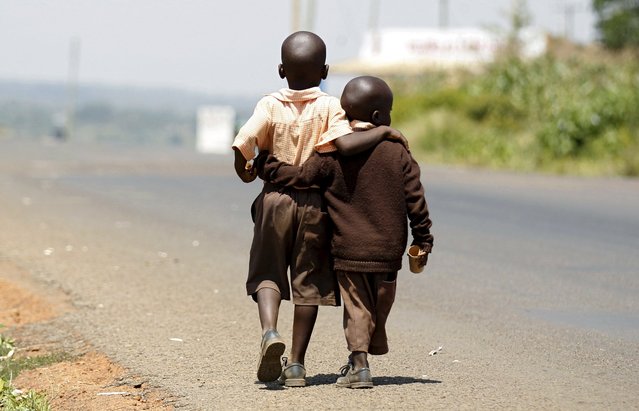
Boys walk home for lunch from school in the village of Kogelo, west of Kenya's capital Nairobi, July 16, 2015. (Photo by Thomas Mukoya/Reuters)

Boys walk home for lunch from school in the village of Kogelo, west of Kenya's capital Nairobi, July 16, 2015. U.S. President Barack Obama visits Kenya and Ethiopia later this month. His ancestral home of Kogelo is home to Sarah Hussein Obama, his step-grandmother. The Kenyan village, burial place of Obama's father, features an open-pit goldmine, a pork butcher's, a school named after their most famous son and outdoor market stalls. Villagers get around by motorbike taxi or on foot while a donkey-cart transports water. Children, some of them named Obama in honour of the President, walk to and from school together. (Photo by Thomas Mukoya/Reuters)
Details
24 Jul 2015 11:46:00