Loading...
Done


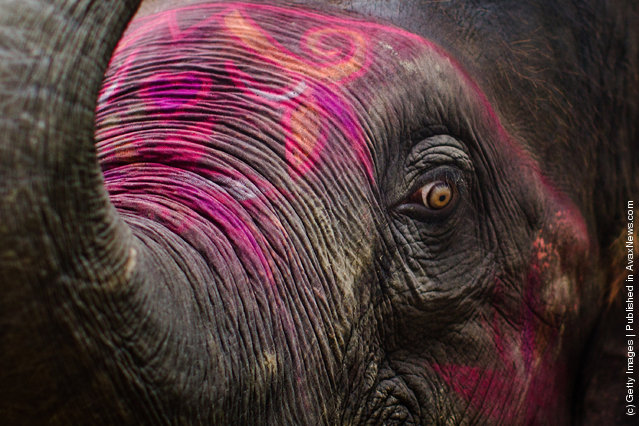
SONEPUR, INDIA - NOVEMBER 15: An elephant is painted in decorative colours during the Sonepur Mela on November 15, 2011 in Sonepur near Patna, India. The cattle fair, held in the Indian state of Bihar, has its origins during ancient times, when people traded elephants and horses across the auspicious river Ganges. The mela used to attract traders from places as distant as Central Asia. It is one of Asia's largest cattle fairs and lasts for a fortnight. (Photo by Daniel Berehulak/Getty Images)
Details
16 Nov 2011 02:42:00
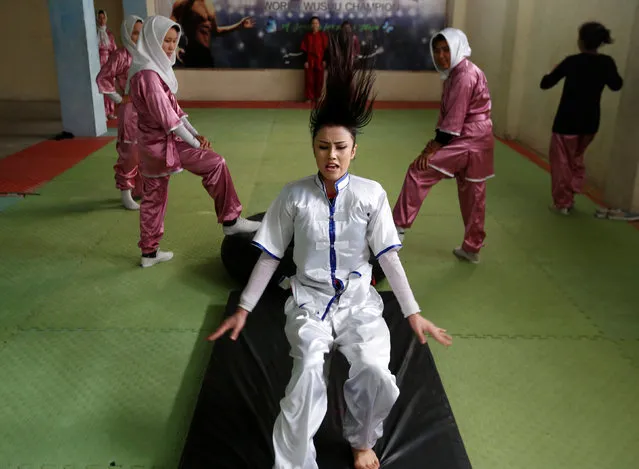
Sabera Bayanne, 20, a student of the Shaolin Wushu club, practices in Kabul, Afghanistan January 29, 2017. (Photo by Mohammad Ismail/Reuters)

Sabera Bayanne, 20, a student of the Shaolin Wushu club, practices in Kabul, Afghanistan January 29, 2017. On a snowy mountaintop to the west of Kabul, a group of Afghan girls practise the flowing movements of Wushu, a sport developed from ancient Chinese kung fu martial arts, stretching and bending and slashing the air with bright swords. (Photo by Mohammad Ismail/Reuters)
Details
05 Feb 2017 01:06:00
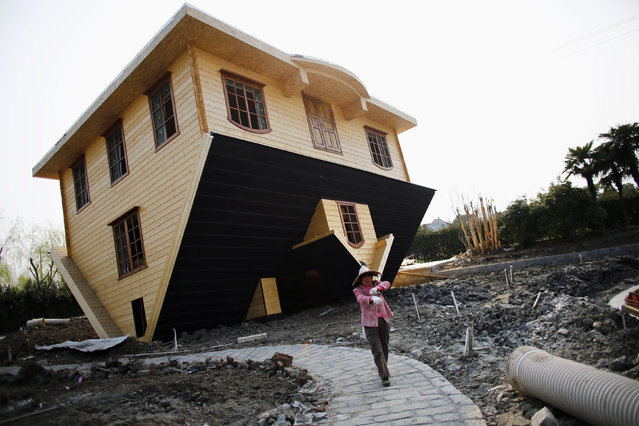
A laborer works at an upside-down house under construction at Fengjing Ancient Town, Jinshan District, south of Shanghai, March 17, 2014. Workers are putting the final touches on this eccentric tourist attraction built at the “China Folk Painting Village”. Furniture will also be placed upside down in the house, which is expected to open the public in April, according to local media. (Photo by Carlos Barria/Reuters)

A laborer works at an upside-down house under construction at Fengjing Ancient Town, Jinshan District, south of Shanghai, March 17, 2014. Workers are putting the final touches on this eccentric tourist attraction built at the “China Folk Painting Village”. Furniture will also be placed upside down in the house, which is expected to open the public in April, according to local media. (Photo by Carlos Barria/Reuters)
Details
21 Mar 2014 09:53:00
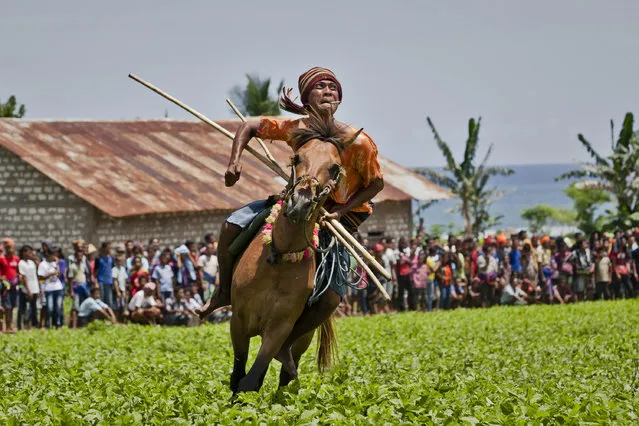
A Pasola rider reacts after throwing his spear during the Pasola war festival at Ratenggaro village on March 22, 2014 in Sumba Island, Indonesia. The Pasola Festival is an important annual event to welcome the new harvest season, which coincides with the arrival of  “Nyale” sea worms during February or March each year. Pasola, an ancient ritual fighting game, involves two teams of men on horseback charging towards each other while trying to hit their rivals with “pasol” javelins and avoid being hit themselves. (Photo by Ulet Ifansasti/Getty Images)

A Pasola rider reacts after throwing his spear during the Pasola war festival at Ratenggaro village on March 22, 2014 in Sumba Island, Indonesia. The Pasola Festival is an important annual event to welcome the new harvest season, which coincides with the arrival of “Nyale” sea worms during February or March each year. Pasola, an ancient ritual fighting game, involves two teams of men on horseback charging towards each other while trying to hit their rivals with “pasol” javelins and avoid being hit themselves. (Photo by Ulet Ifansasti/Getty Images)
Details
25 Mar 2014 07:54:00
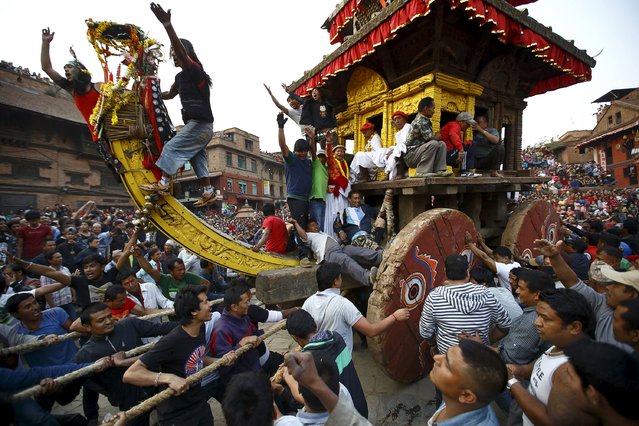
The chariot of God Bhairab is pulled through the city centre of Bhaktapur near Kathmandu during the Bisket festival April 10, 2015. The festival, which runs for more than a week and coincides with the Nepalese New Year, involves devotees offering prayers and the pulling of two chariots, one carrying the idol of God Bhairab and the other with the idol of Goddess Bhadrakali, around the ancient city of Bhaktapur. (Photo by Navesh Chitrakar/Reuters)

The chariot of God Bhairab is pulled through the city centre of Bhaktapur near Kathmandu during the Bisket festival April 10, 2015. The festival, which runs for more than a week and coincides with the Nepalese New Year, involves devotees offering prayers and the pulling of two chariots, one carrying the idol of God Bhairab and the other with the idol of Goddess Bhadrakali, around the ancient city of Bhaktapur. Devotees participate in the festival with the belief that they will be blessed with good health, fortune and harvest for the coming year. (Photo by Navesh Chitrakar/Reuters)
Details
12 Apr 2015 07:52:00
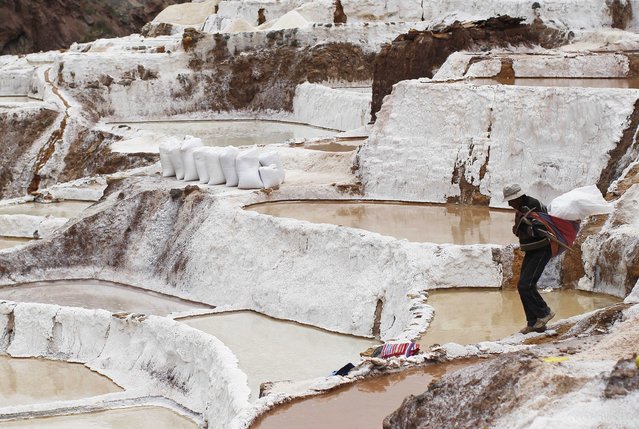
A worker carries a bag of salt after collecting it from a pond at the Maras mines in Cuzco December 3, 2014. Salt has been obtained in Maras since pre-Incan times by evaporating highly salty local subterranean stream water. The water is intricately channelled through constructions, flowing gradually down onto several hundred ancient terraced ponds. (Photo by Enrique Castro-Mendivil/Reuters)

A worker carries a bag of salt after collecting it from a pond at the Maras mines in Cuzco December 3, 2014. Salt has been obtained in Maras since pre-Incan times by evaporating highly salty local subterranean stream water. The water is intricately channelled through constructions, flowing gradually down onto several hundred ancient terraced ponds. From each pond, a local member of the mine cooperative can produce 150 to 200 kilos per month which can be sold in the markets at $0.34 per kilogram, according to miners. (Photo by Enrique Castro-Mendivil/Reuters)
Details
05 Dec 2014 13:36:00
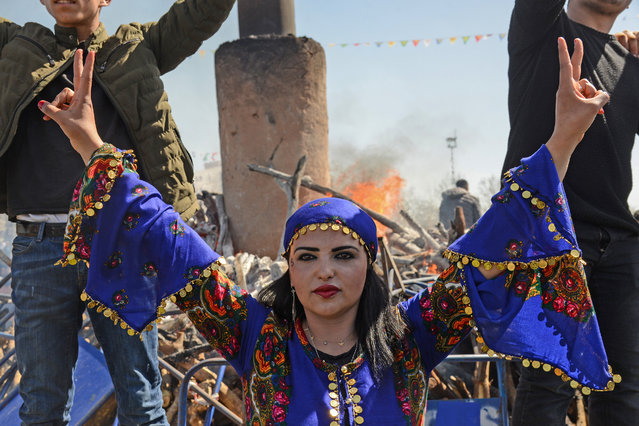
A young woman flashes the victory sign in front of a bonfire as Turkish Kurds gather during Newroz celebrations for the new year in Diyarbakir, southeastern Turkey, on March 21, 2018. Newroz (also known as Nawroz or Nowruz) is an ancient Persian festival, which is also celebrated by Kurdish people, marking the first day of spring, which falls on March 21. (Photo by Ilyas Akengin/AFP Photo)

A young woman flashes the victory sign in front of a bonfire as Turkish Kurds gather during Newroz celebrations for the new year in Diyarbakir, southeastern Turkey, on March 21, 2018. Newroz (also known as Nawroz or Nowruz) is an ancient Persian festival, which is also celebrated by Kurdish people, marking the first day of spring, which falls on March 21. (Photo by Ilyas Akengin/AFP Photo)
Details
23 Mar 2018 00:01:00
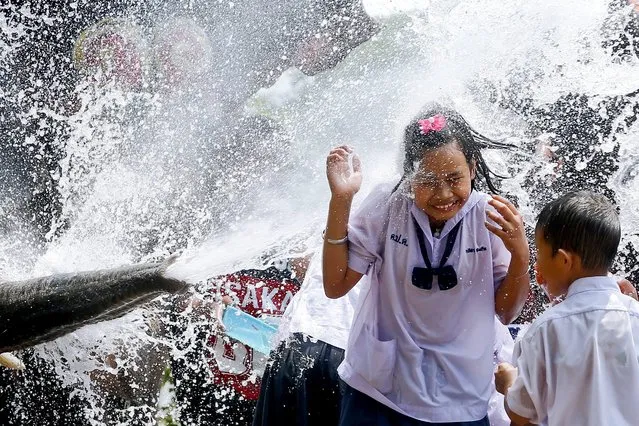
A schoolgirl is soaked with water thrown by an elephant in a preview of the upcoming Songkran Festival celebration, the Thai traditional New Year, also known as the water festival in the ancient world heritage city of Ayutthaya, Thailand, 11 April 2016. The annual elephant Songkran is held to promote the tourism industry prior the three-day Songkran Festival which starts on 13-15 April annually and is celebrated with splashing water and putting powder on each others faces as a symbolic sign of cleansing and washing away the sins from the old year. (Photo by Diego Azubel/EPA)

A schoolgirl is soaked with water thrown by an elephant in a preview of the upcoming Songkran Festival celebration, the Thai traditional New Year, also known as the water festival in the ancient world heritage city of Ayutthaya, Thailand, 11 April 2016. The annual elephant Songkran is held to promote the tourism industry prior the three-day Songkran Festival which starts on 13-15 April annually and is celebrated with splashing water and putting powder on each others faces as a symbolic sign of cleansing and washing away the sins from the old year. (Photo by Diego Azubel/EPA)
Details
12 Apr 2016 11:32:00