Loading...
Done
A photographer takes pictures near an inflated Master Yoda character hot air balloon during the 33rd annual QuickChek New Jersey Festival of Ballooning at Solberg Airport Friday, July 24, 2015, in Readington, N.J. The festival which runs through Sunday, July 26, 2015, will feature as many as 100 balloons, including many large, shaped balloons of Darth Vader, an American Flag, a giant whale, a Panda Bear, and a baby dinosaur. (Photo by Mel Evans/AP Photo)

A photographer takes pictures near an inflated Master Yoda character hot air balloon during the 33rd annual QuickChek New Jersey Festival of Ballooning at Solberg Airport Friday, July 24, 2015, in Readington, N.J. The festival which runs through Sunday, July 26, 2015, will feature as many as 100 balloons, including many large, shaped balloons of Darth Vader, an American Flag, a giant whale, a Panda Bear, and a baby dinosaur. (Photo by Mel Evans/AP Photo)
Details
25 Jul 2015 12:36:00
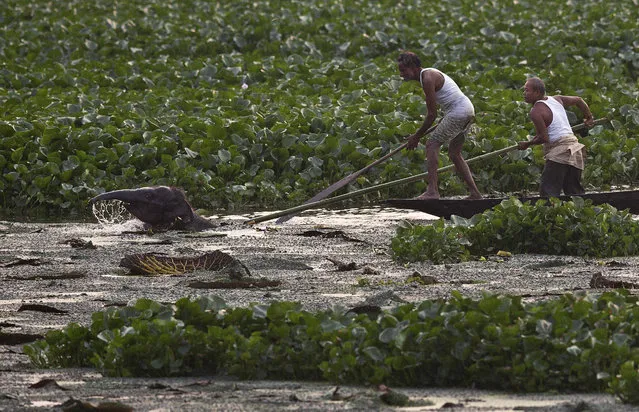
In this Friday, May 10, 2019, file photo, rescuers help a baby wild elephant cross the wetland to return to the forest at Deepor Beel wildlife sanctuary in Gauhati, India. The elephant had gotten stuck in the waters of Deepor Beel after it was separated from a herd of wild elephant that came down in search of food last night. (Photo by Anupam Nath/AP Photo)

In this Friday, May 10, 2019, file photo, rescuers help a baby wild elephant cross the wetland to return to the forest at Deepor Beel wildlife sanctuary in Gauhati, India. The elephant had gotten stuck in the waters of Deepor Beel after it was separated from a herd of wild elephant that came down in search of food last night. (Photo by Anupam Nath/AP Photo)
Details
23 May 2019 00:05:00
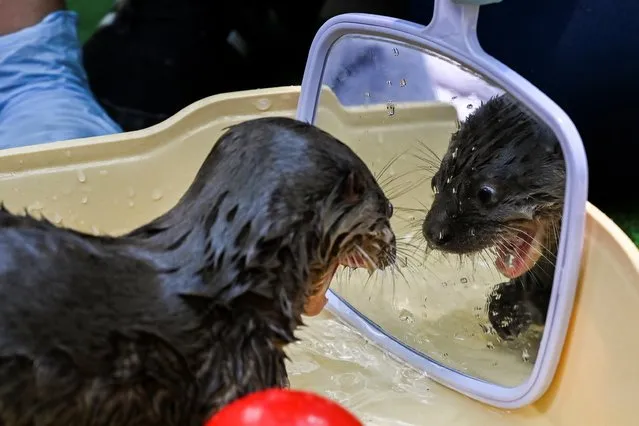
A river otter (lontra longicaudis) of 6-weeks-old looks in the mirror during a bath in the Animal Welfare Unit of the Zoo in Cali, Colombia, on October 22, 2019. The baby otter was found abandoned brought to the Cali Zoo for breeding, for its extensive experience in raising these species. According to the International Union for Conservation of Nature the river otter (lontra longicaudis) are in danger of extinction, because of mining, agriculture, pollution of rivers and housing construction in their habitat. (Photo by Luis Robayo/AFP Photo)

A river otter (lontra longicaudis) of 6-weeks-old looks in the mirror during a bath in the Animal Welfare Unit of the Zoo in Cali, Colombia, on October 22, 2019. The baby otter was found abandoned brought to the Cali Zoo for breeding, for its extensive experience in raising these species. According to the International Union for Conservation of Nature the river otter (lontra longicaudis) are in danger of extinction, because of mining, agriculture, pollution of rivers and housing construction in their habitat. (Photo by Luis Robayo/AFP Photo)
Details
27 Oct 2019 00:03:00
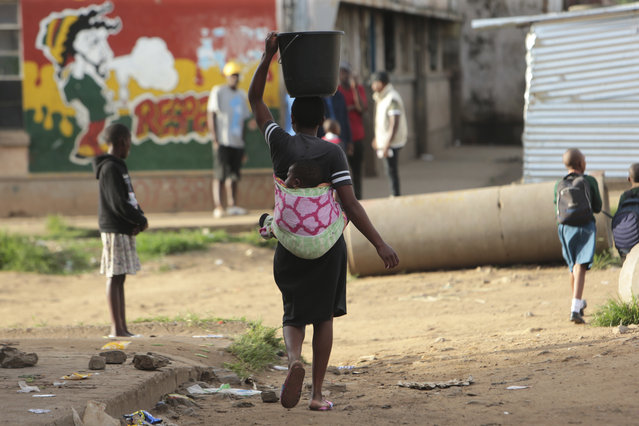
In this Monday, April 6, 2020 photo, a woman carries a her baby and a bucket of water in Harare. Lockdowns imposed to curb the coronavirus’ spread have put millions of women in Africa, Asia and elsewhere out of reach of birth control and other sexual and reproductive health needs. Confined to their homes with husbands and others, they face unwanted pregnancies and little idea of when they can reach the outside world again. (Photo by Tsvangirayi Mukwazhi/AP Photo)

In this Monday, April 6, 2020 photo, a woman carries a her baby and a bucket of water in Harare. Lockdowns imposed to curb the coronavirus’ spread have put millions of women in Africa, Asia and elsewhere out of reach of birth control and other sexual and reproductive health needs. Confined to their homes with husbands and others, they face unwanted pregnancies and little idea of when they can reach the outside world again. (Photo by Tsvangirayi Mukwazhi/AP Photo)
Details
30 May 2020 00:01:00
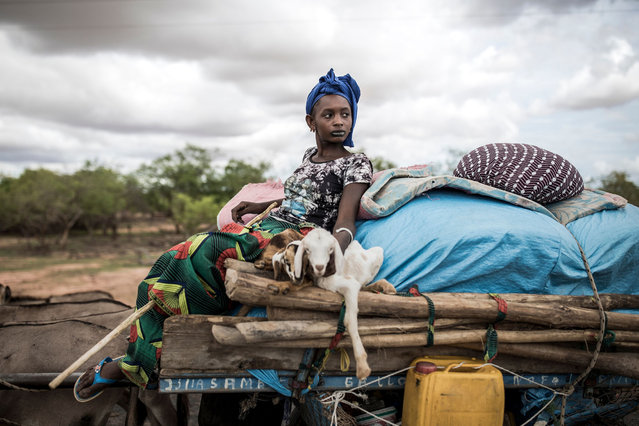
A Fulani Pastoralist carries two baby sheep on her donkey cart as her family move on northwards in Barkedji, Senegal on July 21, 2020. Thousands of Pastoralist families will start the movement north in the next weeks. With the first rains comes fresh grass and water for the Fulani herders' livestock, it also marks the point where most of the Pastoralist will move northwards until the dry season. (Photo by John Wessels/AFP Photo)

A Fulani Pastoralist carries two baby sheep on her donkey cart as her family move on northwards in Barkedji, Senegal on July 21, 2020. Thousands of Pastoralist families will start the movement north in the next weeks. With the first rains comes fresh grass and water for the Fulani herders' livestock, it also marks the point where most of the Pastoralist will move northwards until the dry season. (Photo by John Wessels/AFP Photo)
Details
04 Aug 2020 00:05:00
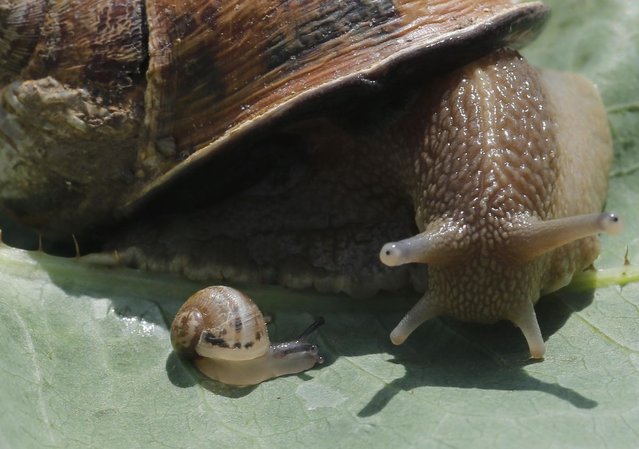
A snail (Helix Aspersa) and a baby snail sit on a leave in a farm in Vienna June 12, 2013. Andreas Gugumuck owns Vienna's largest snail farm, exporting snails, snail-caviar and snail-liver all over the world. The gourmet snails are processed using old traditional cooking techniques and some are sold locally to Austrian gourmet restaurants. (Photo by Leonhard Foeger/Reuters)

A snail (Helix Aspersa) and a baby snail sit on a leave in a farm in Vienna June 12, 2013. Andreas Gugumuck owns Vienna's largest snail farm, exporting snails, snail-caviar and snail-liver all over the world. The gourmet snails are processed using old traditional cooking techniques and some are sold locally to Austrian gourmet restaurants. (Photo by Leonhard Foeger/Reuters)
Details
31 Jul 2013 07:19:00
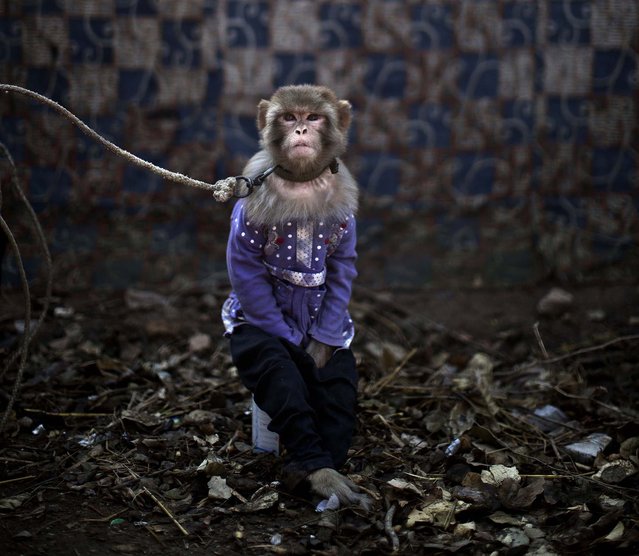
In this Tuesday, February 11, 2014, photo, a trained monkey, that makes a living for her Pakistani owner by performing to a crowd in public and private places, sits held by a leash, in Rawalpindi, Pakistan. For Pakistanis who raise and train the monkeys they are an important source of income in an impoverished country, and they form a strong bond with the animals. The monkeys are usually captured in the wild when they are babies and then trained. A trained monkey can fetch 20,000 to 30,000 rupees ($190 to $285). (Photo by Muhammed Muheisen/Associated Press)

In this Tuesday, February 11, 2014, photo, a trained monkey, that makes a living for her Pakistani owner by performing to a crowd in public and private places, sits held by a leash, in Rawalpindi, Pakistan. For Pakistanis who raise and train the monkeys they are an important source of income in an impoverished country, and they form a strong bond with the animals. The monkeys are usually captured in the wild when they are babies and then trained. A trained monkey can fetch 20,000 to 30,000 rupees ($190 to $285). (Photo by Muhammed Muheisen/Associated Press)
Details
23 Feb 2014 09:50:00
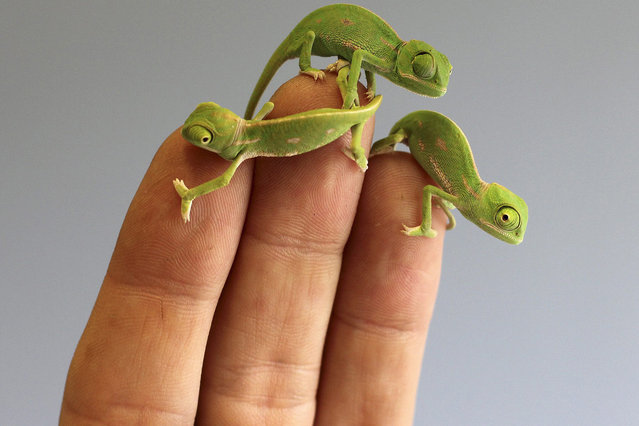
A handout image released by the Taronga Zoo shows Veiled Chameleon hatchlings at Taronga Zoo in Sydney, Australia, 11 March 2015. Taronga has welcomed more than 20 baby chameleons, with the last of three clutches of eggs hatching this week. Veiled Chameleons, or Chamaeleo calyptratus, are native to Saudi Arabia and Yemen and can live up to five years. (Photo by EPA/Taronga Zoo)

A handout image released by the Taronga Zoo shows Veiled Chameleon hatchlings at Taronga Zoo in Sydney, Australia, 11 March 2015. Taronga has welcomed more than 20 baby chameleons, with the last of three clutches of eggs hatching this week. Veiled Chameleons, or Chamaeleo calyptratus, are native to Saudi Arabia and Yemen and can live up to five years. (Photo by EPA/Taronga Zoo)
Details
21 Mar 2015 13:13:00