Loading...
Done
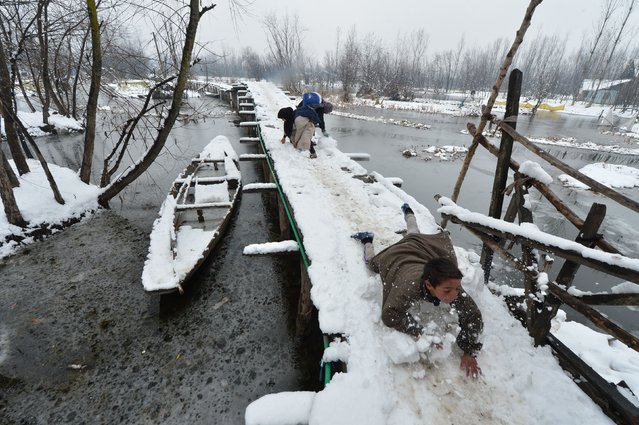
Kashmiri children play with snow on a wooden foot bridge in the interiors of Dal Lake in Srinagar on January 16, 2017. A cold wave has further tightened its grip in Jammu and Kashmir, with most places in the state recording sub-zero temperatures. (Photo by Tauseef Mustafa/AFP Photo)

Kashmiri children play with snow on a wooden foot bridge in the interiors of Dal Lake in Srinagar on January 16, 2017. A cold wave has further tightened its grip in Jammu and Kashmir, with most places in the state recording sub-zero temperatures. (Photo by Tauseef Mustafa/AFP Photo)
Details
17 Jan 2017 12:14:00
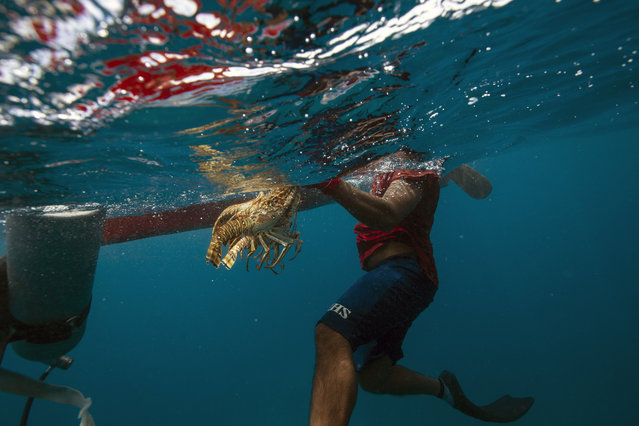
In this September 9, 2018 photo, a diver holds onto his catch of lobsters during a fishing journey in the Miskito coast near Cay Savannah, Honduras. A diver makes 75 lempiras ($3) per pound of lobster. An average 10-pound daily haul of lobster is a windfall for people in one of the most impoverished regions of the Americas, so many take the risk, and many suffer for it. (Photo by Rodrigo Abd/AP Photo)

In this September 9, 2018 photo, a diver holds onto his catch of lobsters during a fishing journey in the Miskito coast near Cay Savannah, Honduras. A diver makes 75 lempiras ($3) per pound of lobster. An average 10-pound daily haul of lobster is a windfall for people in one of the most impoverished regions of the Americas, so many take the risk, and many suffer for it. (Photo by Rodrigo Abd/AP Photo)
Details
23 Jan 2019 00:01:00
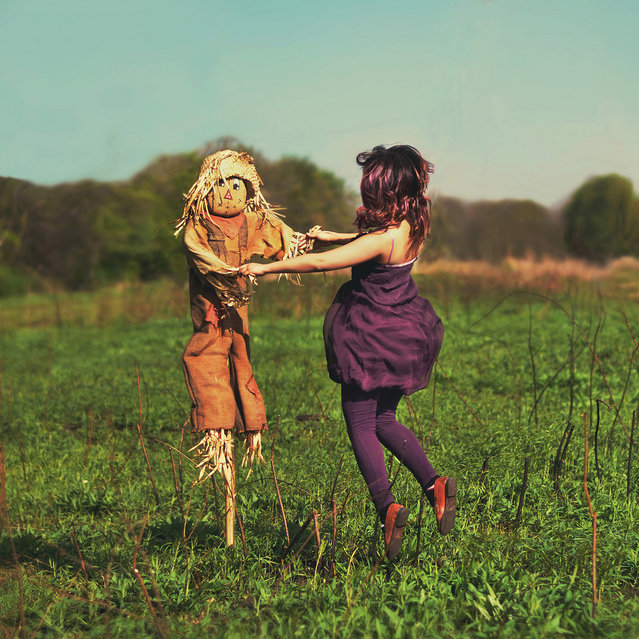
If I Only Had a Brain (365 project). (Glenda Lissette)

We received intriguing letter: “Hello! My name is Glenda Lissette, I am an 18 year old photographer from Chicago, IL. I produce surreal and conceptual photographs. I am currently working on a project where I take a photo a day for an entire year”. Well, let's look!

Photo: “If I Only Had a Brain” (365 project). (Photo by Glenda Lissette)


Details
20 Nov 2012 11:55:00


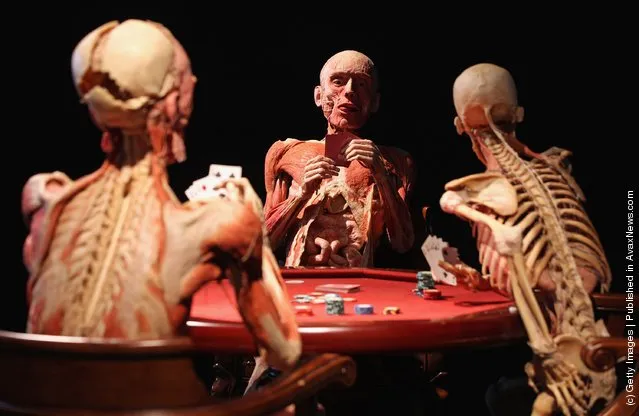
Plastinated human corpses posed to look like poker players stand on display at the Body Worlds exhibition on April 27, 2011 in Berlin, Germany. The exhibition, which features human and animal corpses plastinated by Gunther von Hagens, focuses on the role of the heart. It will be open to the public at the Postbahnhof from April 27 to August 14. (Photo by Sean Gallup/Getty Images)
Details
27 Apr 2011 08:15:00
Life reconstruction of the new oviraptorosaurian dinosaur species Anzu wyliei in its 66 million-year-old environment in western North America as seen in an undated handout illustration by Mark A. Klinger, Carnegie Museum of Natural History. Some 18,000 species, great and small, were discovered in 2014, adding to the 2 million already known, scientists said on May 21, 2015 as they released a “Top 10” list that highlights the diversity of life. (Photo by Mark A. Klingler/Reuters/Carnegie Museum of Natural History)

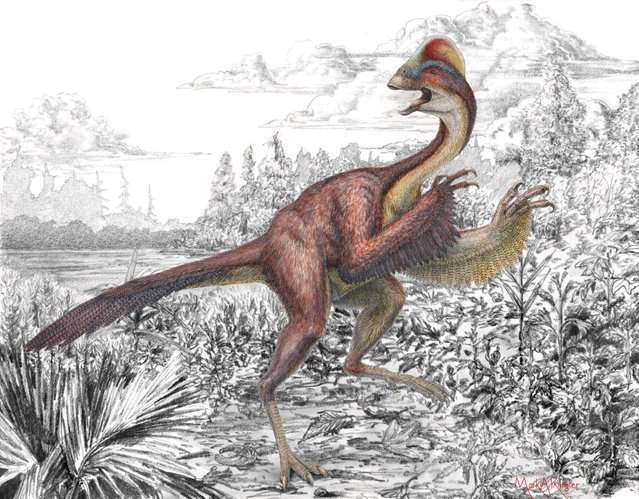
Life reconstruction of the new oviraptorosaurian dinosaur species Anzu wyliei in its 66 million-year-old environment in western North America as seen in an undated handout illustration by Mark A. Klinger, Carnegie Museum of Natural History. Some 18,000 species, great and small, were discovered in 2014, adding to the 2 million already known, scientists said on May 21, 2015 as they released a “Top 10” list that highlights the diversity of life. Anzu wyliei, one of the top 10, dubbed “the chicken from hell”, is extinct. The feathered dinosaur whose partial skeletons were unearthed in the Dakotas was a contemporary of T. rex and Triceratops. (Photo by Mark A. Klingler/Reuters/Carnegie Museum of Natural History)

Details
22 May 2015 12:31:00
Plaster cast moulds of victims of the Mount Vesuvius eruption lie on a display table in a laboratory at Pompeii October 13, 2015. An expert team made up of archaeologists, radiologists, orthodontists and anthropologists began on September 2015 to use CAT scan technology (computerised axial tomography) to peer inside the plaster cast moulds of Pompeii's victims, in a study that has added more detail to previous findings. (Photo by Alessandro Bianchi/Reuters)

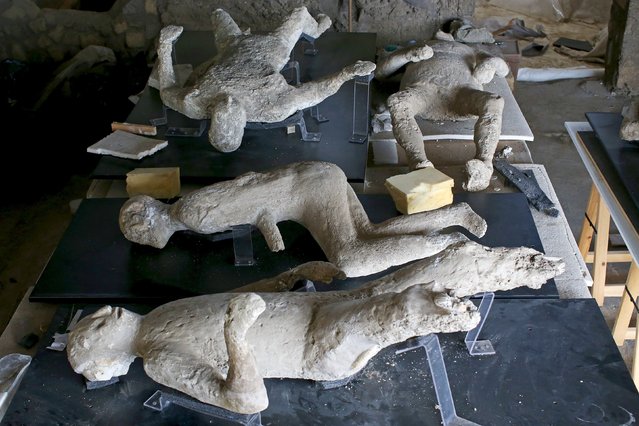
Plaster cast moulds of victims of the Mount Vesuvius eruption lie on a display table in a laboratory at Pompeii October 13, 2015. An expert team made up of archaeologists, radiologists, orthodontists and anthropologists began on September 2015 to use CAT scan technology (computerised axial tomography) to peer inside the plaster cast moulds of Pompeii's victims, in a study that has added more detail to previous findings. A 16-layer scan had to be used in order to penetrate the hardened plaster but the results showed up impressive skeletal remains and near perfect teeth. (Photo by Alessandro Bianchi/Reuters)
Details
22 Oct 2015 08:02:00
American students going wild during their Spring Break week-long recess in Cancun, Mexico on March 10, 2007. (Photo by Keystone USA/ZUMA Press/Rex Features/Shutterstock)

American students going wild during their Spring Break week-long recess in Cancun, Mexico on March 10, 2007. (Photo by Keystone USA/ZUMA Press/Rex Features/Shutterstock)
Details
21 Mar 2017 08:08:00
Yak near Yamdrok lake, Tibet. It is a long-haired bovinae found throughout the Himalayan region of south Central Asia, the Tibetan Plateau and as far north as Mongolia and Russia. The Tibetan economy is dominated by subsistence agriculture. Due to limited arable land, the primary occupation of the Tibetan Plateau is raising livestock, such as sheep, cattle, goats, camels, yaks, dzo, and horses. The Tibetan yak is an integral part of Tibetan life. (Photo by Dennis Jarvis)

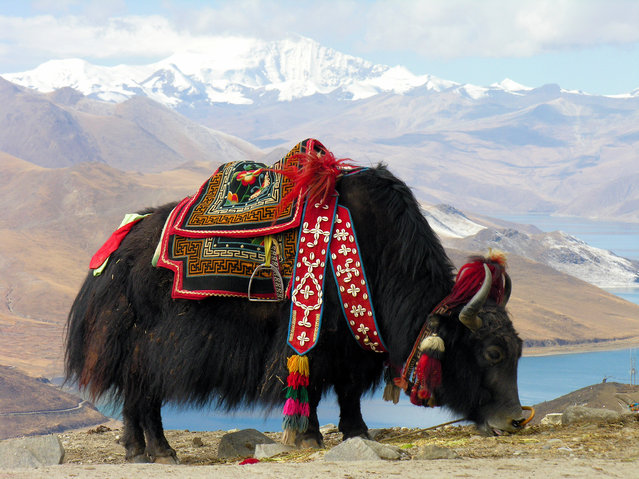
Yak near Yamdrok lake, Tibet. It is a long-haired bovinae found throughout the Himalayan region of south Central Asia, the Tibetan Plateau and as far north as Mongolia and Russia. The Tibetan economy is dominated by subsistence agriculture. Due to limited arable land, the primary occupation of the Tibetan Plateau is raising livestock, such as sheep, cattle, goats, camels, yaks, dzo, and horses. The Tibetan yak is an integral part of Tibetan life. (Photo by Dennis Jarvis)
Details
10 Jun 2015 10:48:00