Loading...
Done
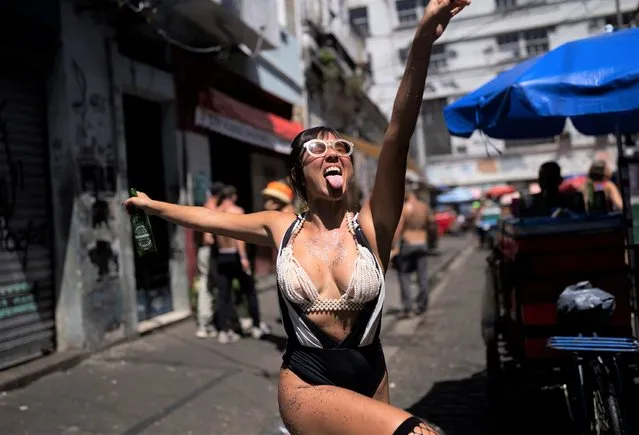
A reveler strikes a pose during an unofficial carnival block party referred to as “blocos”, in Rio de Janeiro, Brazil, Saturday, February 26, 2022. (Photo by Silvia Izquierdo/AP Photo)

A reveler strikes a pose during an unofficial carnival block party referred to as “blocos”, in Rio de Janeiro, Brazil, Saturday, February 26, 2022. City Hall banned all blocos, the tightly packed street parties attended by those who cannot or don't want to buy pricey tickets for the official parade at the Sambadrome, due to a wave of the Omicron variant. (Photo by Silvia Izquierdo/AP Photo)
Details
28 Feb 2022 04:52:00
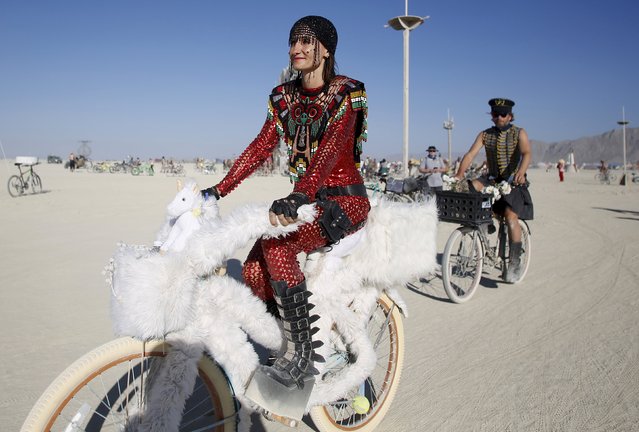
Bibi rides her bike on the Playa during the Burning Man 2015 “Carnival of Mirrors” arts and music festival in the Black Rock Desert of Nevada, August 31, 2015. (Photo by Jim Urquhart/Reuters)

Bibi rides her bike on the Playa during the Burning Man 2015 “Carnival of Mirrors” arts and music festival in the Black Rock Desert of Nevada, August 31, 2015. Approximately 70,000 people from all over the world are gathering at the sold-out festival to spend a week in the remote desert to experience art, music and the unique community that develops. (Photo by Jim Urquhart/Reuters)
Details
02 Sep 2015 11:21:00
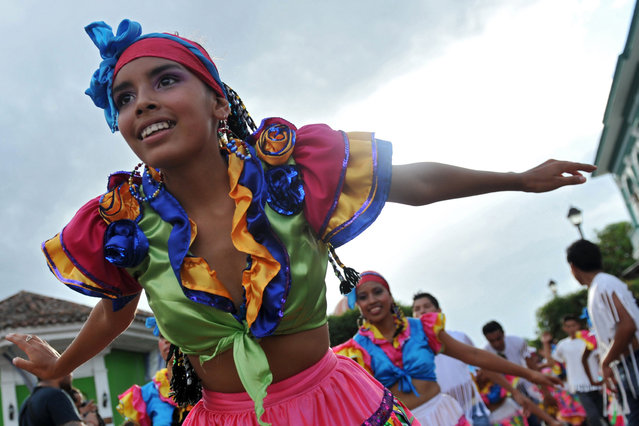
A girl takes part in the “Burial of arrogance and haughtiness” carnival during the IX Poetry Festival in Granada, 45 km from Managua, Nicaragua on February 20, 2013. In this occasion the festival is dedicated to Nicaraguan poet Ernesto Cardenal. (Photo by Hector Retamal/AFP Photo)

Granada’s International Poetry Festival is an extraordinary celebration of poetry that takes place across the entire city. For a week, every February, Granada is transformed into a virtual Capital of the World’s Poetry. Photo: A girl takes part in the “Burial of arrogance and haughtiness” carnival during the IX Poetry Festival in Granada, 45 km from Managua, Nicaragua on February 20, 2013. In this occasion the festival is dedicated to Nicaraguan poet Ernesto Cardenal. (Photo by Hector Retamal/AFP Photo)
Details
21 Feb 2013 08:38:00
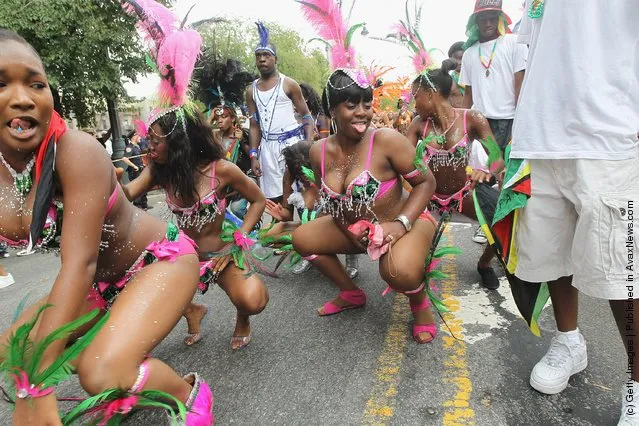
New Yorkers Celebrate At West Indian Day Parade

“The Labor Day Parade (or West Indian Carnival), is an annual celebration held on American Labor Day (the first Monday in September), in Crown Heights, Brooklyn, New York. Ms. Jessie Waddell and some of her West Indian friends started the Carnival in Harlem in the 1920s by staging costume parties in large enclosed places like the Savoy, Renaissance and Audubon Ballrooms due to the cold wintry weather of February. This is the usual time for the pre-Lenten celebrations held in most countries around the world. However, because of the very nature of Carnival, and the need to parade in costume to music, indoor confinement did not work well. The earliest known Carnival street parade was held on September 1, 1947. The Trinidad Carnival Pageant Committee was the founding force behind the parade, which was held in Harlem. The parade route was along Seventh Avenue, starting at 110th St.” – Wikipedia

Photo: A reveler looks on during the West Indian-American Day Parade September 5, 2011 in the Brooklyn borough of New York City. More than 2 million spectators were expected to attend the celebration of Caribbean culture. (Photo by Mario Tama/Getty Images)

Details
06 Sep 2011 11:18:00
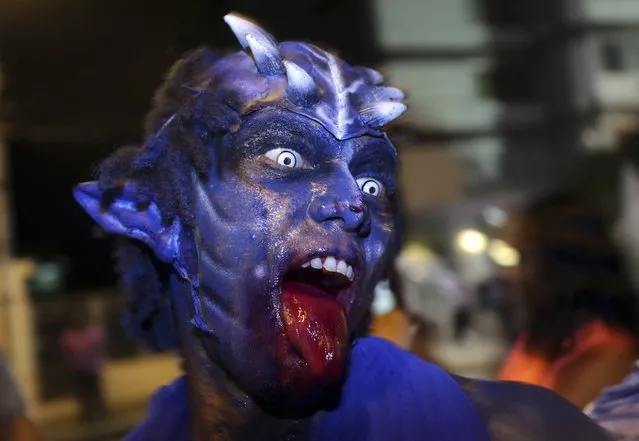
A masquerader from the Paramin Blue Devils parades before judges during the traditional mas competition held by the National Carnival Commission at Victoria Square, in the capital Port-of-Spain, February 12, 2015. (Photo by Andrea De Silva/Reuters)

A masquerader from the Paramin Blue Devils parades before judges during the traditional mas competition held by the National Carnival Commission at Victoria Square, in the capital Port-of-Spain, February 12, 2015. (Photo by Andrea De Silva/Reuters)
Details
14 Feb 2015 12:54:00
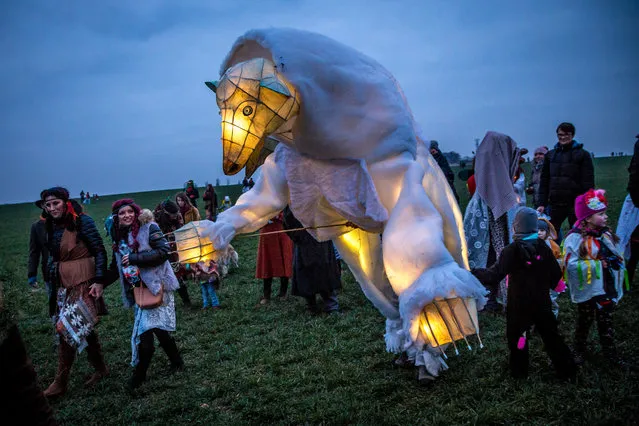
Parade participants during the traditional “Masopust Carnival” festival on February 13, 2018 in Roztoky near Prague, Czech Republic. Known as Masopust (literally, “giving up meat”), the festival was traditionally the last chance to eat and drink in excess before the austerity of Lent. (Photo by Margot Buff/RFE/RL)

Parade participants during the traditional “Masopust Carnival” festival on February 13, 2018 in Roztoky near Prague, Czech Republic. Known as Masopust (literally, “giving up meat”), the festival was traditionally the last chance to eat and drink in excess before the austerity of Lent. (Photo by Margot Buff/RFE/RL)
Details
14 Feb 2018 08:44:00
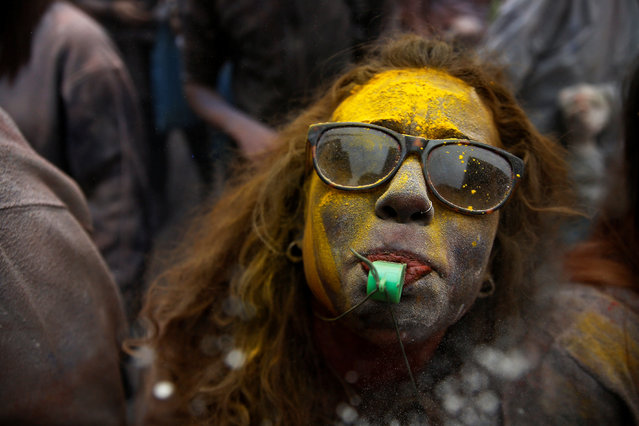
Revellers celebrate “Ash Monday” by participating in a colourful “flour war”, a traditional festivity marking the end of the carnival season and the start of the 40-day Lent period until the Orthodox Easter, in Galaxidi, Greece February 19, 2018. (Photo by Alkis Konstantinidis/Reuters)

Revellers celebrate “Ash Monday” by participating in a colourful “flour war”, a traditional festivity marking the end of the carnival season and the start of the 40-day Lent period until the Orthodox Easter, in Galaxidi, Greece February 19, 2018. (Photo by Alkis Konstantinidis/Reuters)
Details
21 Feb 2018 00:02:00
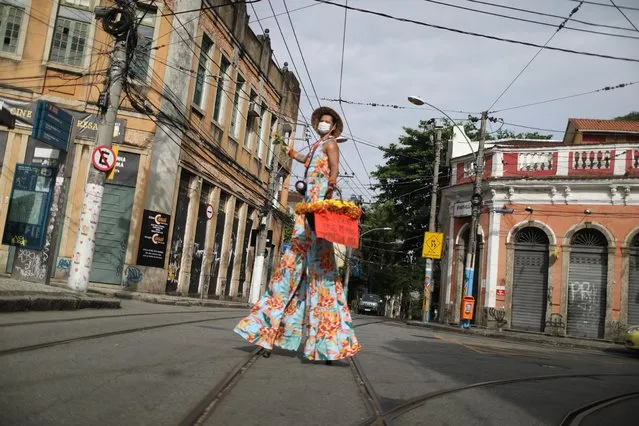
Anilson Costa, reveller of the annual block party “Ceu na Terra”, walks along the Santa Teresa neighborhood where the block party used to be celebrated, as Carnival celebrations have been canceled, amid the coronavirus disease (COVID-19) pandemic, in Rio de Janeiro, Brazil on February 12, 2021. (Photo by Pilar Olivares/Reuters)

Anilson Costa, reveller of the annual block party “Ceu na Terra”, walks along the Santa Teresa neighborhood where the block party used to be celebrated, as Carnival celebrations have been canceled, amid the coronavirus disease (COVID-19) pandemic, in Rio de Janeiro, Brazil on February 12, 2021. (Photo by Pilar Olivares/Reuters)
Details
13 Feb 2021 10:42:00