Loading...
Done
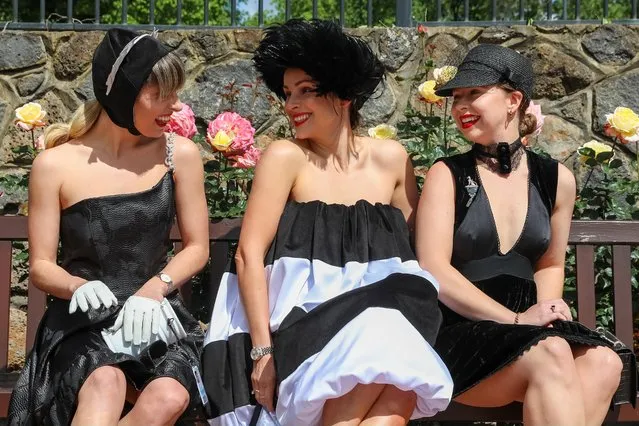
Spectators pose for a photo upon entry for Derby Day at Flemington Racecourse on October 30, 2021 in Melbourne, Australia. Victoria's COVID-19 restrictions have eased to allow spectators to return to Flemington racecourse for the first time since 2019. Up to 5,500 fully vaccinated fans are permitted to attend Derby Day, while the remainder of the Melbourne Cup Carnival Race days will have a spectator limit of 10,000 people. Under COVID-19 restrictions, all patrons to the Melbourne Cup Carnival will be separated into three zones, with allocated seats for the service of food and drink. Spectators will be required to wear masks at Flemington, despite Victoria's outdoor mask mandate easing on Friday. (Photo by Asanka Ratnayake/Getty Images)

Spectators pose for a photo upon entry for Derby Day at Flemington Racecourse on October 30, 2021 in Melbourne, Australia. Victoria's COVID-19 restrictions have eased to allow spectators to return to Flemington racecourse for the first time since 2019. (Photo by Asanka Ratnayake/Getty Images)
Details
18 Jun 2022 04:34:00
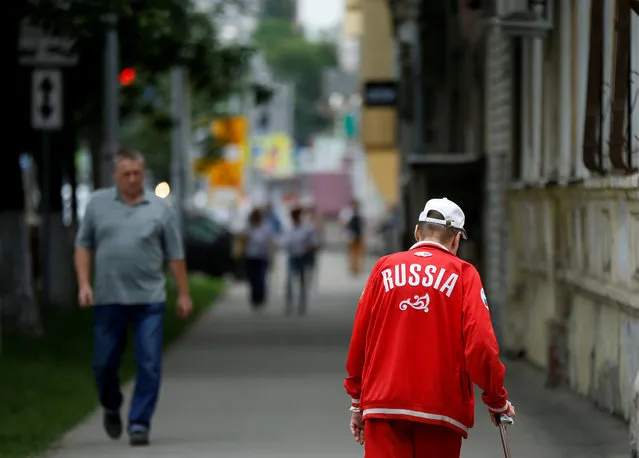
People walk on the street in Samara, Russia on July 18, 2017. (Photo by David Mdzinarishvili/Reuters)

People walk on the street in Samara, Russia on July 18, 2017. (Photo by David Mdzinarishvili/Reuters)
Details
28 Jul 2017 09:43:00
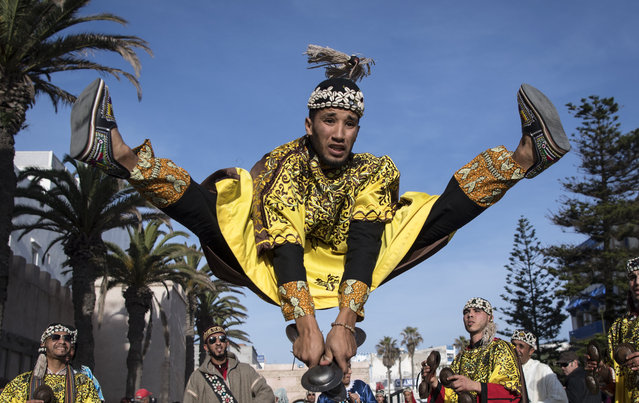
A Gnawa traditional group performs in the city of Essaouira on December 14, 2019, to celebrate the decision of adding the Gnawa culture to UNESCO's list of Intangible Cultural Heritage of Humanity. Gnawa culture, a centuries-old Moroccan practice rooted in music, African rituals and Sufi traditions, was added to UNESCO's list of Intangible Cultural Heritage of Humanity earlier in the week. Gnawa refers to a “set of musical productions, fraternal practices and therapeutic rituals where the secular mixes with the sacred”, according to the nomination submitted by Morocco. Often dressed in colourful outfits, Gnawa musicians play the guenbri, a type of lute with three strings, accompanied by steel castanets called krakebs. (Photo by Fadel Senna/AFP Photo)

A Gnawa traditional group performs in the city of Essaouira on December 14, 2019, to celebrate the decision of adding the Gnawa culture to UNESCO's list of Intangible Cultural Heritage of Humanity. Gnawa culture, a centuries-old Moroccan practice rooted in music, African rituals and Sufi traditions, was added to UNESCO's list of Intangible Cultural Heritage of Humanity earlier in the week. Gnawa refers to a “set of musical productions, fraternal practices and therapeutic rituals where the secular mixes with the sacred”, according to the nomination submitted by Morocco. Often dressed in colourful outfits, Gnawa musicians play the guenbri, a type of lute with three strings, accompanied by steel castanets called krakebs. (Photo by Fadel Senna/AFP Photo)
Details
18 Dec 2019 00:05:00
RGB Colorspace Atlas By Tauba Auerbach

Very impressive, the RGB Colorspace Atlas is a beautiful picture book by American artist Tauba Auerbach. The book displays the full RGB gradient in 3,632 pages.
Details
03 Aug 2014 11:10:00
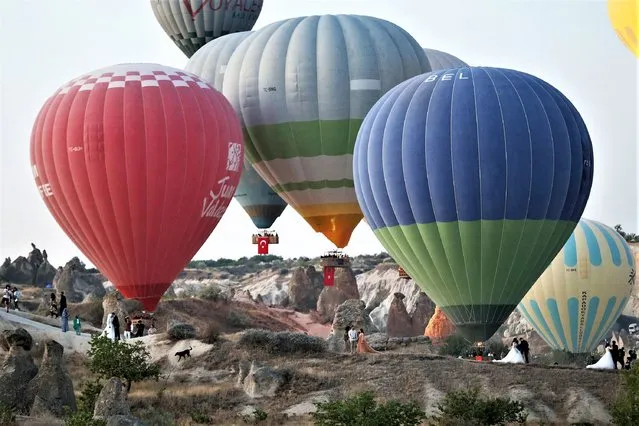
Hot-air balloons glide over the historical Cappadocia region with Turkish flags to mark August 30 Turkiye's Victory Day in Nevsehir, Turkiye on August 30, 2023. (Photo by Behcet Alkan/Anadolu Agency via Getty Images)

Hot-air balloons glide over the historical Cappadocia region with Turkish flags to mark August 30 Turkiye's Victory Day in Nevsehir, Turkiye on August 30, 2023. (Photo by Behcet Alkan/Anadolu Agency via Getty Images)
Details
23 Jan 2024 09:51:00
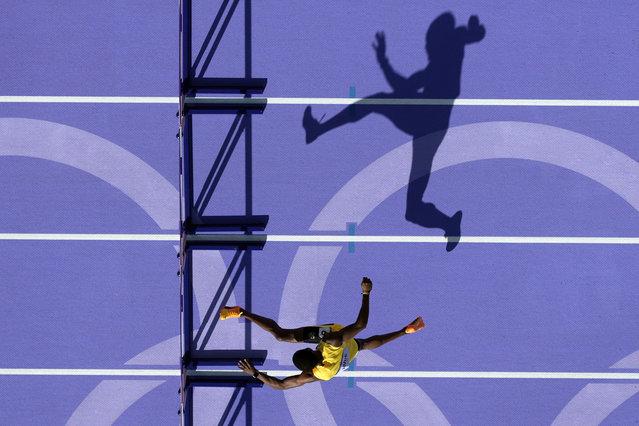
Jaheel Hyde, of Jamaica, competes in a men's 400-meter hurdles heat at the 2024 Summer Olympics, Monday, August 5, 2024, in Saint-Denis, France. (Photo by David J. Phillip/AP Photo)

Jaheel Hyde, of Jamaica, competes in a men's 400-meter hurdles heat at the 2024 Summer Olympics, Monday, August 5, 2024, in Saint-Denis, France. (Photo by David J. Phillip/AP Photo)
Details
27 Jan 2025 04:41:00
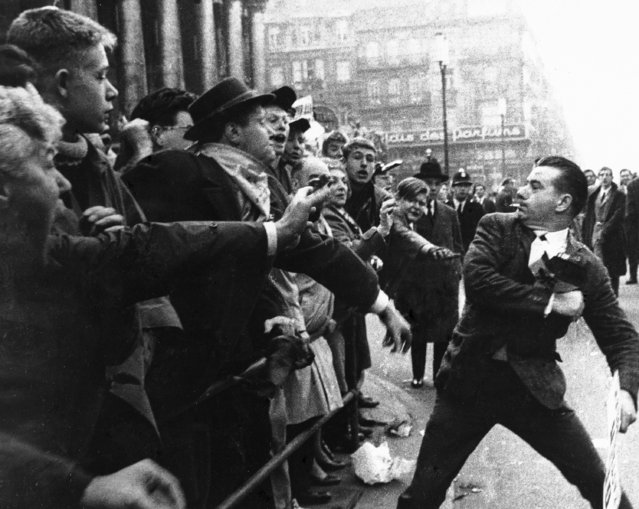
A Flemish demonstrator, one of thousands who gathered for a march through Brussels to protest against what the Flemings call their subjucation by the French-speaking Walloons, draws back as he is jeered by a crowd of Walloons on the pavement in a Brussels Street, on October 14, 1962. The Flemish demonstrators clashed with Walloon counter demonstrators as riot police sought to maintain order. (Photo by AP Photo)

A Flemish demonstrator, one of thousands who gathered for a march through Brussels to protest against what the Flemings call their subjucation by the French-speaking Walloons, draws back as he is jeered by a crowd of Walloons on the pavement in a Brussels Street, on October 14, 1962. The Flemish demonstrators clashed with Walloon counter demonstrators as riot police sought to maintain order. The Flemings claim that although they form 60% of the population in Belgium, they are inadequately represented in the government, and they say, the Walloons get most of the top jobs in the armed forces and the diplomatic service. (Photo by AP Photo)
Details
16 Oct 2015 08:05:00
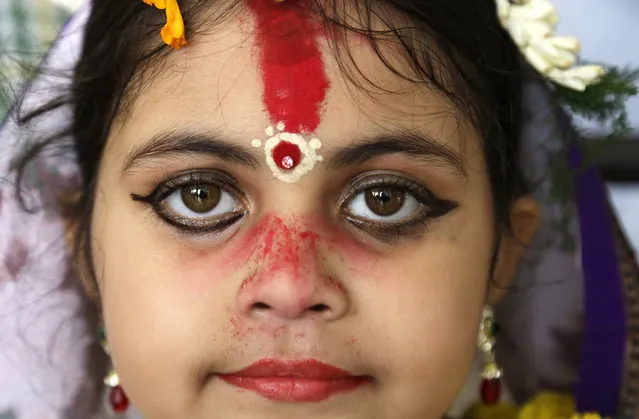
A young Hindu girl sits for a ceremony where she and other girls are worshipped as “Kumari”, or living goddess, during Ram Navami festival, at a temple in Kolkata, India, Saturday, March 28, 2015. (Photo by Bikas Das/AP Photo)

A young Hindu girl sits for a ceremony where she and other girls are worshipped as “Kumari”, or living goddess, during Ram Navami festival, at a temple in Kolkata, India, Saturday, March 28, 2015. Ram Navami marks the birth of Hindu God Rama. (Photo by Bikas Das/AP Photo)
Details
29 Mar 2015 12:23:00