Loading...
Done
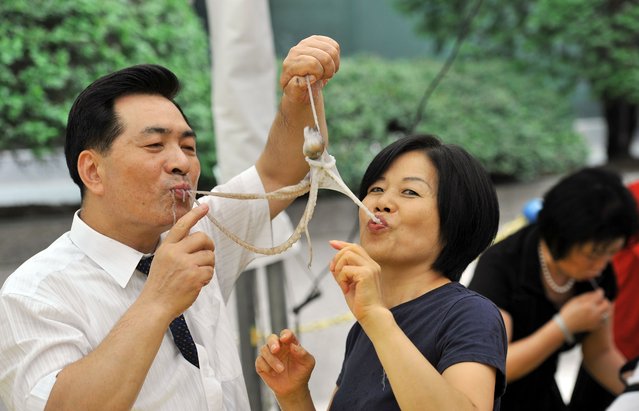
A South Korean man and a woman eat a live octopus during an event to promote a local food festival in Seoul on September 12, 2013. (Photo by Jung Yeon-Je/AFP Photo)

Live octopus is a delicacy in South Korea but is a known choking hazard, since the still-moving suction cups can cause tentacle pieces to stick in a person's throat. A baby octopus is often consumed whole, while larger varieties are cut up and the still-wriggling tentacles eaten with a splash of sesame oil. Photo: A South Korean man and a woman eat a live octopus during an event to promote a local food festival in Seoul on September 12, 2013. (Photo by Jung Yeon-Je/AFP Photo)
Details
13 Sep 2013 09:40:00
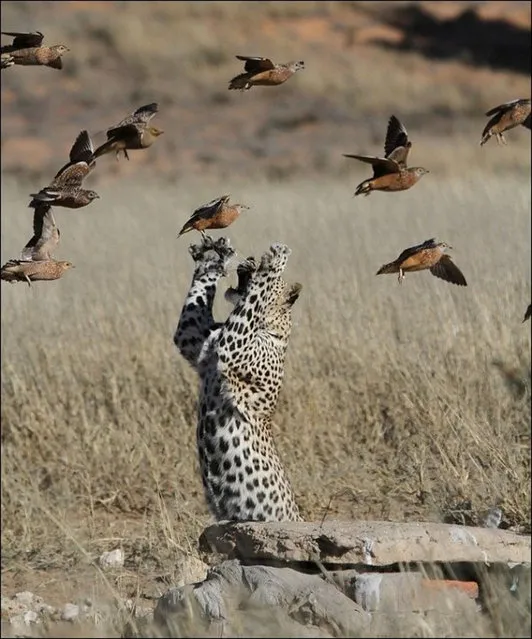
South African Leopard Catches Sandgrouse

Deftly he finished with a birdie that they fly so low?
Details
24 Sep 2012 15:41:00


Hwang Bo-young (L), a North Korean defector who was a member of the North Korean National female ice hockey team, prepares for practice with South Korean teammates on March 13, 2006 in Seoul, South Korea. Young, 27-years-old, became a captain of the South Korean National Female Ice Hockey Team. (Photo by Chung Sung-Jun/Getty Images)
Details
19 Jun 2011 10:47:00
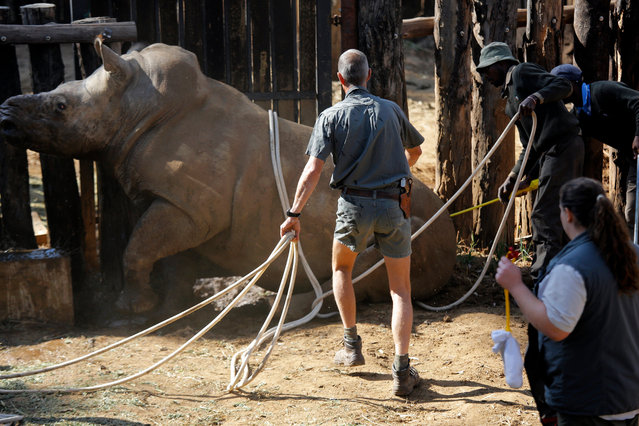
Conservation staff members move the eight-years-old White Rhino Seha into a truck in Johannesburg, South Africa, 28 July 2017. (Photo by Kim Ludbrook/EPA/EFE)

Conservation staff members move the eight-years-old White Rhino Seha into a truck in Johannesburg, South Africa, 28 July 2017. Seha is the only survivor after five rhinos where poached on the same game farm. South Africa has the world's largest population of Rhinos in the world. (Photo by Kim Ludbrook/EPA/EFE)
Details
06 Oct 2017 06:36:00
Dutch Swimmers Brave The North Sea For New Years Day Dip

Hardy Dutch swimmers brave the icy North Sea on January 1, 2012 in Scheveningen, Netherlands. A record number of 10,000 people took the plunge in this year's traditional New Year's dip. The high turnout was attributed to the mild weather with a sea temperature of 8 degrees compared to 4 degrees last year. (Photo by Jasper Juinen/Getty Images)
Details
02 Jan 2012 11:44:00
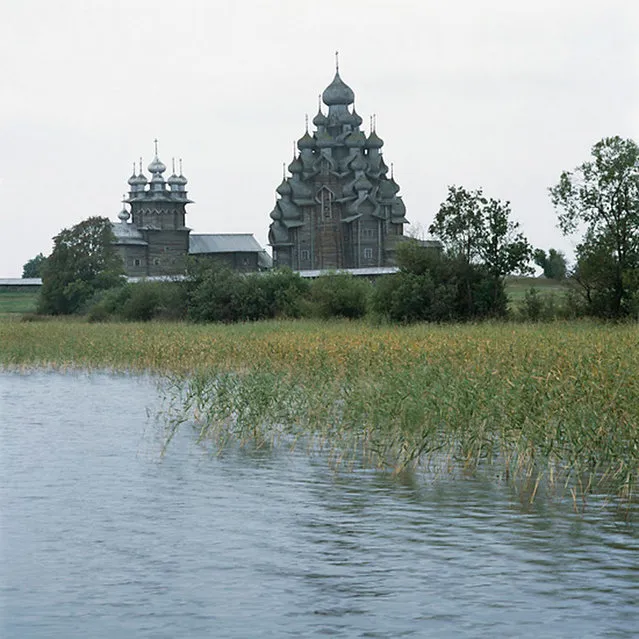
Wooden Churches - Travelling In The Russian North By Richard Davies Part 1

While communism, collectivism, worms, dry rot and casual looting failed to destroy the majestic wooden churches of Russia, it may be ordinary neglect that finally does them in. Dwindled now to several hundred remaining examples, these glories of vernacular architecture lie scattered amid the vastness of the world’s largest country. Just over a decade ago, Richard Davies, a British architectural photographer, struck out on a mission to record the fragile and poetic structures. Austerely beautiful and haunting, “Wooden Churches: Traveling in the Russian North” (White Sea Publishing; $132) is the result. Covering thousands of miles, Mr. Davies described how he and the writer Matilda Moreton tracked down the survivors from among the thousands of onion-domed structures built after Prince Vladimir converted to Christianity in 988.
Details
25 Nov 2013 12:47:00
South Korean environmentalists participates in a rally held to commemorate the Fukushima nuclear disaster on the eve of the one year anniversary of Japan's earthquake and tsunami

South Korean environmentalists participates in a rally held to commemorate the Fukushima nuclear disaster on the eve of the one year anniversary of Japan's earthquake and tsunami on March 10, 2012 in Seoul, South Korea. Currently four nuclear power plants are in operation in South Korea while the government plans to increase the number of reactors to 32 by the year 2021. (Photo by Chung Sung-Jun/Getty Images)
Details
12 Mar 2012 11:44:00


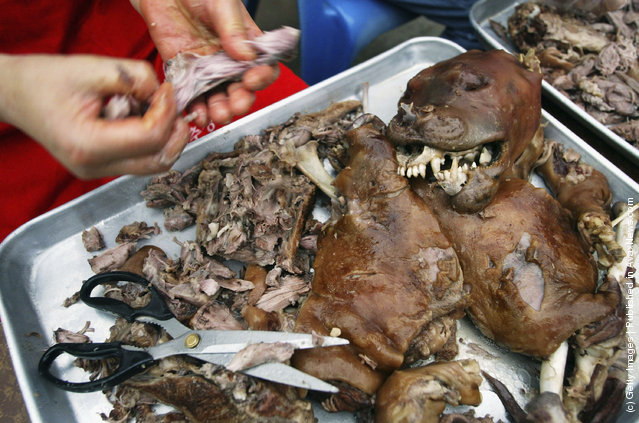
“Dog meat refers to edible parts and the flesh derived from (predominantly domestic) dogs. Human consumption of dog meat has been recorded in many parts of the world, including ancient China, ancient Mexico, and ancient Rome. According to contemporary reports, dog meat is consumed in a variety of countries such as Switzerland, China, Vietnam, the Philippines, and Korea. In addition, dog meat has also been used as survival food in times of war and/or other hardships”. – Wikipedia

Photo: A chef prepares dog meat at a restaurant on July 4, 2005 in Gwacheon, South Korea. Dog meat is a traditional dish in Korea dating back to the Samkuk period (period of the three kingdoms BC 57 – AD 668). Although many recipes existed historically for dog meat, now chefs only make soups, or dishes using boiled or roasted meat. Koreans traditionally eat dog meat on the hottest day of the summer, for it's reputed benefits of virility, invigoration and health. (Photo by Chung Sung-Jun/Getty Images)
Details
24 Jul 2011 13:21:00