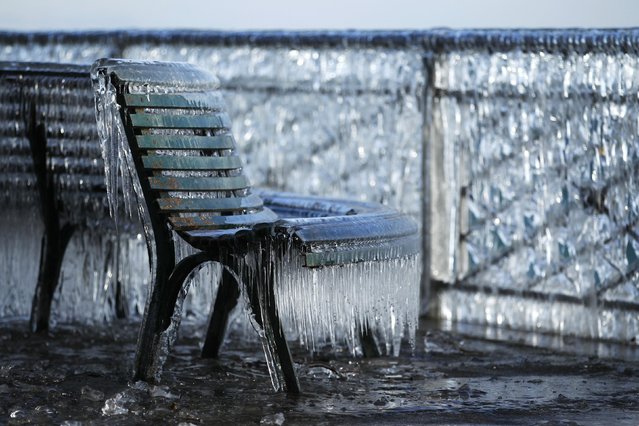
A partially frozen Niagara Falls is seen on the American side lit by lights during sub freezing temperatures in Niagara Falls, Ontario March 3, 2014. (Photo by Mark Blinch/Reuters)
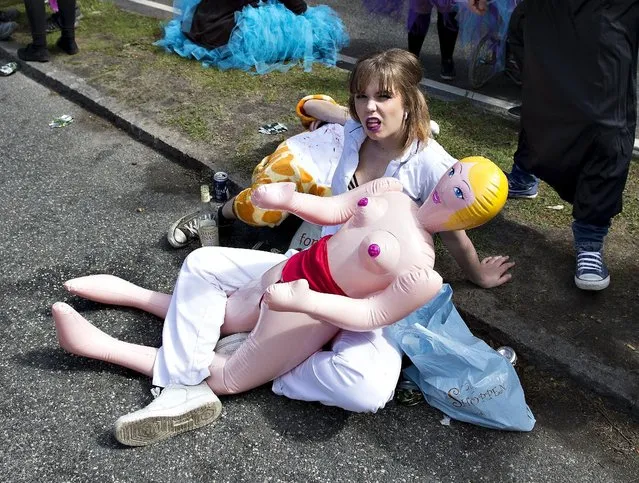
A woman sits on the side of a street during the Grand Parade of Aalborg Carnival in Aalborg, Denmark May 23, 2015. (Photo by Henning Bagger/Reuters/Scanpix Denmark)
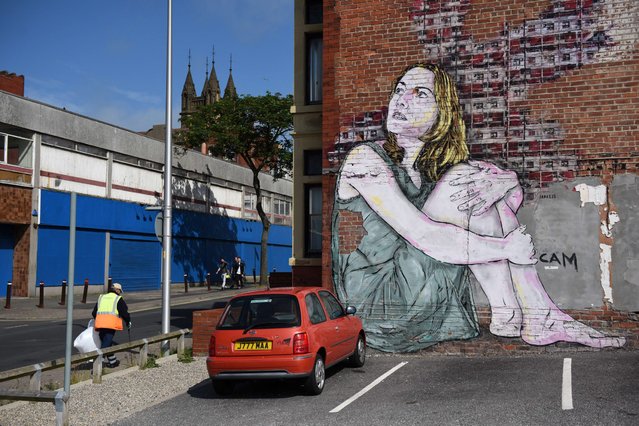
A workman walks past a large mural on the side of a building during the “Sand Sea & Spray” Urban Art Festival in Blackpool, north west England on July 11, 2015. (Photo by Oli Scarff/AFP Photo)
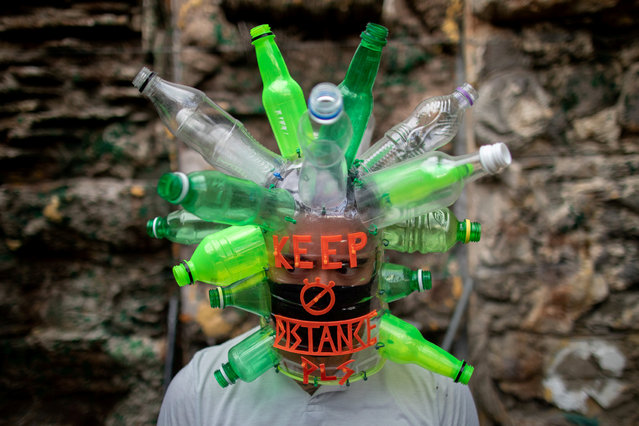
Filipino artist Leeroy New poses with a makeshift mask he designed with recycled materials as he adapts to the effects of the coronavirus disease (COVID-19) pandemic in the art industry, in his studio in Quezon City, Metro Manila, Philippines, May 28, 2020. (Photo by Eloisa Lopez/Reuters)
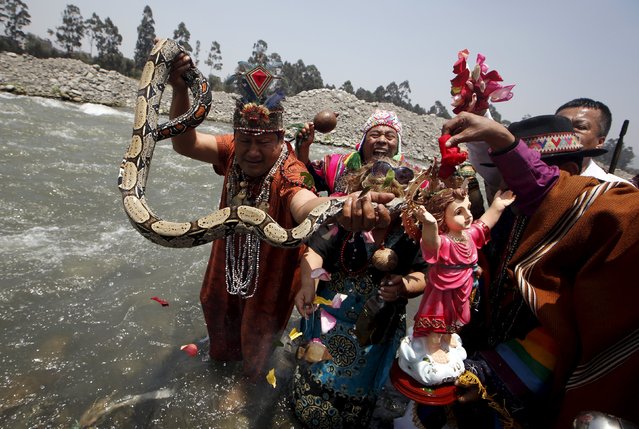
Peruvian shamans holding a figure of a Nino Jesus (Child Jesus) and a snake perform a ritual at the Rimac river to fight the negative effects of the Nino weather phenomena over Nature, in Lima, October 1, 2015. (Photo by Mariana Bazo/Reuters)
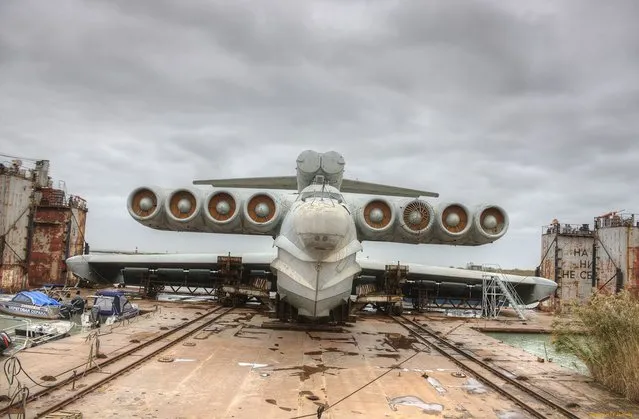
“The Lun-class ekranoplan (NATO reporting name Duck) was a ground effect vehicle (GEV) designed by Rostislav Evgenievich Alexeev and used by the Soviet and Russian navies from 1987 until sometime in the late 1990s. It “flew” using the lift generated by the ground effect of its large wings when close to the surface of the water – about four metres or less. Although they might look similar and/or have related technical characteristics, ekranoplans like the Lun are not aircraft, seaplanes, hovercraft, or hydrofoils – ground effect is a separate technology altogether. The International Maritime Organization classifies these vehicles as maritime ships. The name Lun comes from the Russian for harrier”. – Wikipedia (Photo by Igor113)