Loading...
Done
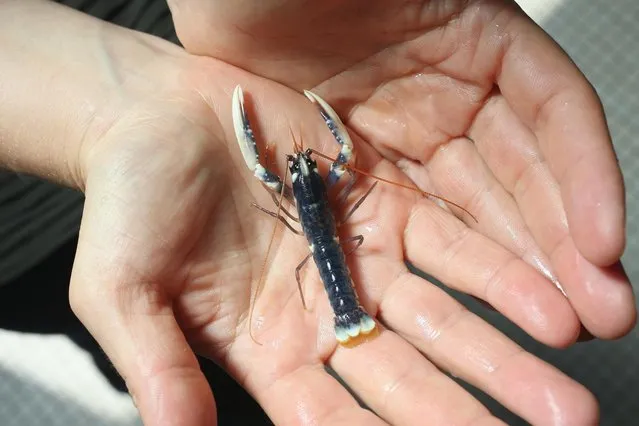
Isabel Schmalenbach, an environmental scientist with the Helgoland Biological Institute (Biologische Anstalt Helgoland), part of the Alfred Wegener Institute for Polar and Marine Research, holds a one-year old baby European lobster (Homarus gammarus) raised at the institute on August 3, 2013 on Helgoland Island, Germany. (Photo by Sean Gallup/Getty Images)

Isabel Schmalenbach, an environmental scientist with the Helgoland Biological Institute (Biologische Anstalt Helgoland), part of the Alfred Wegener Institute for Polar and Marine Research, holds a one-year old baby European lobster (Homarus gammarus) raised at the institute on August 3, 2013 on Helgoland Island, Germany. Later in the day Schmalenbach and her colleagues released a total of 415 one-year old lobsters into the North Sea as part of an effort to repopulate the lobster population around Helgoland (also called Heligoland). In the 19th century local fishermen caught up to 80,000 lobsters a year in the surrounding waters, combined with the heavy allied bombing of the island during and after World War II, as well as other environmental factors, decimated the lobster population. (Photo by Sean Gallup)
Details
05 Aug 2013 08:39:00
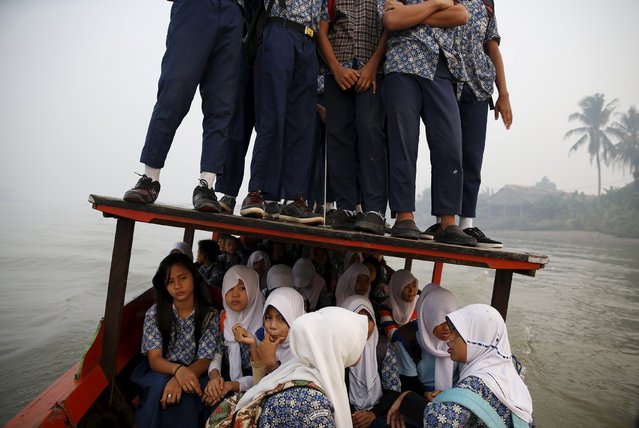
Students stand on the roof of a wooden boat as haze blankets the Musi River while they travel to school in Palembang, on Indonesia's Sumatra island, September 10, 2015. (Photo by Reuters/Beawiharta)

Students stand on the roof of a wooden boat as haze blankets the Musi River while they travel to school in Palembang, on Indonesia's Sumatra island, September 10, 2015. Indonesia is investigating 10 firms over worsening forest fires that have created a blanket of smog over Southeast Asia, threatening them with sanctions if they are found responsible, a government minister said on Tuesday. The thick haze from Indonesia's Sumatra and Kalimantan islands has forced the repeated cancellation of flights in the area and pushed air quality to unhealthy levels in neighbouring Singapore and Malaysia. (Photo by Reuters/Beawiharta)
Details
11 Sep 2015 12:09:00
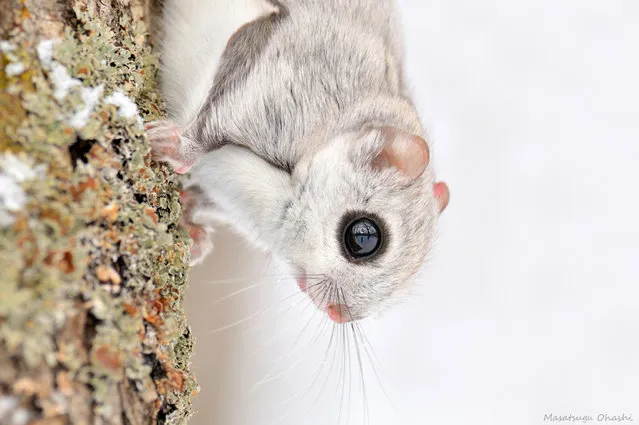
Siberian Flying Squirrels By Masatsugu Ohashi

A photographer has taken pictures of the Siberian flying squirrel. The adorable nocturnal animal was snapped on the Japanese island of Hokkaido by Masatsugu Ohashi.
Details
25 Mar 2013 11:14:00
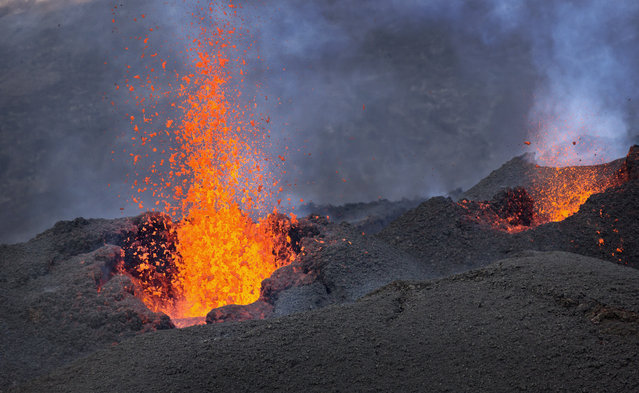
Lava erupts from the Piton de la Fournaise “Peak of the Furnace” volcano, on the southeastern corner of the Indian Ocean island of Reunion Saturday, August 1, 2015. Spewing red-hot lava, one of the most active volcanoes in the world is currently erupting on this Indian Ocean island, where the world's attention has been focused since a wing fragment believed to be from the missing Malaysian jet was discovered washed up on a beach. (Photo by Ben Curtis/AP Photo)

Lava erupts from the Piton de la Fournaise “Peak of the Furnace” volcano, on the southeastern corner of the Indian Ocean island of Reunion Saturday, August 1, 2015. Spewing red-hot lava, one of the most active volcanoes in the world is currently erupting on this Indian Ocean island, where the world's attention has been focused since a wing fragment believed to be from the missing Malaysian jet was discovered washed up on a beach. The lava fountains are shooting as high as 40 meters (44 yards) and are creating cones that are about 20 meters high after only one day of eruption, said Peltier. The volcano is in the Reunion National Park – a world heritage site. The volcano is not seen as dangerous because the lava flows down the east side of the mountain through an uninhabited area called the Grand Brule, or the Big Burned, toward the sea. The last times the volcano threatened the population was in 1977 and 1986. (Photo by Ben Curtis/AP Photo)
Details
03 Aug 2015 12:23:00
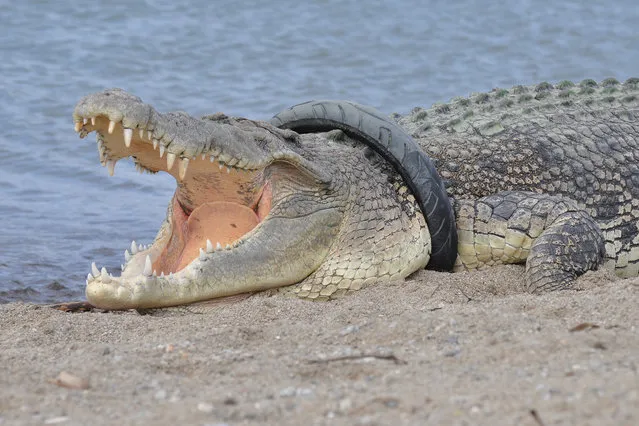
A saltwater crocodile with a tyre around its neck is seen in Palu river in Palu on January 16, 2018. Indonesian conservation officials are racing against time to locate and rescue a saltwater crocodile that has had a tire wrapped around its for more than a year on the island of Sulawesi. (Photo by AFP Photo/ARFA)

A saltwater crocodile with a tyre around its neck is seen in Palu river in Palu on January 16, 2018. Indonesian conservation officials are racing against time to locate and rescue a saltwater crocodile that has had a tire wrapped around its for more than a year on the island of Sulawesi. (Photo by AFP Photo/ARFA)
Details
21 Jan 2018 07:25:00
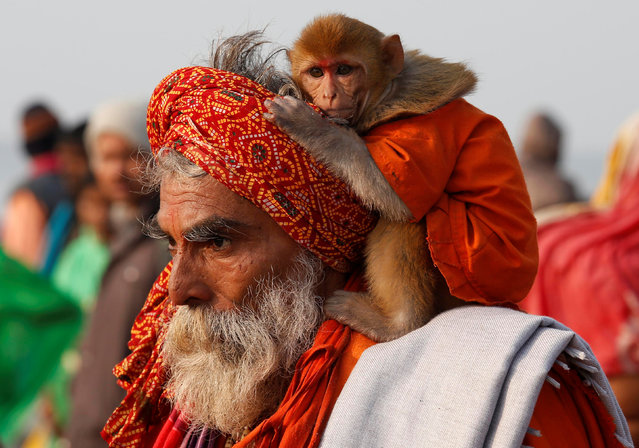
A Sadhu or a Hindu holy man carrying his pet monkey walks after taking a dip at the confluence of the river Ganges and the Bay of Bengal on the occasion of “Makar Sankranti” festival at Sagar Island, south of Kolkata, India, January 14, 2017. (Photo by Rupak De Chowdhuri/Reuters)

A Sadhu or a Hindu holy man carrying his pet monkey walks after taking a dip at the confluence of the river Ganges and the Bay of Bengal on the occasion of “Makar Sankranti” festival at Sagar Island, south of Kolkata, India, January 14, 2017. (Photo by Rupak De Chowdhuri/Reuters)
Details
16 Jan 2017 10:30:00
Underwater photographer of the year – winner. Dancing Octopus by Gabriel Barathieu (France). Location: Island of Mayotte, off the coast of south-east Africa. “Balletic and malevolent”, one judge said of this octopus, hunting in a lagoon. Barathieu waited until spring tides when there was just 30cm of water on the flats and plenty of light in the shallows. (Photo by Gabriel Barathieu/UPY2017)

Underwater photographer of the year – winner. Dancing Octopus by Gabriel Barathieu (France). Location: Island of Mayotte, off the coast of south-east Africa. “Balletic and malevolent”, one judge said of this octopus, hunting in a lagoon. Barathieu waited until spring tides when there was just 30cm of water on the flats and plenty of light in the shallows. (Photo by Gabriel Barathieu/UPY2017)
Details
16 Feb 2017 00:06:00
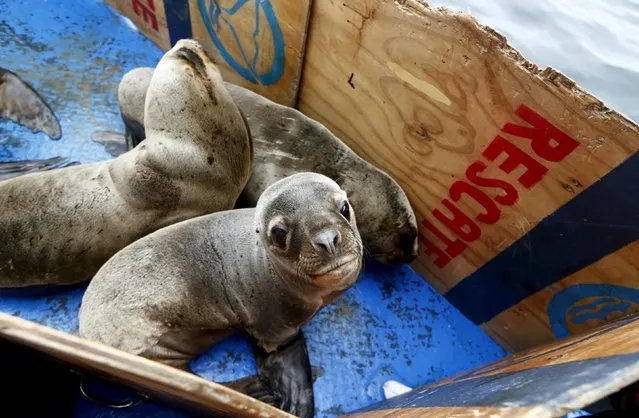
Sea lions wait on the deck of the boat before being released in front of Palomino island, in Callao, Peru September 12, 2015. (Photo by Mariana Bazo/Reuters)

Sea lions wait on the deck of the boat before being released in front of Palomino island, in Callao, Peru September 12, 2015. Four young sea lions returned to the wild after being rescued by marine biologists and treated for various illnesses. The sea lions are survivors of various illnesses which they contracted off the coast of Peru caused by the elevated temperatures in the water because of the El Nino phenomenon, according to Carlos Yaipen, Director of Animal Science and Well-being Organization (ORCA). (Photo by Mariana Bazo/Reuters)
Details
14 Sep 2015 13:37:00