Loading...
Done
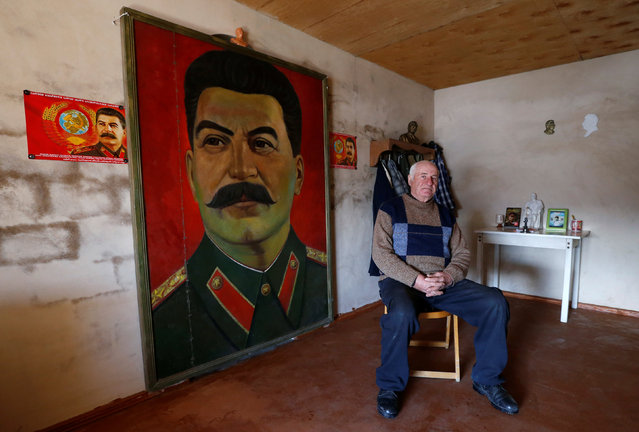
Retired builder Vasili Sidamonidze, 70, poses for a portrait at his home in Gori, Georgia, December 6, 2016. “Unfortunately, Stalin is not popular nowadays. Our people don't respect him. Only we, members of the (Communist) Party, respect him”, Sidamonidze said. “I always try to attend Stalin's birthday anniversaries in Gori. Unfortunately many people don't want to join us even if they live nearby. They look at us from their windows”. Stalin, who was born in Gori in 1878 and died in 1953, is largely reviled today in Georgia, which regained its independence during the 1991 collapse of the Soviet Union. Over the years, his memorials have been dismantled, most recently in 2010 when authorities removed a statue of the dictator from Gori's central square. But Stalin is still revered by a small group of mainly elderly supporters who stress his role in the industrialisation of the Soviet Union and in defeating Nazi Germany in World War Two. Each Dec. 21, a few dozen people mark his birthday by gathering outside a Gori museum dedicated to Stalin, where they make speeches and walk to the square where a 6-meter-high bronze statue of him once stood, calling for it to be reinstated. Opponents say it was a symbol of Moscow's still lingering shadow. In 2008, Russia fought a brief war with Georgia and recognised its breakaway regions of Abkhazia and South Ossetia as independent states. (Photo by David Mdzinarishvili/Reuters)

Retired builder Vasili Sidamonidze, 70, poses for a portrait at his home in Gori, Georgia, December 6, 2016. “Unfortunately, Stalin is not popular nowadays. Our people don't respect him. Only we, members of the (Communist) Party, respect him”, Sidamonidze said. “I always try to attend Stalin's birthday anniversaries in Gori. Unfortunately many people don't want to join us even if they live nearby. They look at us from their windows”. (Photo by David Mdzinarishvili/Reuters)
Details
17 Dec 2016 07:59:00
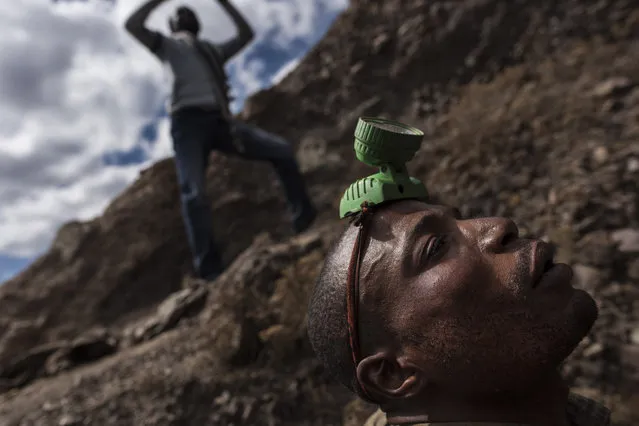
A “creuseur”, or digger, a plastic lantern on his head, readies to enter a copper and cobalt mine in Kawama, Democratic Republic of Congo on June 8, 2016. Cobalt is used in the batteries for electric cars and mobile phones. Working conditions are dangerous, often with no safety equipment or structural support for the tunnels. The diggers say they are paid on average US$2-3/day. (Photo by Michael Robinson Chavez/The Washington Post)

A “creuseur”, or digger, a plastic lantern on his head, readies to enter a copper and cobalt mine in Kawama, Democratic Republic of Congo on June 8, 2016. Cobalt is used in the batteries for electric cars and mobile phones. Working conditions are dangerous, often with no safety equipment or structural support for the tunnels. The diggers say they are paid on average US$2-3/day. (Photo by Michael Robinson Chavez/The Washington Post)
Details
30 Dec 2016 10:29:00
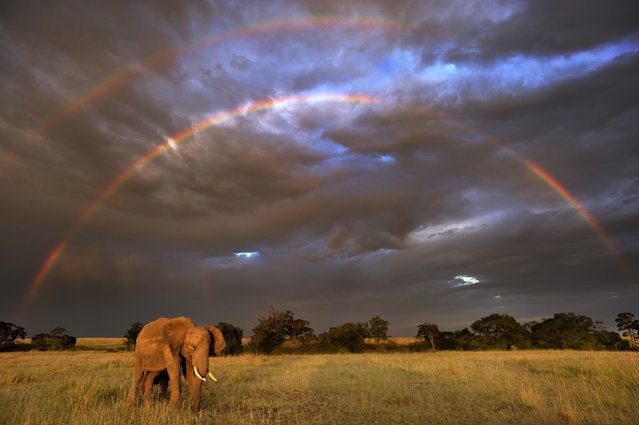
This photo provided by Netflix/naturepl.com and WWF-International shows an African Elephant (Loxodonta africana) in front of double rainbow, in Masai Mara, Kenya, included in the Netflix natural history series, “Our Planet”, in collaboration with Silverback Films and WWF. The eight-part series debuts in 2019. (Photo by Andy Rouse/Naturepl.com/WWF-International/Netflix via AP Photo)

This photo provided by Netflix/naturepl.com and WWF-International shows an African Elephant (Loxodonta africana) in front of double rainbow, in Masai Mara, Kenya, included in the Netflix natural history series, “Our Planet”, in collaboration with Silverback Films and WWF. The eight-part series debuts in 2019. (Photo by Andy Rouse/Naturepl/WWF-International/Netflix via AP Photo)
Details
09 Oct 2015 08:05:00
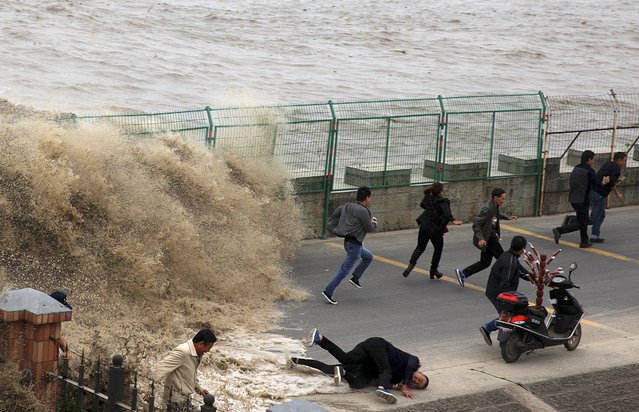
A visitor falls down as they run away from a wave caused by a tidal bore which surged past a barrier on the banks of Qiantang River, in Hangzhou, Zhejiang province, China, October 28, 2015. (Photo by Reuters/China Daily)

A visitor falls down as they run away from a wave caused by a tidal bore which surged past a barrier on the banks of Qiantang River, in Hangzhou, Zhejiang province, China, October 28, 2015. (Photo by Reuters/China Daily)
Details
31 Oct 2015 08:06:00
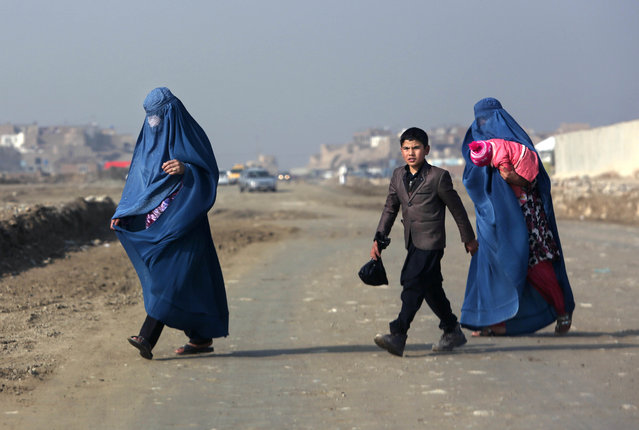
Afghan women and a boy make their way in Kabul, Afghanistan, Sunday, November 15, 2015. (Photo by Rahmat Gul/AP Photo)

Afghan women and a boy make their way in Kabul, Afghanistan, Sunday, November 15, 2015. (Photo by Rahmat Gul/AP Photo)
Details
25 Nov 2015 08:06:00
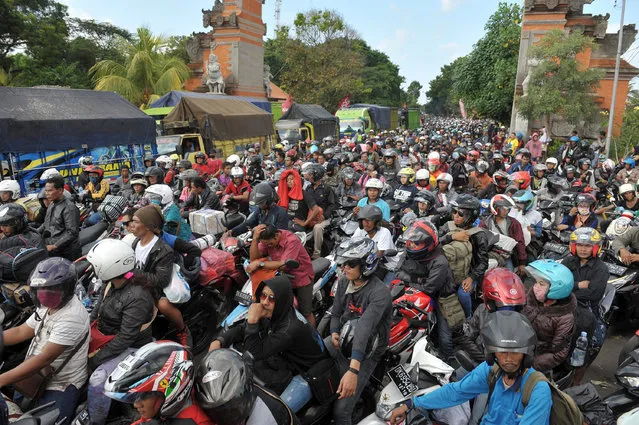
Thousands of travellers heading to their hometowns to celebrate Eid al-Fitr, the Muslim holiday to mark the end of Ramadan, wait in a traffic jam to board a ferry at the entrance to Gilimanuk port on Bali, Indonesia July 3, 2016 in this photo taken by Antara Foto. (Photo by Nyoman Budhiana/Reuters/Antara Foto)

Thousands of travellers heading to their hometowns to celebrate Eid al-Fitr, the Muslim holiday to mark the end of Ramadan, wait in a traffic jam to board a ferry at the entrance to Gilimanuk port on Bali, Indonesia July 3, 2016 in this photo taken by Antara Foto. (Photo by Nyoman Budhiana/Reuters/Antara Foto)
Details
12 Jul 2016 12:18:00
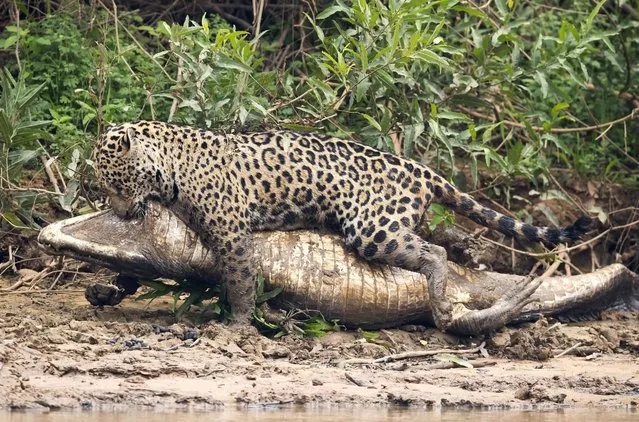
A jaguar ambushes a giant jacare caiman high up on the Three Brothers River in the Pantanal in Mato Grosso, Brazil. (Photo by Chris Brunskill Ltd/Getty Images)

A jaguar ambushes a giant jacare caiman high up on the Three Brothers River in the Pantanal in Mato Grosso, Brazil. The cat wrestled with the reptile for over twenty minutes in a death struggle witnessed by photographer Chris Brunskill just after ten o'clock in the morning on the 26th of September, 2017. Caimans form a large part of the jaguar's diet in the Pantanal but battles such as this are very rarely observed and seldom photographed. (Photo by Chris Brunskill Ltd/Getty Images)
Details
01 Oct 2017 06:37:00
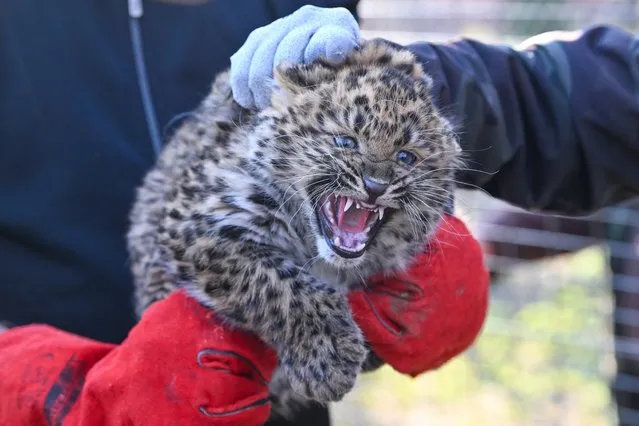
A ten-week-old North China leopard (Panthera pardus japonensis) is handled during a routine health check in the Zoo of Debrecen, northeastern Hungary, 30 January 2024. The female cub, which was born on 21 November 2023, belongs to a leopard subspecies that is endemic to the forest habitats of Northern China. (Photo by Zsolt Czegledi/EPA/EFE)

A ten-week-old North China leopard (Panthera pardus japonensis) is handled during a routine health check in the Zoo of Debrecen, northeastern Hungary, 30 January 2024. The female cub, which was born on 21 November 2023, belongs to a leopard subspecies that is endemic to the forest habitats of Northern China. (Photo by Zsolt Czegledi/EPA/EFE)
Details
11 Feb 2024 07:48:00