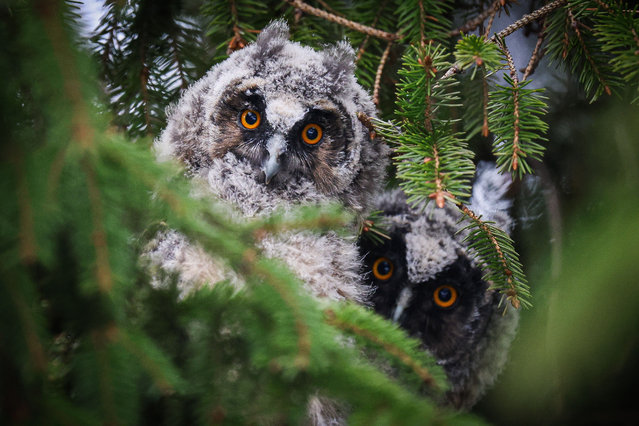
Long-eared owl chicks sit on a spruce branch in a park near St Petersburg, Russia on March 3, 2025. (Photo by Artem Priakhin/SOPA Images/Rex Features/Shutterstock)
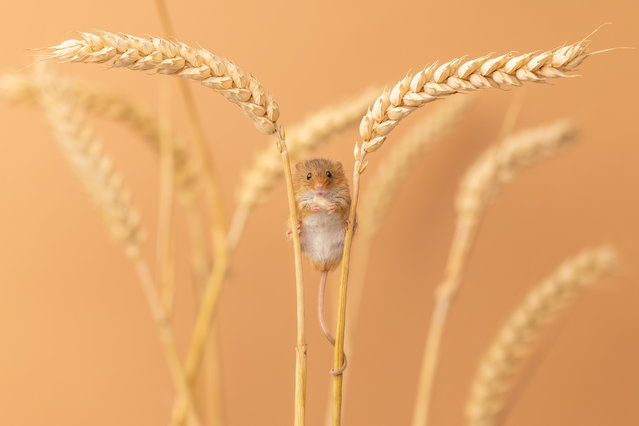
Stunning image capture the moment a tiny harvest mouse uses wheat stems as stilts as he munches on a kernel in UK in August 2025. The minute-mouse, who weighs as much as a 2p coin and is only two-inches-long, uses his prehensile tail to keep himself perfectly level. (Photo by Tony Nellis/South West News Service)
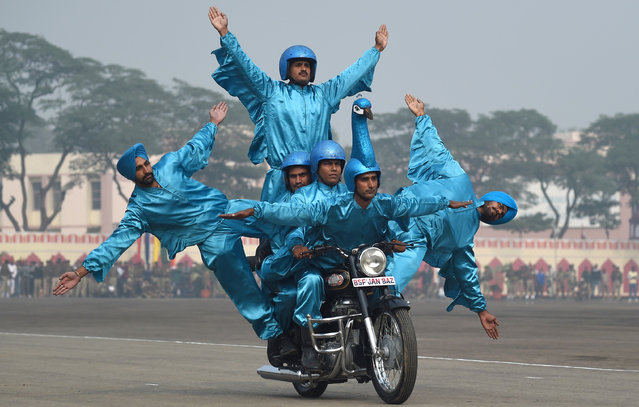
Members of the Indian Border Security Force (BSF) demonstrate their skills on motor-bikes during the BSF Golden Jubilee Day celebration in New Delhi on December 1, 2015. (Photo by Money Sharma/AFP Photo)
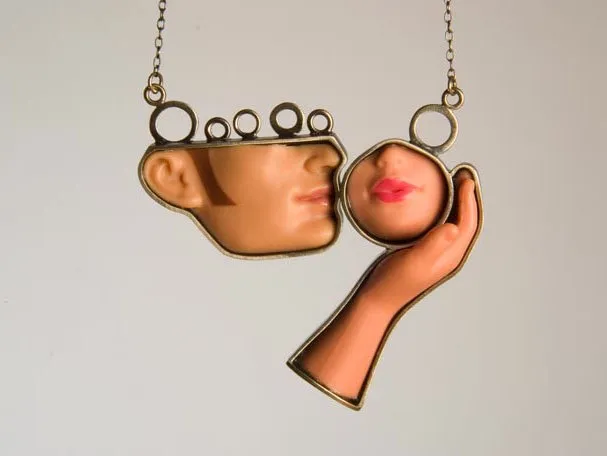
Margaux Lange’s Plastic Body Series art jewelry collection utilizes salvaged Barbie doll parts in combination with sterling silver and pigmented resins. The series is a result of Lange’s desire to re-purpose mass produced materials into handmade, wearable art. It is meant to examine and celebrate her own as well as pop culture’s relationship with the icon known simply as: Barbie
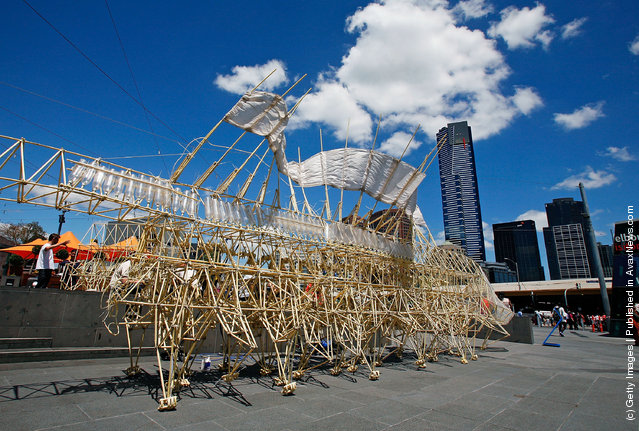
The “Strandbeest” sculpture created by Dutch artist Theo Jansen walks at Federation Square on February 1, 2012 in Melbourne, Australia. The 12 metre long, 4 metre high and 2 metre wide structure built of plastic tubes and bottles designed to walk using wind energy will be on display at Federation Square until February 26. (Photo by Scott Barbour/Getty Images)
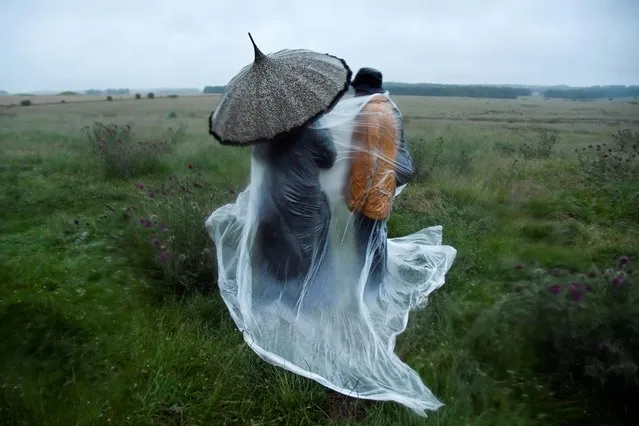
Revellers shield themselves as they celebrate in the rain near Stonehenge stone circle, despite official Summer Solstice celebrations being cancelled due to the spread of the coronavirus disease (COVID-19), near Amesbury, Britain, June 21, 2020. (Photo by Toby Melville/Reuters)
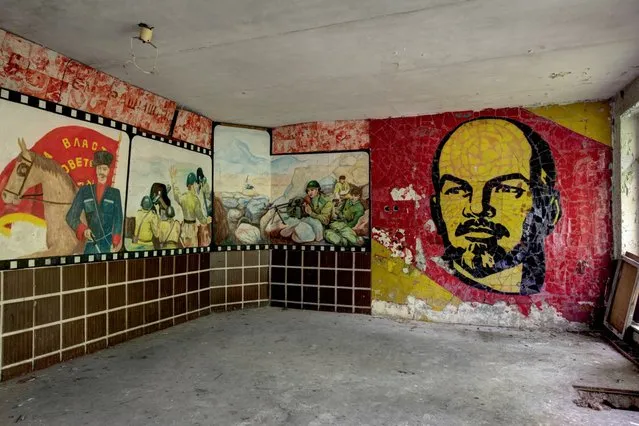
Only the most intrepid urban explorers cross the tattered ruins of the old Iron Curtain to endure the excessive bureaucracy, military paranoia and freezing winds of the East to hunt for the ghosts of an empire. Rebecca Litchfield is one who couldn’t resist the haunting allure of the ruins of the Soviet Union.
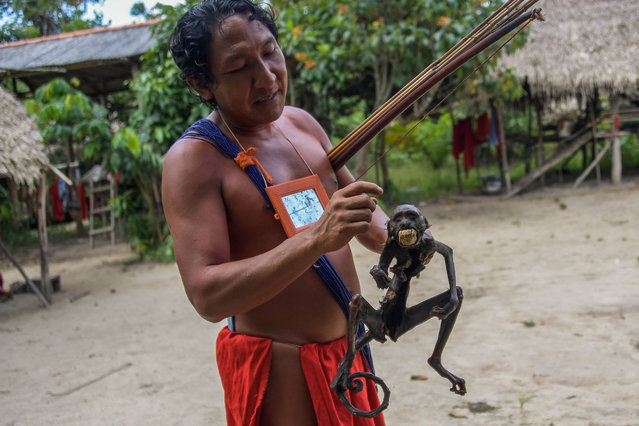
Chieftain Japarupi Waiapi shows a roasted monkey -part of Waiapi's diet, also based in Manioc and fruits- at the reserve in Amapa state in Brazil on October 13, 2017. When Waiapis walks into the Amazon forest surrounding their village, they do not see trees, but a kind of shopping mall providing medicine, food, shelter, tools and weapons all under the eye of multiple spirits. (Photo by Apu Gomes/AFP Photo)