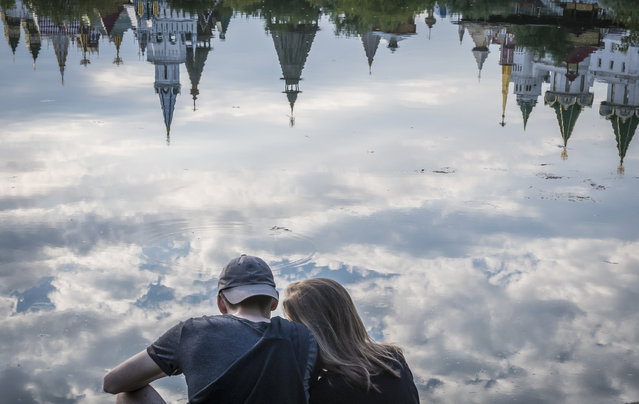
A couple enjoys the view of the ethnographic and amusement center Kremlin in Izmailovo reflected in the Serebryano-Vinogradnii lake in Moscow, Russia on July 30, 2017. (Photo by Mladen Antonov/AFP Photo)
New Zealand Defence Force personal perform a haka during Te Rau Aroha, an evening to commemorate Maori service in the New Zealand Armed Forces on February 05, 2020 in Waitangi, New Zealand. The Waitangi Day national holiday celebrates the signing of the treaty of Waitangi on February 6, 1840 by Maori chiefs and the British Crown, that granted the Maori people the rights of British Citizens and ownership of their lands and other properties. (Photo by Fiona Goodall/Getty Images)
British actress Laila Rouass poses during a studio shoot ahead of the new series of “Footballers Wives” at a London studio on January 28, 2004 in London. Rouass plays Conrad's bisexual wife Amber, and the nine-part series begins on ITV1 on February 11, 2004. (Photo by Stephen Perry/Getty Images)
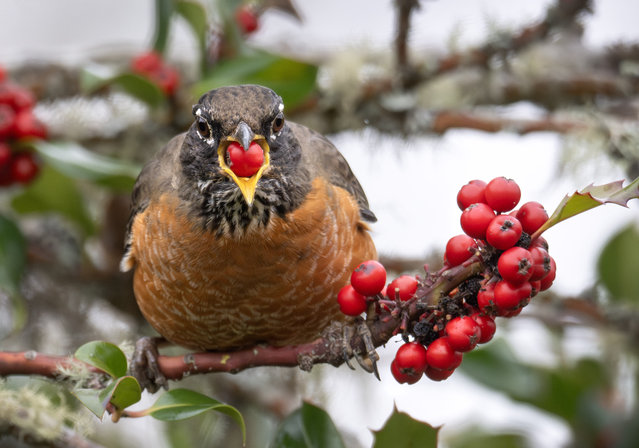
An American robin feeds on holly berries in a thicket near Elkton in southwestern Oregon on November 16, 2024. Many birds can safely consume holly berries, including blackbirds, redwings, and thrushes. There is an old wives tale that if you see a bird eating a berry, it is safe for humans to eat, but this is not true. Birds consume many plants that are poisonous to humans, holly berries included. (Photo by Robin Loznak/ZUMA Press Wire/Rex Features/Shutterstock)
British “Love Island” host Maya Jama in the last decade of December 2024 starts the party with a tray of drinks during a surprise DJ set at Soho’s The Box. (Photo by Maya Jama/Instagram)
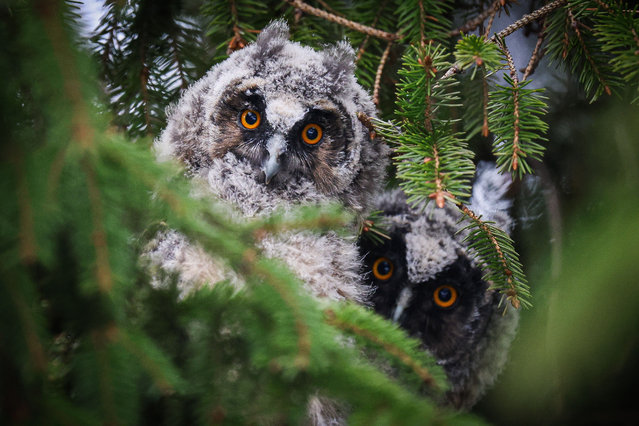
Long-eared owl chicks sit on a spruce branch in a park near St Petersburg, Russia on March 3, 2025. (Photo by Artem Priakhin/SOPA Images/Rex Features/Shutterstock)
American singer-songwriter Olivia Rodrigo is red hot backstage at her show in Argentina in the last decade of March 2025. (Photo by oliviarodrigo/Instagram)
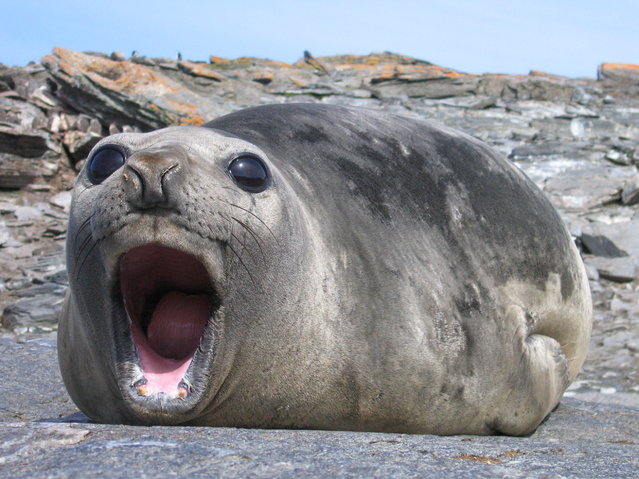
Weddell seal numbers in 2025 have declined sharply on Signy Island, part of the South Orkney Islands in the Southern Ocean, where British Antarctic Survey researchers have tracked seal populations for nearly 50 years to understand the impact of melting sea ice. (Photo by Michael Dunn/The Times)