Loading...
Done
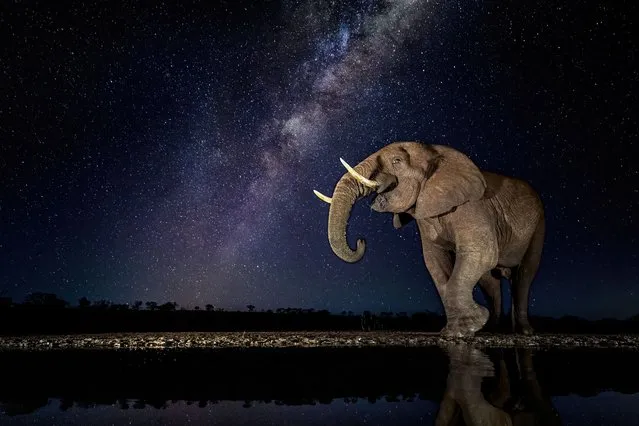
A majestic elephant visits the watering hole at the Zimanga Private Game Reserve in South Africa under the Milky Way in August 2022. (Photo by Sean Weekly/Animal News Agency)

A majestic elephant visits the watering hole at the Zimanga Private Game Reserve in South Africa under the Milky Way in August 2022. (Photo by Sean Weekly/Animal News Agency)
Details
16 Feb 2023 04:26:00
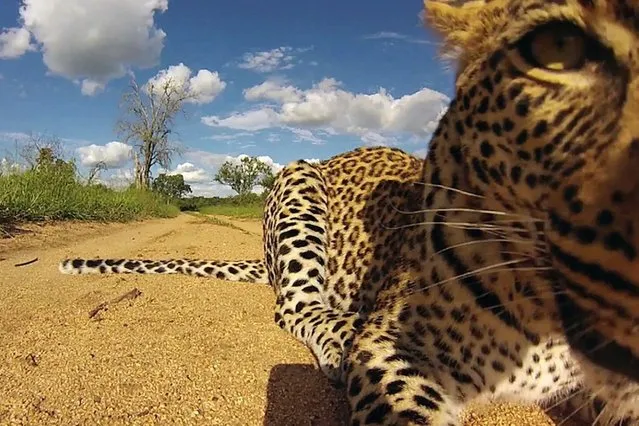
A curious leopard cub toys with a camera at MalaMala Game Reserve in Mpumalanga Province, South Africa. (Photo by Barcroft Media)

A curious leopard cub toys with a camera at MalaMala Game Reserve in Mpumalanga Province, South Africa. (Photo by Barcroft Media)
Details
23 May 2014 09:54:00
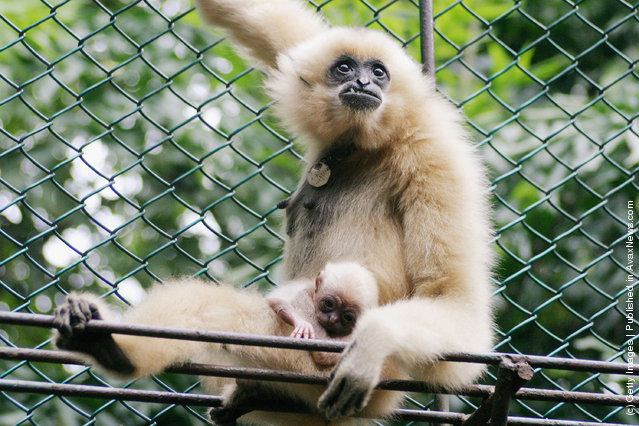
Newborn White-Cheeked Gibbon Nomascus

“Nomascus is the second most speciose genus of gibbons (family Hylobatidae). Originally this genus was a subgenus of Hylobates, and all individuals were considered one species, Hylobates concolor. Species within Nomascus are characterized by 52 chromosomes. Some species are all black, some light with a distinct black tuft of crown fur, and some by distinct, light-colored cheek patches. Nomascus is found from southern China (Yunnan) to southern Vietnam, and also on Hainan Island. One of the genus' species, Nomascus nasutus, has been deemed “the most critically endangered ape species in the world”. All of the species in this genus are endangered or critically endangered”. – Wikipedia

Photo: A newborn White-Cheeked Gibbon clings to its mother in the Nanning Zoo on April 12, 2004 in Nanning, Guangxi province, China. The White-Cheeked Gibbon's natural habitat is Southern China as well as Vietnam and Laos. They are classified as highly endangered and are on the brink of extinction due to poaching and reduction of natural rainforests. (Photo by Getty Images)
Details
12 Aug 2011 11:51:00
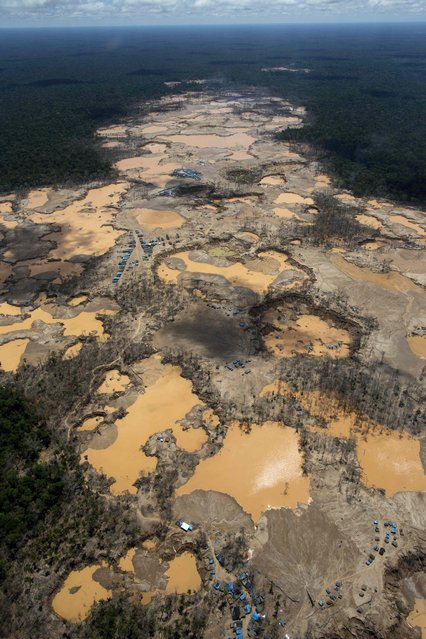
This November 11, 2014 aerial photo, shows a deforested area dotted with blue tarps, marking the area where miners reside, and craters filled with water, caused by illegal gold mining activities, in La Pampa, in Peru's Madre de Dios region. (Photo by Rodrigo Abd/AP Photo)

This November 11, 2014 aerial photo, shows a deforested area dotted with blue tarps, marking the area where miners reside, and craters filled with water, caused by illegal gold mining activities, in La Pampa, in Peru's Madre de Dios region. Less than a month before Peru plays host to global climate talks, the government sent a battalion of police into southeastern jungles to dismantle illegal gold-mining mining camps. Peru's anti-illegal mining czar, retired army Gen. Augusto Soto, marched the men to the wasteland known as La Pampa, where 50,000 hectares of rainforest have been obliterated in the past six years. (Photo by Rodrigo Abd/AP Photo)
Details
21 Nov 2014 12:35:00
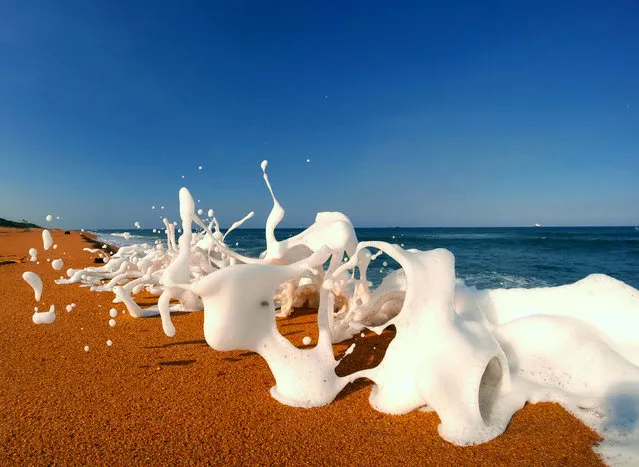
Foam party: Marck captured this moment in time from the shore on July, 30, 2015, in Durban, South Africa. (Photo by Marck Botha/Barcroft Media)

Beautiful seascapes capture the “raw power” of waves rising and crashing in the Indian Ocean. The stunning photos were taken off the coast of Durban in South Africa, and show formations from above and below the surface. Surfer and photographer Marck Botha took the images between April and July, and has always had a passion for the ocean. Here: Marck captured this moment in time from the shore on July, 30, 2015, in Durban, South Africa. (Photo by Marck Botha/Barcroft Media)
Details
30 Jan 2016 13:46:00
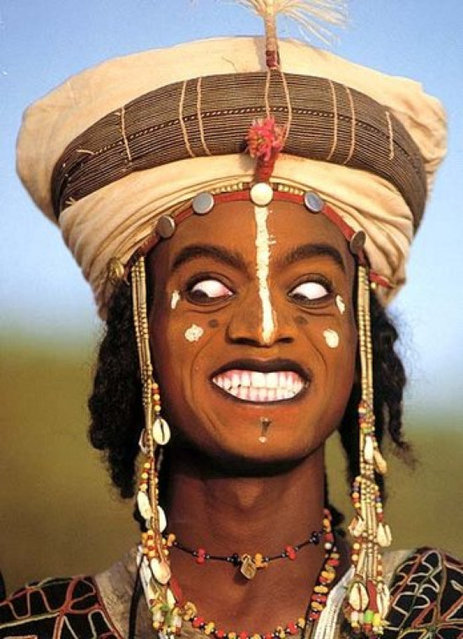
Beauty_By_Fulani

Fula people or Fulani or Fulbe are an ethnic group spread over many countries, predominantly in West Africa, but found also in Central Africa and Sudanese North Africa. African countries where they are present include Mauritania, Ghana, Senegal, Guinea, The Gambia, Mali, Nigeria, Sierra Leone, Benin, Burkina Faso, Guinea Bissau, Cameroon, Côte d'Ivoire, Niger, Chad, Togo, the Central African Republic, Liberia, and as far as Sudan and Egypt in the East. Fula people form a minority in every country they inhabit, but in Guinea they represent a plurality of the population (40%).
Details
25 Sep 2012 10:17:00
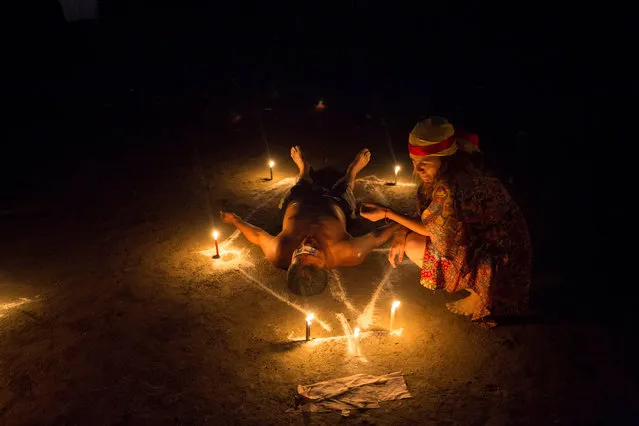
A man lies on the floor during a ritual at the Sorte Mountain on the outskirts of Chivacoa, in the state of Yaracuy, Venezuela October 10, 2015. (Photo by Marco Bello/Reuters)

A man lies on the floor during a ritual at the Sorte Mountain on the outskirts of Chivacoa, in the state of Yaracuy, Venezuela October 10, 2015. One long night every year in a mountainous rainforest in Venezuela, hundreds gather to dance on red-hot embers, enter trance-like states, and worship an ancient goddess known as Maria Lionza. Those who travel to the mountain known as Sorte in central Venezuela are practitioners of a cult that is built on local indigenous traditions. (Photo by Marco Bello/Reuters)
Details
08 Jul 2016 12:19:00
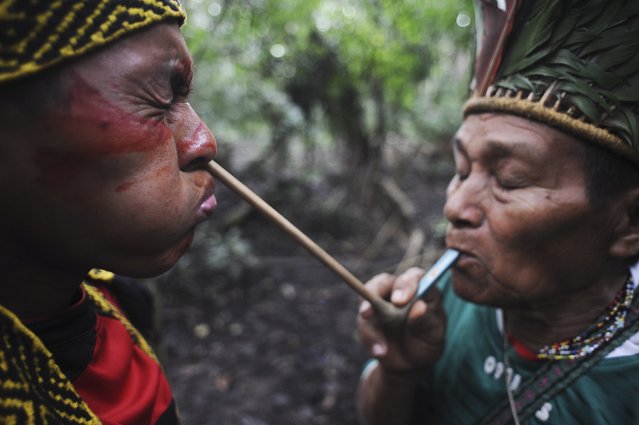
A spiritual leader (R) of the Huni Kui Indian tribe blows an herbal powder into the nose of a tribal member during a ceremony outside the village of Novo Segredo along the Envira river of Brazil's northwestern Acre state, March 9, 2014. (Photo by Lunae Parracho/Reuters)

A spiritual leader (R) of the Huni Kui Indian tribe blows an herbal powder into the nose of a tribal member during a ceremony outside the village of Novo Segredo along the Envira river of Brazil's northwestern Acre state, March 9, 2014. Many indigenous groups, including the Huni Kui, Ashaninka, and Madija, live in villages in the Brazilian rainforest near the border with Peru. (Photo by Lunae Parracho/Reuters)
Details
04 Apr 2014 08:18:00