Loading...
Done
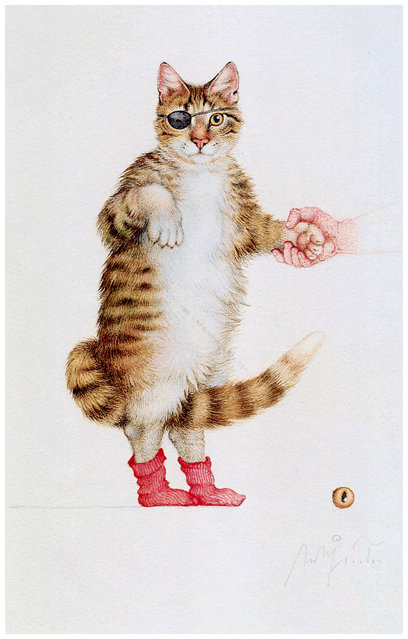
Katerfruehstueck. Artwork by Michael Mathias Prechtl

“Michael Mathias Prechtl (April 26, 1926, Amberg – March 19, 2003, Nuremberg) was a German artist, illustrator and cartoonist. He served as a soldier on the Eastern Front during World War II and spent 1945-49 as a prisoner of war in the Soviet Union”. – Wikipedia

Photo: “Der Gestiefelte Kater (Puss in Boots)”, 1997. Artwork by Michael Mathias Prechtl
Details
09 Sep 2012 10:45:00
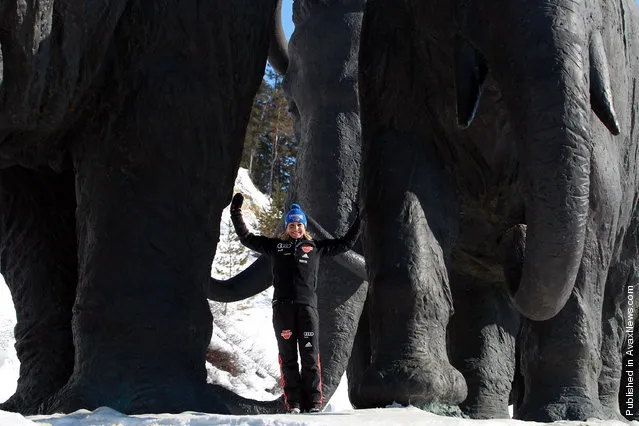
Magdalena Neune

Magdalena Neuner poses in front of mammoth figures during a photocall of the German Biathlon Woman Team at the Archeopark on March 10, 2011 in Khanty-Mansiysk, Russia. On the territory of Archeopark are mammoth sculptural compositions, made of bronze. Mammoths lived in Ugra 70-10 thousand years ago and were members of the Pleistocene, or also called 'the mammoth fauna’. The growth figures exceed the natural factor 2-3 times.
Details
10 Mar 2011 14:09:00


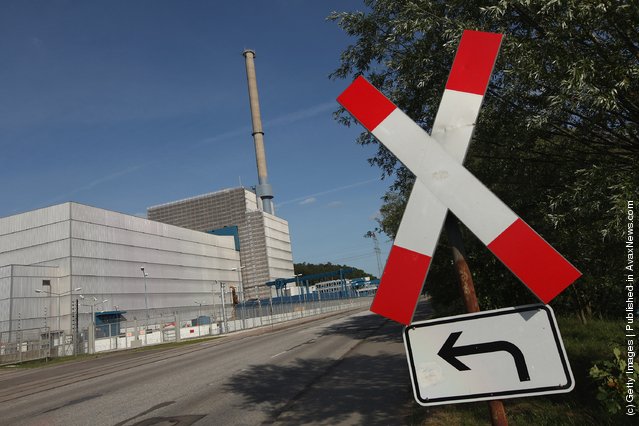
A sign marks a railway crossing next to the troubled Kruemmel nuclear power plant on June 2, 2011 in Geesthacht, Germany. The German government recently announced it will phase out the country's 17 remaining nuclear reactors by 2022 in a policy initiative that represents a radical reversal from its previous policy and was sparked by the disaster at Fukushima. Kruemmel went into operation in 1983 but was taken offline following a fire in 2007. (Photo by Sean Gallup/Getty Images)
Details
03 Jun 2011 09:12:00
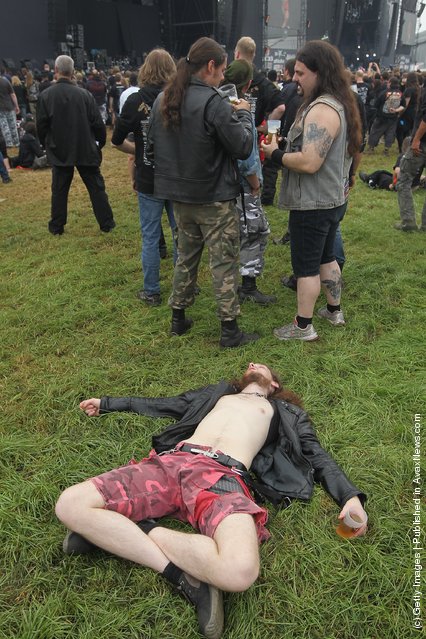
Wacken heavy metal Festival 2011

A fan lies passed out on the first day of the Wacken Open Air heavy metal music fest on August 4, 2011 in Wacken, Germany. Approximately 75,000 heavy metal fans from all over the world have descended on the north German village of 1,800 residents for the annual three-day fest. (Photo by Sean Gallup/Getty Images)
Details
05 Aug 2011 09:47:00
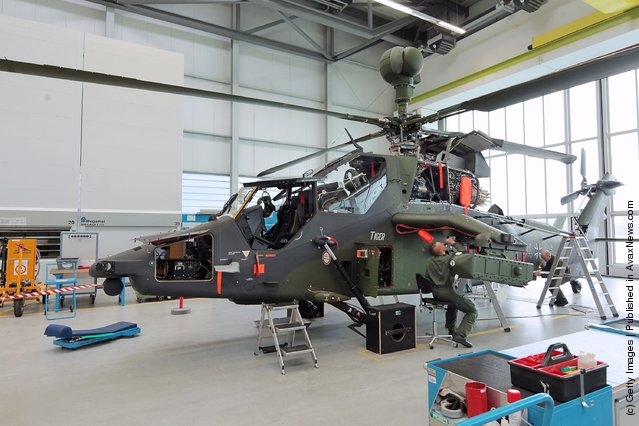
Workers assemble a Eurocopter Tiger military attack helicopter at the Eurocopter plant

Military staff members of the German Bundeswehr check an Eurocopter Tiger military attack helicopter at the Eurocopter plant on March 8, 2012 in Donauworth, Germany. EADS, the parent company of Eurocopter as well as airplane manufacturer Airbus, is scheduled to announce financial results for 2011 today. (Photo by Johannes Simon/Getty Images)
Details
09 Mar 2012 12:34:00


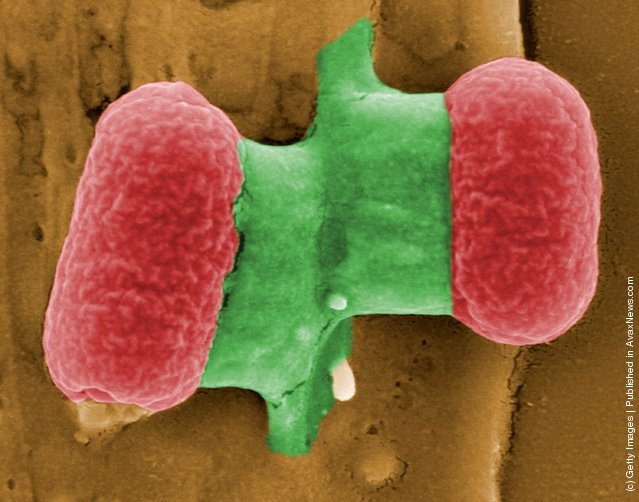
In this handout photo provided by the Helmholtz Center for Research on Infectious Diseases an EHEC bacteria is visible on May 30, 2011 in Berlin, Germany. German health authorities have attributed at least 14 deaths within the last two weeks to an outbreak of enterohemorrhagic E. coli, also known as the EHEC bacteria. (Photo Courtesay Manfred Rohde, Helmholtz-Zentrum fuer Infektionsforschung (HZI)/Getty Images)
Details
31 May 2011 06:43:00
Fantastic Illustration by Frank Melech

Frank Melech is a german artist that works with illustration and digital compositing. What we’re bringing you here today is a slice of such work that we thought, besides remarkably talended, highly creative, because Frank Melech starts with a light bulb, a universal symbol of Idea but also a metaphor for an enclosed but transparent world, and inserts in them precisely other worlds and ideas.
Details
23 Jul 2013 16:26:00
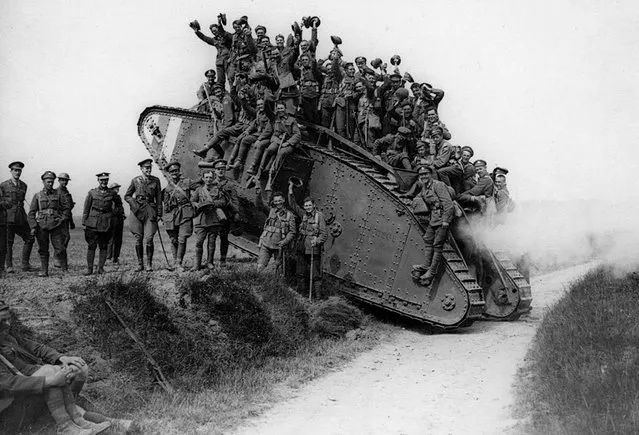
These black-and-white photos are taken from the new book “Armoured Warfare in the First World War 1916 – 1918” by Anthony Tucker-Jones and published by Pen & Sword Military. “Interestingly the British, French and Germans took completely different approaches with varying results”. The British military produced “Little Willie” in Autumn 1915 weighing 18 tonnes, which had a crew of two plus four gunners. “Inspired by a tracked artillery tractor “Little Willie” was referred to as a water tank – hence the name tank – to ensure secrecy”, said Anthony. “This led to the strange looking Mark I with its peculiar rhomboid shape, designed to cross trenches with guns in sponsons on either side. The Germans saw the tank as unchivalrous and were slow to grasp its utility. They favoured the Stormtrooper (specialist soldiers used to infiltrate enemy trenches) and artillery, not the tank”, said Anthony. “However, they didn’t hesitate to make use of captured British tanks. Although the tank helped secure victory and German soldiers dubbed it “Germany’s Downfall” the country was ultimately brought to its knees by the Allies blockade”. Here: British troops hitch a ride on a Mark IV after the massed tank fleet spearheading attack at Cambrai on November 20, 1917. (Photo by Anthony Tucker-Jones/Mediadrumworld.com)

These black-and-white photos are taken from the new book “Armoured Warfare in the First World War 1916 – 1918” by Anthony Tucker-Jones and published by Pen & Sword Military. Here: British troops hitch a ride on a Mark IV after the massed tank fleet spearheading attack at Cambrai on November 20, 1917. (Photo by Anthony Tucker-Jones/Mediadrumworld.com)
Details
23 Feb 2017 00:02:00