Loading...
Done
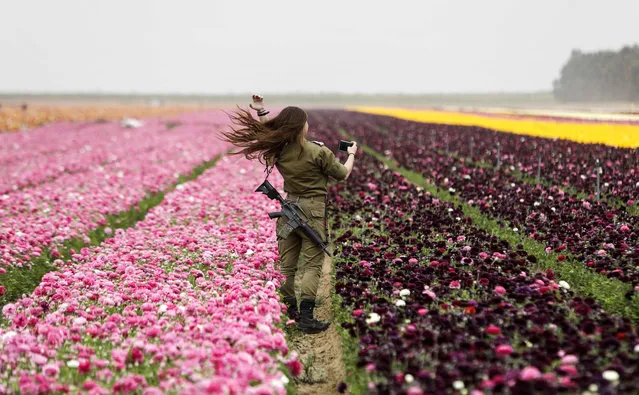
An Israeli soldier looks through her cell phone as she enjoys the Ranunculus flowers in a field in the southern Israeli Kibbutz of Nir Yitzhak, located along the Israeli- Gaza Strip border, during the Jewish holiday of Pesach (Passover) on April 12, 2017. (Photo by Menahem Kahana/AFP Photo)

An Israeli soldier looks through her cell phone as she enjoys the Ranunculus flowers in a field in the southern Israeli Kibbutz of Nir Yitzhak, located along the Israeli- Gaza Strip border, during the Jewish holiday of Pesach (Passover) on April 12, 2017. (Photo by Menahem Kahana/AFP Photo)
Details
21 Apr 2017 07:54:00
A man walks in the street at the start of the new curfew to counter the COVID-19 in the center of Lyon, central France, Saturday, January 16, 2021. All of France will be under a stricter curfew starting Saturday at 6 p.m. for at least 15 days to fight the spread of the coronavirus. (Photo by Laurent Cipriani/AP Photo)

A man walks in the street at the start of the new curfew to counter the COVID-19 in the center of Lyon, central France, Saturday, January 16, 2021. All of France will be under a stricter curfew starting Saturday at 6 p.m. for at least 15 days to fight the spread of the coronavirus. (Photo by Laurent Cipriani/AP Photo)
Details
18 Jan 2021 00:07:00
A Kashmiri woman walks on a footbridge as it rains in Srinagar, June 24, 2015. This year's monsoon rains in India are officially forecast to be only 88 percent of the long-term average. (Photo by Danish Ismail/Reuters)

A Kashmiri woman walks on a footbridge as it rains in Srinagar, June 24, 2015. This year's monsoon rains in India are officially forecast to be only 88 percent of the long-term average. (Photo by Danish Ismail/Reuters)
Details
29 Jun 2015 12:11:00
A woman waters the plants outside her house in an alley at a slum in Mumbai October 28, 2014. (Photo by Danish Siddiqui/Reuters)

A woman waters the plants outside her house in an alley at a slum in Mumbai October 28, 2014. (Photo by Danish Siddiqui/Reuters)
Details
29 Oct 2014 11:55:00
A woman poses after she got an image of a lion tattooed on her back as part of awareness campaign to save Asiatic lions and in preparations for the upcoming Navratri festival in Ahmedabad, India, October 5, 2018. (Photo by Amit Dave/Reuters)

A woman poses after she got an image of a lion tattooed on her back as part of awareness campaign to save Asiatic lions and in preparations for the upcoming Navratri festival in Ahmedabad, India, October 5, 2018. (Photo by Amit Dave/Reuters)
Details
15 Oct 2018 00:05:00
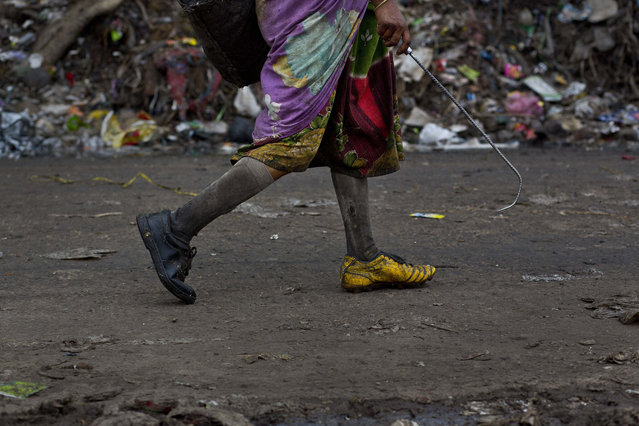
In this Monday, June 5, 2017, file photo, an Indian woman walks as se searches for recyclable materials at a garbage dumping site on the outskirts of Gauhati, Assam state, India. (Photo by Anupam Nath/AP Photo)

In this Monday, June 5, 2017, file photo, an Indian woman walks as se searches for recyclable materials at a garbage dumping site on the outskirts of Gauhati, Assam state, India. (Photo by Anupam Nath/AP Photo)
Details
12 Jun 2017 09:21:00
Artists dressed as Hindu gods reacts to the camera during the Bonalu festival procession in Secunderabad, the twin city of Hyderabad, on July 26, 2021. (Photo by Noah Seelam/AFP Photo)

Artists dressed as Hindu gods reacts to the camera during the Bonalu festival procession in Secunderabad, the twin city of Hyderabad, on July 26, 2021. (Photo by Noah Seelam/AFP Photo)
Details
03 Aug 2021 09:25:00
“Cassowaries are large, flightless birds related to emus and (more distantly) to ostriches, rheas, and kiwis”, writes Olivia Judson in the September issue of National Geographic magazine. (Photo by Christian Ziegler/National Geographic)

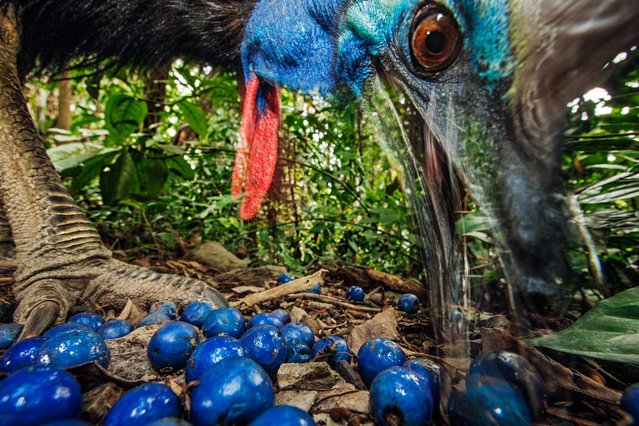
“Cassowaries are large, flightless birds related to emus and (more distantly) to ostriches, rheas, and kiwis”, writes Olivia Judson in the September issue of National Geographic magazine. How large? People-size: Adult males stand well over five foot five and top 110 pounds. Females are even taller, and can weigh more than 160 pounds. Dangerous when roused, they’re shy and peaceable when left alone. But even birds this big and tough are prey to habitat loss. The dense New Guinea and Australia rain forests where they live have dwindled. Today cassowaries might number 1,500 to 2,000. And because they help shape those same forests – by moving seeds from one place to another – “if they vanish”, Judson writes, “the structure of the forest would gradually change” too. (Photo by Christian Ziegler/National Geographic)

Details
06 Jan 2014 12:21:00