Loading...
Done
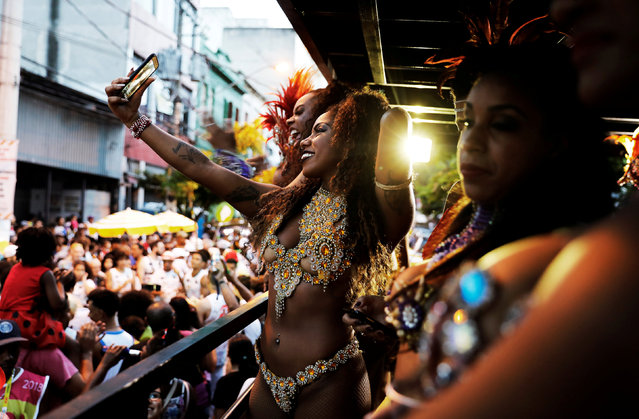
Women take part in an annual block party known as “Banda do Candinho e Mulatas” (Candinho Band and Mulatto Women), during carnival festivities at Bixiga neighbourhood in Sao Paulo, Brazil February 7, 2018. (Photo by Nacho Doce/Reuters)

Women take part in an annual block party known as “Banda do Candinho e Mulatas” (Candinho Band and Mulatto Women), during carnival festivities at Bixiga neighbourhood in Sao Paulo, Brazil February 7, 2018. (Photo by Nacho Doce/Reuters)
Details
09 Feb 2018 08:08:00
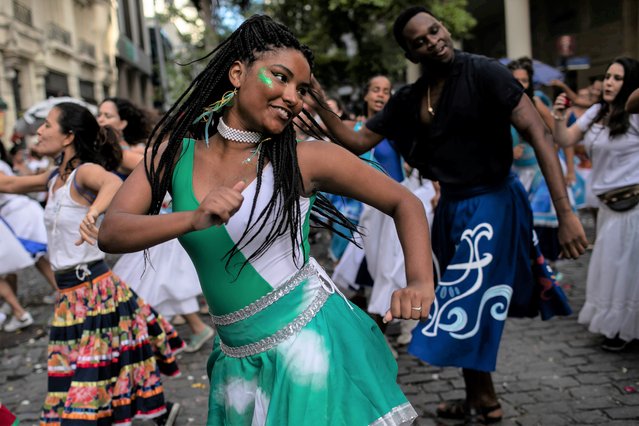
A woman dances during a rehearsal by the group “Tambores de Olokun” in Rio de Janeiro, Brazil, Sunday, April 17, 2022. The Brazilian municipalities of Rio de Janeiro and Sao Paulo postponed the traditional parades of the carnival samba schools to April 22 - 23, as a result of the COVID-19 pandemic. (Photo by Bruna Prado/AP Photo)

A woman dances during a rehearsal by the group “Tambores de Olokun” in Rio de Janeiro, Brazil, Sunday, April 17, 2022. The Brazilian municipalities of Rio de Janeiro and Sao Paulo postponed the traditional parades of the carnival samba schools to April 22 - 23, as a result of the COVID-19 pandemic. (Photo by Bruna Prado/AP Photo)
Details
19 Apr 2022 05:56:00
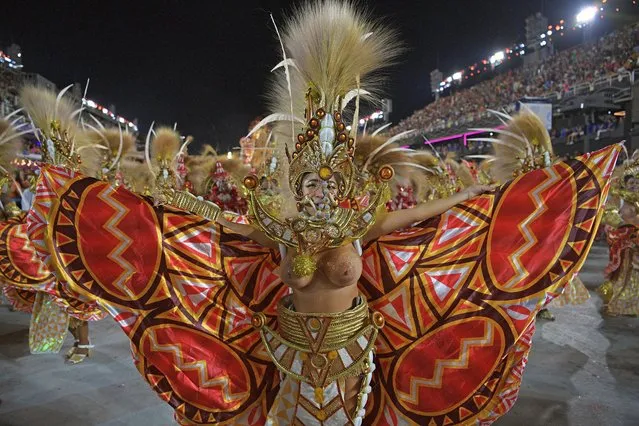
A member of Viradouro samba school performs during the first night of Rio's Carnival parade at the Sambadrome Marques de Sapucai in Rio de Janeiro, Brazil on April 22, 2022. (Photo by Carl de Souza/AFP Photo)

A member of Viradouro samba school performs during the first night of Rio's Carnival parade at the Sambadrome Marques de Sapucai in Rio de Janeiro, Brazil on April 22, 2022. (Photo by Carl de Souza/AFP Photo)
Details
29 May 2022 04:12:00
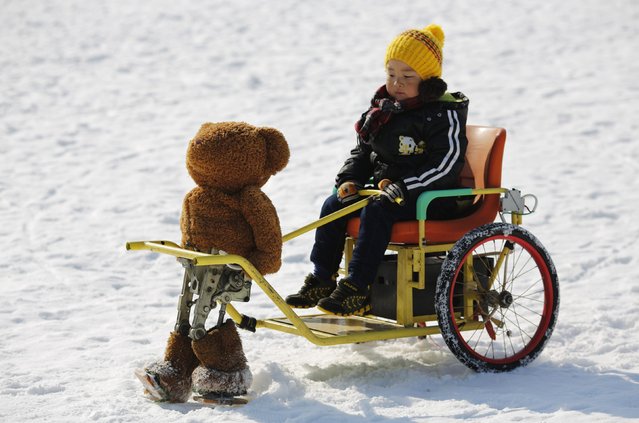
A boy rides on a snow wagon towed by a robot dressed as a Teddy bear, which only moves forward by moving its legs, during the Ice and snow carnival at Taoranting park in Beijing February 9, 2015. (Photo by Kim Kyung-Hoon/Reuters)

A boy rides on a snow wagon towed by a robot dressed as a Teddy bear, which only moves forward by moving its legs, during the Ice and snow carnival at Taoranting park in Beijing February 9, 2015. (Photo by Kim Kyung-Hoon/Reuters)
Details
10 Feb 2015 11:31:00
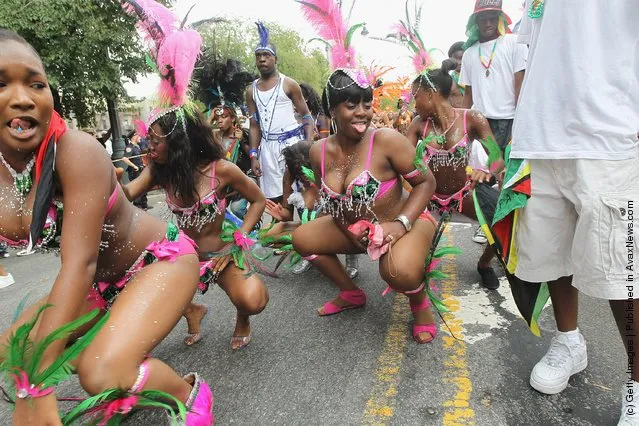
New Yorkers Celebrate At West Indian Day Parade

“The Labor Day Parade (or West Indian Carnival), is an annual celebration held on American Labor Day (the first Monday in September), in Crown Heights, Brooklyn, New York. Ms. Jessie Waddell and some of her West Indian friends started the Carnival in Harlem in the 1920s by staging costume parties in large enclosed places like the Savoy, Renaissance and Audubon Ballrooms due to the cold wintry weather of February. This is the usual time for the pre-Lenten celebrations held in most countries around the world. However, because of the very nature of Carnival, and the need to parade in costume to music, indoor confinement did not work well. The earliest known Carnival street parade was held on September 1, 1947. The Trinidad Carnival Pageant Committee was the founding force behind the parade, which was held in Harlem. The parade route was along Seventh Avenue, starting at 110th St.” – Wikipedia

Photo: A reveler looks on during the West Indian-American Day Parade September 5, 2011 in the Brooklyn borough of New York City. More than 2 million spectators were expected to attend the celebration of Caribbean culture. (Photo by Mario Tama/Getty Images)

Details
06 Sep 2011 11:18:00
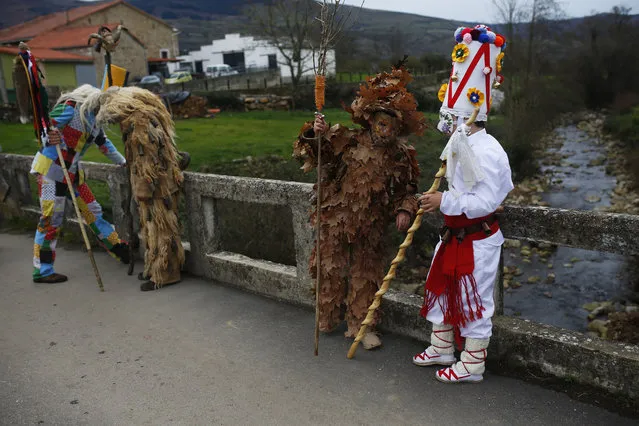
People dressed in costumes have a break while marching during the Vijanera Festival, in the small village of Silio, northern Spain, Sunday, January 3, 2016. The Vijanera masquerade, of pre-Roman origin, is the first carnival of the year in Europe symbolizing the triumph of good over evil and involving the participation of crowds of residents wearing different masks, animal skins and brightly coloured clothing with its own complex function and symbolism and becoming the living example of the survival of archaic cults to nature. (Photo by Francisco Seco/AP Photo)

People dressed in costumes have a break while marching during the Vijanera Festival, in the small village of Silio, northern Spain, Sunday, January 3, 2016. The Vijanera masquerade, of pre-Roman origin, is the first carnival of the year in Europe symbolizing the triumph of good over evil and involving the participation of crowds of residents wearing different masks, animal skins and brightly coloured clothing with its own complex function and symbolism and becoming the living example of the survival of archaic cults to nature. (Photo by Francisco Seco/AP Photo)
Details
04 Jan 2016 10:17:00
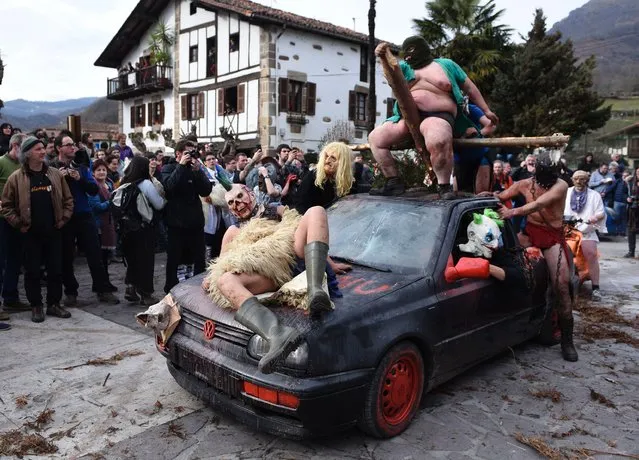
Disguised participants strike poses on a car during the ancient carnival of Ituren, in the northern Spanish Navarra province on January 30, 2017. The yearly three day festivities, revolving mainly around agriculture and principally sheep hearding, run on the last Sunday, Monday and Tuesday of January where Navarra Valley locals from two villages dress up and participate in a variety of activites as they perform a pilgrimage through each village. (Photo by Ander Gillenea/AFP Photo)

Disguised participants strike poses on a car during the ancient carnival of Ituren, in the northern Spanish Navarra province on January 30, 2017. The yearly three day festivities, revolving mainly around agriculture and principally sheep hearding, run on the last Sunday, Monday and Tuesday of January where Navarra Valley locals from two villages dress up and participate in a variety of activites as they perform a pilgrimage through each village. (Photo by Ander Gillenea/AFP Photo)
Details
31 Jan 2017 10:00:00
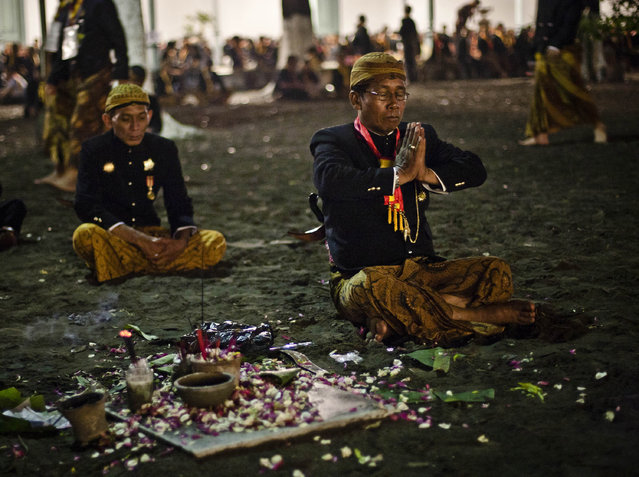
Javanese people pray before rituals night carnival “1st Suro” (Javanese calender) during  Islamic New Year celebrations at Kasunanan Palace on November 14, 2012 in Solo City, Central Java, Indonesia. Javanese will celebrate the national holiday with ceremonies and rituals marking the 1434th Islamic New Year's Eve or “1st Suro”. The parade started from Keraton Kasunanan and is headed by a group of albino buffaloes, known as Kebo Bule. Local people believe that the parade of Heirlooms and Kebo Bule will bring them a better life. (Photo by Ulet Ifansasti)

Javanese people pray before rituals night carnival “1st Suro” (Javanese calender) during Islamic New Year celebrations at Kasunanan Palace on November 14, 2012 in Solo City, Central Java, Indonesia. Javanese will celebrate the national holiday with ceremonies and rituals marking the 1434th Islamic New Year's Eve or “1st Suro”. The parade started from Keraton Kasunanan and is headed by a group of albino buffaloes, known as Kebo Bule. Local people believe that the parade of Heirlooms and Kebo Bule will bring them a better life. (Photo by Ulet Ifansasti)
Details
16 Nov 2012 07:37:00