Loading...
Done
Chicago: 35 photographs, 15 minutes. (Photo by Daniel Marker-Moors/Caters News)

A photographer is using a unique method to show the shift from day to night across famous cities in spectacular images. Daniel Marker-Moors' take on time-lapse photography – which he calls time slice – sees the photographer snap image after image, before combining them to create beautiful, vibrant works. His images usually focus on a point in the day with the most dramatic change in light, such as sunrise or sunset. Marker-Moors, from Los Angeles, begins by shooting hundreds and sometimes thousands of images from the same spot. Here: Chicago – 35 photographs, 15 minutes. (Photo by Daniel Marker-Moors/Caters News)
Details
21 Dec 2015 08:04:00
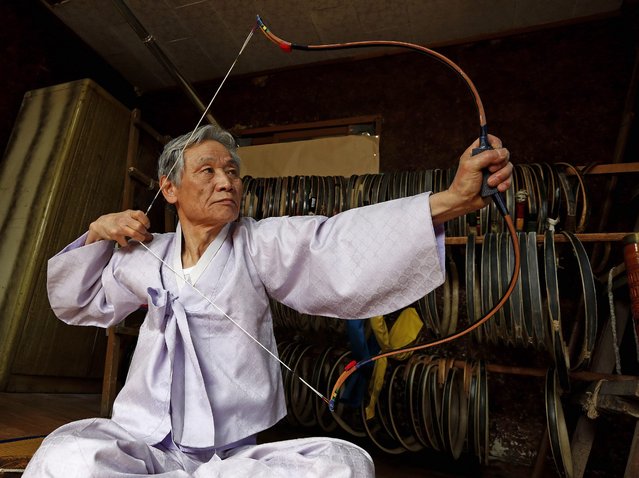
South Korean traditional bow artisan Kwon Yeong-Hak works on a bow in his workshop in Yecheon-gun, Gyeongsangbuk-do, South Korea, 26 February 2015. (Photo by Jeon Heon-Kyun/EPA)

South Korean traditional bow artisan Kwon Yeong-Hak works on a bow in his workshop in Yecheon-gun, Gyeongsangbuk-do, South Korea, 26 February 2015. Kwon Yeong-Hak still crafts his bows in the traditional way, carrying on a four-generation family business. The Gakgung bow, of which Kwon is one of the last remaining artisans, is unique to Korea, and is constructed with a variety of materials, including water buffalo horn, oak, bamboo and cattle spinal sinew. A ban on the import of water buffalo horns has put the Gakgung tradition at risk. (Photo by Jeon Heon-Kyun/EPA)
Details
24 Mar 2015 09:54:00
Cuttlery with rope handles. (Photo by Giuseppe Colarusso/Caters News)

An artist has created series of wacky images turning everyday items into hilarious and all but impossible to use objects. Giuseppe Colarusso, 49, fashioned the unique work to make people question the functionality of the likes of cutlery, garden tools and office equipment. The set of playful pictures, entitled “Improbabilita”, makes some items impossible to use, others improbable and some given a completely new function altogether. From a dice with no spots, to a ping pong paddle with a hole in it, the items have all been given a quirky twist. Photo: Cuttlery with rope handles. (Photo by Giuseppe Colarusso/Caters News)
Details
27 Jun 2013 07:37:00
Inhabitants of the community of Coyolillo celebrate their Afro-descendant carnival in Veracruz, Mexico on February 25, 2020. This carnival has more than 100 years of history and is the heritage of the African workers who arrived in that area more than 300 years ago to work in the sugar cane fields. The event is known for the colourful robes, capes and animal masks – of bulls, deer, goats and cows – worn by participants. As such, the carnival is a unique expression of African-Mexican folk art. (Photo by Hector Adolfo Quintanar Perez/ZUMA Wire/Rex Features/Shutterstock)

Inhabitants of the community of Coyolillo celebrate their Afro-descendant carnival in Veracruz, Mexico on February 25, 2020. This carnival has more than 100 years of history and is the heritage of the African workers who arrived in that area more than 300 years ago to work in the sugar cane fields. (Photo by Hector Adolfo Quintanar Perez/ZUMA Wire/Rex Features/Shutterstock)
Details
05 Mar 2020 00:03:00
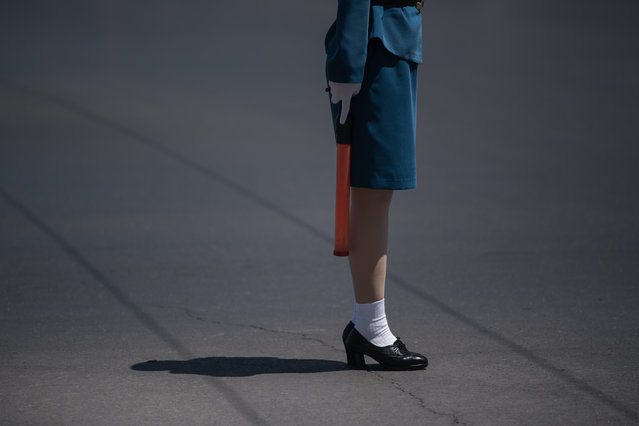
In a photo taken on June 5, 2017 a traffic security officer stands on duty at an intersection in Pyongyang. Officially known as traffic security officers but universally referred to as traffic ladies, they are chosen for their looks in a society that remains traditionalist in many respects. They must leave the role if they marry, and have a finite shelf-life, with compulsory retirement looming at just 26. The 300-odd ladies are unique to Pyongyang, which North Korean authorities are always keen to present in the best possible light despite their nuclear-armed country's impoverished status, and ensure a steady supply of photogenic young women who are the favourite subject of visiting tourists and journalists. (Photo by Ed Jones/AFP Photo)

In a photo taken on June 5, 2017 a traffic security officer stands on duty at an intersection in Pyongyang. Officially known as traffic security officers but universally referred to as traffic ladies, they are chosen for their looks in a society that remains traditionalist in many respects. They must leave the role if they marry, and have a finite shelf-life, with compulsory retirement looming at just 26. (Photo by Ed Jones/AFP Photo)
Details
21 May 2018 00:03:00
Concept Artist And Illustrator Jakub Rozalski Part 2

My name is Jakub and I’m a painter, illustrator & concept artist who lives and work in Poland. My speciality is dark fantasy, character design, concept art and portrait. Since several years I work and paint digitally, but I never gave up traditional drawing and painting. For me the most important in my work, is create unique atmosphere and tell some kind of story through my creations.


Jakub Rozalski

See Also: Part 1
Details
01 Oct 2014 10:35:00
Members of staff demonstrate a form of massage using pythons at Bali Heritage Reflexology and Spa on October 27, 2013 in Jakarta, Indonesia. (Photo by Ulet Ifansasti/Getty Images)

Members of staff demonstrate a form of massage using pythons at Bali Heritage Reflexology and Spa on October 27, 2013 in Jakarta, Indonesia. The snake spa offers a unique massage treatment which involves having several pythons placed on the customers body. The movement of the snakes and the adrenaline triggered by fear is said to have a positive impact on the customers metabolism. (Photo by Ulet Ifansasti/Getty Images)
Details
02 Oct 2014 10:38:00
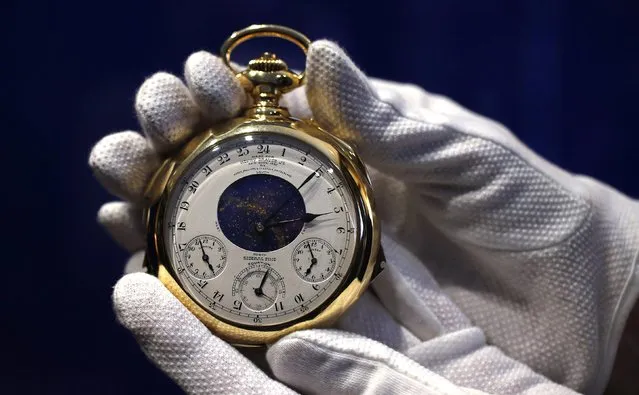
A staff member holds “The Henry Graves Supercomplication” handmade watch by Patek Philippe which was completed in 1932 at Sotheby's auction house in London October 21, 2014. (Photo by Suzanne Plunkett/Reuters)

What makes a watch the most valuable in the world? It’s supercomplicated – literally. In 1925 banker Henry Graves Jr. (considered the greatest watch collector of the 20th century) commissioned Patek Philippe to create a unique gold pocket watch. When Graves finally received it – eight years later – it was the most complex timepiece ever created by human hands... (Photo by Suzanne Plunkett/Reuters)
Details
21 Oct 2014 13:23:00