A model poses with a motorcycle and a car on a racing track at the Essen Motor Show in Essen, Germany, November 27, 2015. (Photo by Ina Fassbender/Reuters)
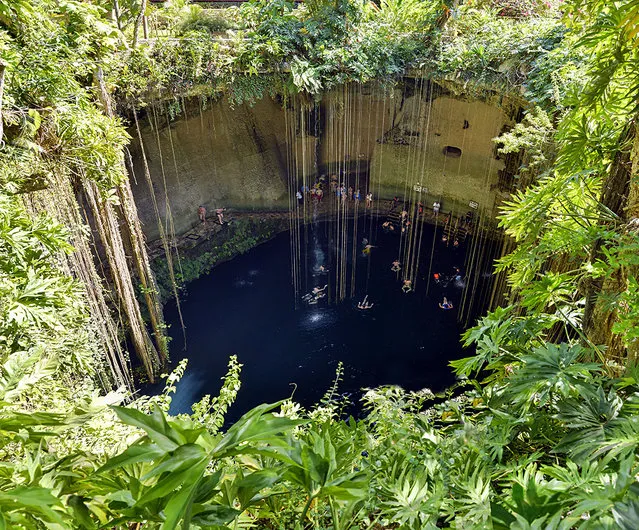
A cenote is a natural phenomenon, a sinkhole in the Earth’s surface. The Yucatan Peninsula in Mexico has an estimated 7,000 cenotes because it is primarily made up of porous limestone. For millions of years, rainfall slowly ate away at the limestone and a huge system of underground caves and caverns was formed. Many filled with water from rain or from the underground water table. When the roof of a water filled cave collapses, a cenote is born. The water found in a cenote may be fresh water, salt water, or both. Structurally it may be completely open, like a lake, almost completely closed with just a small opening at the top, or somewhere in between.
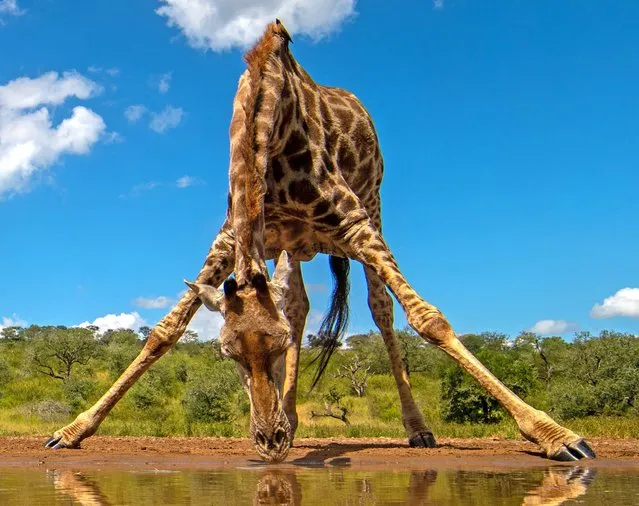
Giraffes doing the splits to get a drink of water from the watering hole at the Zimanga Private Game Reserve in South Africa on March 31, 2022. (Photo by Hendri Venter/Animal News Agency)
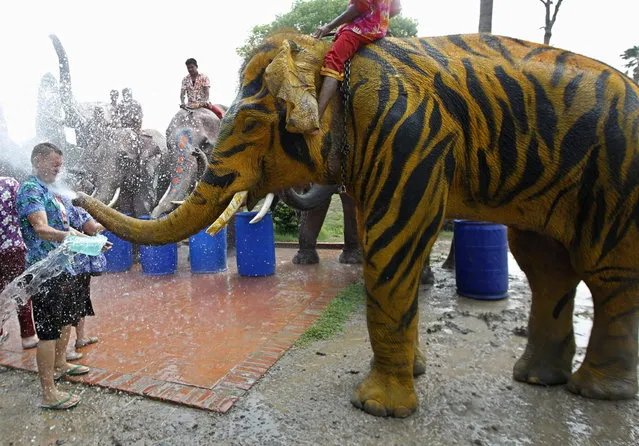
Elephants spray tourists with water in celebration of the Songkran water festival in Thailand's Ayutthaya province, about 80 km (50 miles) north of Bangkok, April 9, 2014. (Photo by Rungroj Yongrit/EFE)
Ukrainians pour water on each other on a street in Lviv, Ukraine, 02 May 2016. The tradition of pouring water was an ancient spring ritual of cleansing on first Monday after Orthodox Easter. (Photo by Mykola Tys/EPA)