Loading...
Done
In this picture taken Friday, September 8, 2017, Brazilan Samba dancers perform on stage during the Harare International Carnival in the capital. (Photo by Tsvangirayi Mukwazhi/AP Photo)

In this picture taken Friday, September 8, 2017, Brazilan Samba dancers perform on stage during the Harare International Carnival in the capital. An international carnival aimed at boosting the local tourism industry has ended in economically troubled Zimbabwe. Some viewed the Harare festivities, which ended Sunday and featured artists and dancers from Brazil, Cuba, Egypt and elsewhere, as a relief from the struggle to get by in the southern African country. (Photo by Tsvangirayi Mukwazhi/AP Photo)
Details
14 Sep 2017 08:13:00
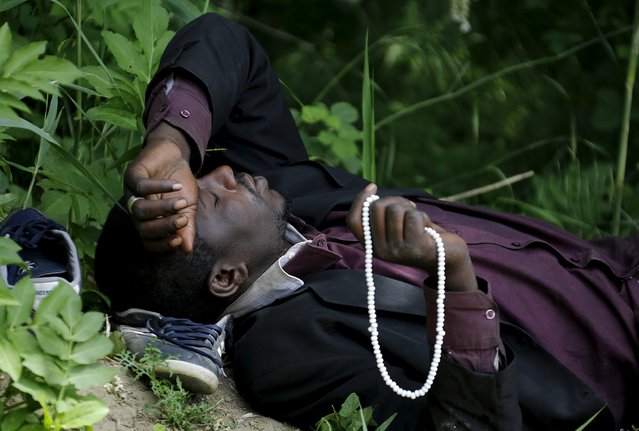
An  immigrant from Mali rests at the Greek-Macedonian border before an attempt to flee to Macedonia  May 13, 2015 village of Idomeni in Kilkis prefecture May 13, 2015. (Photo by Yannis Behrakis/Reuters)

An immigrant from Mali rests at the Greek-Macedonian border before an attempt to flee to Macedonia May 13, 2015 village of Idomeni in Kilkis prefecture May 13, 2015. Hundreds of mostly Afghan, Syrian, and African immigrants cross daily from Greece into Macedonia on their way to northern European countries; most of them are turned back by Macedonian border guards. (Photo by Yannis Behrakis/Reuters)
Details
17 May 2015 11:50:00
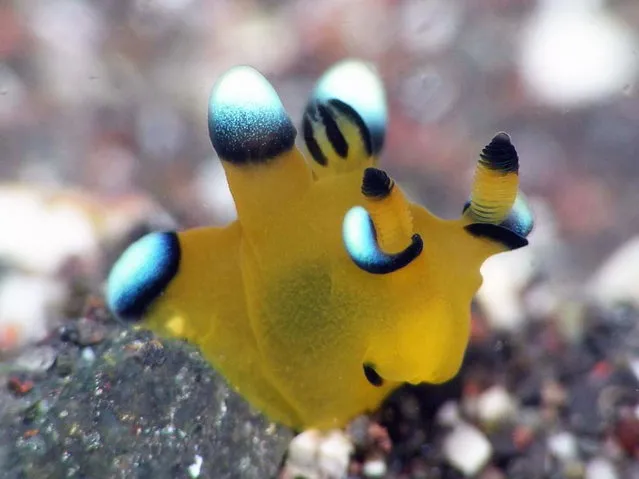
Thecacera Pacifica AKA Pikachu

If you ever wanted to meet a live Pikachu, you might have a hard time finding one. However, there is a creature on this Earth that kind of looks like one. That creature’s name is Thecacera pacifica and it is a species of a sea slug. These little critters can be found in the Indian Ocean from African coast to Indonesia and Vanuatu. Their vibrant orange and blue colors look gorgeous, making it look like some sort of anemone. Also, as you might have guessed from the striking colors of the sea slug, just like most of anemones, this creature is very toxic. Thus, keeping it as a pet isn’t an option.

Details
19 Dec 2014 12:51:00
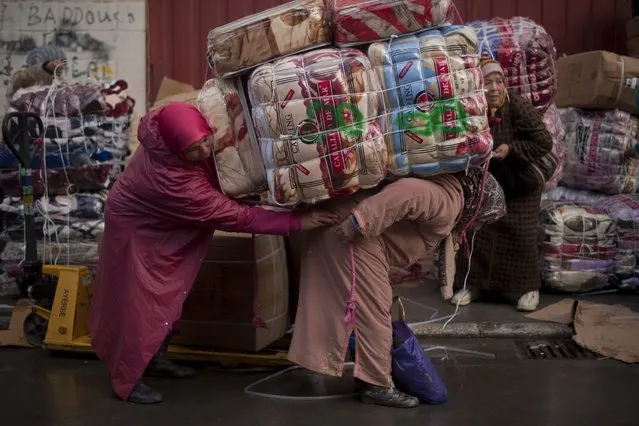
Women porters load bundles onto their back for transport across the El Tarajal boarder separating Morocco and Spain's North African enclave of Ceuta, in Ceuta on December 4, 2014. Unemployment among Ceuta and Melilla's native workforce is more than 30 percent – among the highest rates in Spain. Meanwhile, authorities say some 30,000 Moroccan traders and menial workers cross into each territory every day. (Photo by Jorge Guerrero/AFP Photo)

Women porters load bundles onto their back for transport across the El Tarajal boarder separating Morocco and Spain's North African enclave of Ceuta, in Ceuta on December 4, 2014. Unemployment among Ceuta and Melilla's native workforce is more than 30 percent – among the highest rates in Spain. Meanwhile, authorities say some 30,000 Moroccan traders and menial workers cross into each territory every day. (Photo by Jorge Guerrero/AFP Photo)
Details
29 Dec 2014 13:36:00
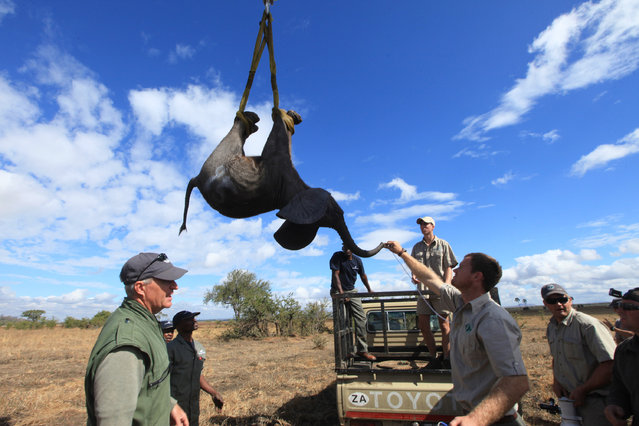
In this Tuesday July 12, 2016 photo, an elephant is lifted by a crane in an upside down position in Lilongwe, Malawi, in the first step of an assisted migration of 500 of the threatened species. African Parks, which manages three Malawian reserves is moving the 500 elephants from Liwonde National Park, this month and next, and again next year when vehicles can maneuver on the rugged terrain during Southern Africa's dry winter. (Photo by Tsvangirayi Mukwazhi/AP Photo)

In this Tuesday July 12, 2016 photo, an elephant is lifted by a crane in an upside down position in Lilongwe, Malawi, in the first step of an assisted migration of 500 of the threatened species. African Parks, which manages three Malawian reserves is moving the 500 elephants from Liwonde National Park, this month and next, and again next year when vehicles can maneuver on the rugged terrain during Southern Africa's dry winter. (Photo by Tsvangirayi Mukwazhi/AP Photo)
Details
20 Jul 2016 10:19:00
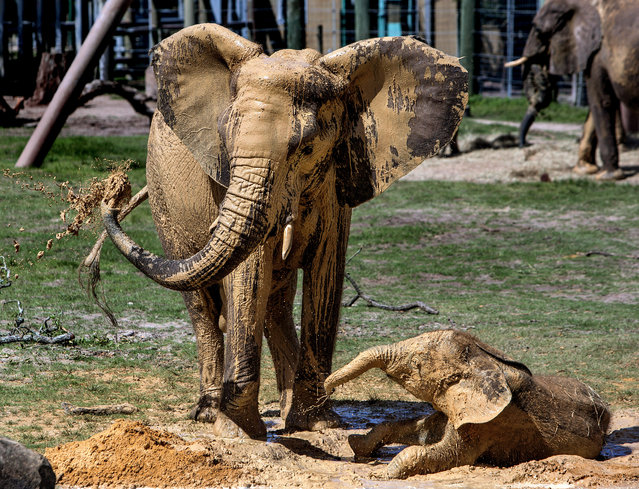
Lowry Park Zoo elephants Matjeka, 23, and her 1-year-old daughter, Mavi, apply a liberal coating of “sunscreen”  to themselves in a clay mud wallow at the park Tuesday, August 12, 2014, in Tampa, Fla., on the park's first observation of World Elephant Day to raise awareness of the wild African elephant crisis. (Photo by Cherie Diez/AP Photo/The Tampa Bay Times)

Lowry Park Zoo elephants Matjeka, 23, and her 1-year-old daughter, Mavi, apply a liberal coating of “sunscreen” to themselves in a clay mud wallow at the park Tuesday, August 12, 2014, in Tampa, Fla., on the park's first observation of World Elephant Day to raise awareness of the wild African elephant crisis. “Elephants are prone to being sunburned”, said associate curator Chris Massaro. “What they need is lot of mud or clay to roll around in and cover up their skin so it will protect it from the sun”. (Photo by Cherie Diez/AP Photo/The Tampa Bay Times)
Details
16 Aug 2014 11:38:00
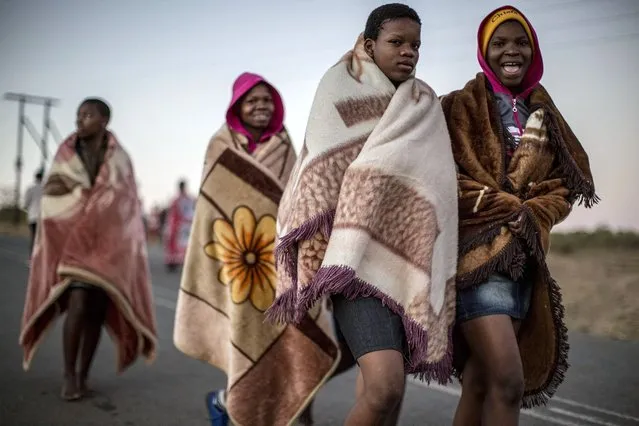
South African maidens wrap themselves in blankets as they head to a ritual bath in a local river on September 5, 2014 at the eNyokeni Royal Palace in Nongoma in the KwaZulu-Natal region ahead of the 13th anniversary of the Reed Dance (uMkhosi woMhlanga) celebrated by the Zulu King Goodwill Zwelithin. (Photo by Marco Longari/AFP Photo)

South African maidens wrap themselves in blankets as they head to a ritual bath in a local river on September 5, 2014 at the eNyokeni Royal Palace in Nongoma in the KwaZulu-Natal region ahead of the 13th anniversary of the Reed Dance (uMkhosi woMhlanga) celebrated by the Zulu King Goodwill Zwelithin. As part of the ceremony, the young women dance bare-breasted for the king, each carrying a long reed, deposited later as they approach the King and is a cultural celebration that promotes respect for young women, and preserves the custom of keeping girls as virgins until marriage. (Photo by Marco Longari/AFP Photo)
Details
07 Sep 2014 13:04:00
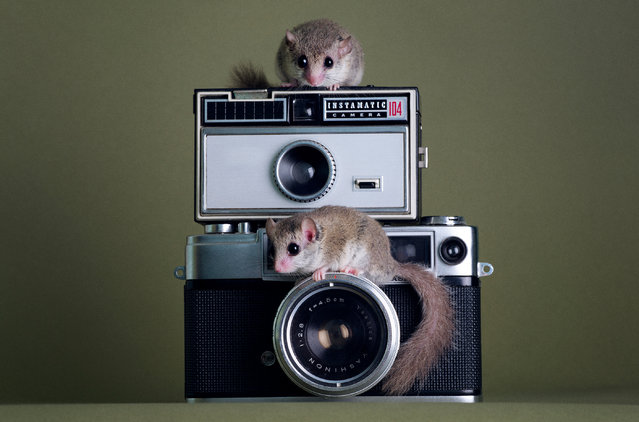
“The most difficult aspect of this shoot was to get each African pygmy dormouse – also known as micro squirrels – on to a separate camera. Once in place, they needed to remain still long enough to get them both in the frame and looking at me. Often solitary, they naturally wanted to move away”. (Photo by David Yeo/Leica Studio Mayfair/The Guardian)

David Yeo’s photography places naturally small species alongside animals that have been selectively bred to be tiny and cute. Here: “The most difficult aspect of this shoot was to get each African pygmy dormouse – also known as micro squirrels – on to a separate camera. Once in place, they needed to remain still long enough to get them both in the frame and looking at me. Often solitary, they naturally wanted to move away”. (Photo by David Yeo/Leica Studio Mayfair/The Guardian)
Details
24 Oct 2017 08:20:00