Loading...
Done
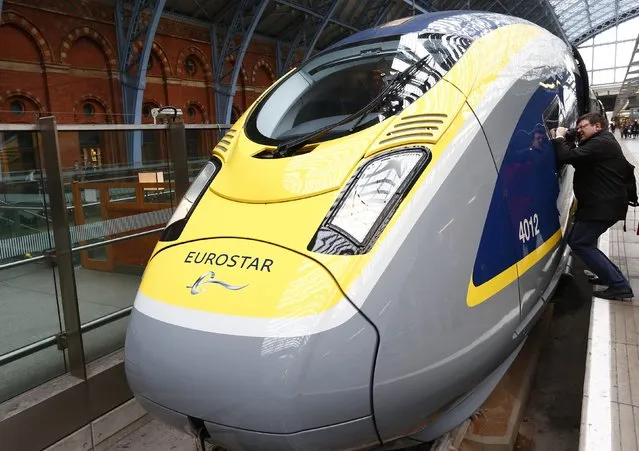
A man tries to photograph the interior of the driver's cab belonging to Eurostar's new Siemens e320 train at St Pancras station in central London, November 13, 2014. (Photo by Andrew Winning/Reuters)

A man tries to photograph the interior of the driver's cab belonging to Eurostar's new Siemens e320 train at St Pancras station in central London, November 13, 2014. Eurostar, the company that runs passenger trains through the Channel tunnel between London and Paris, said it would buy seven additional e320 trains from Siemens for about 300 million pounds ($473 million). The company placed an order for 10 new trains in 2010, the first of which is due to enter commercial service next year, enabling the company to add new routes. (Photo by Andrew Winning/Reuters)
Details
14 Nov 2014 13:50:00
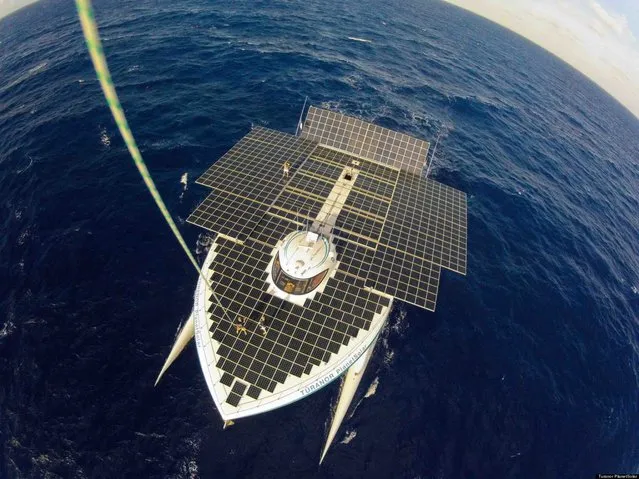
Turanor PlanetSolar

MS Tûranor PlanetSolar, known under the project name PlanetSolar, is the largest solar-powered boat in the world The vessel was designed by LOMOcean Design, built by Knierim Yachtbau in Kiel, Germany, and launched on 31 March 2010. In May 2012, it became the first ever solar electric vehicle to circumnavigate the globe. The 31-meter boat is covered in over 500 square meters of solar panels rated 93 kW, which in turn connect to one of the two electric motors in each hull. There are 8.5 tons of lithium-ion batteries in the ship's two hulls. The boat's shape allows it to reach speeds of up to 14 knots. The hull was model tested in wind tunnels and was tank tested to determine its hydrodynamics and aerodynamics. The boat has been designed to be used as a luxury yacht after the record attempt is finished.
Details
30 Oct 2013 09:06:00
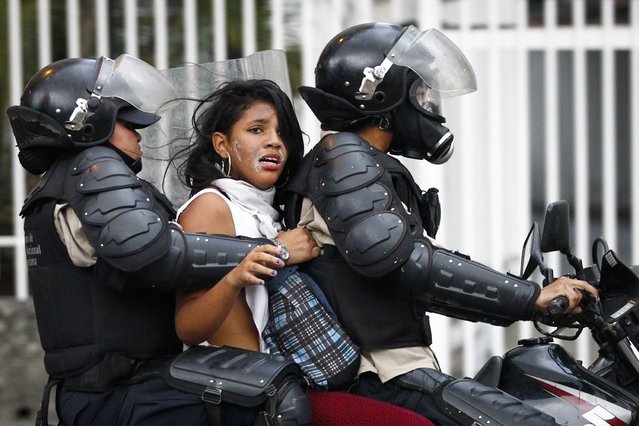
National police transport an anti-government protester detainee during a protest against Nicolas Maduro's government in Caracas March 13, 2014. Venezuela's state prosecutor said on Thursday the death toll from a month of violent protests had risen to 28, after the nation's top court ordered opposition mayors to dismantle barricades set up by street protesters. (Photo by Carlos Garcia Rawlins/Reuters)

National police transport an anti-government protester detainee during a protest against Nicolas Maduro's government in Caracas March 13, 2014. Venezuela's state prosecutor said on Thursday the death toll from a month of violent protests had risen to 28, after the nation's top court ordered opposition mayors to dismantle barricades set up by street protesters. State prosecutor Luisa Ortega Diaz, speaking on the sidelines of the U.N. Human Rights Council in Geneva, also said 1,293 detainees had been released and 104 remained in custody accused of serious crimes during the anti-government demonstrations. (Photo by Carlos Garcia Rawlins/Reuters)
Details
15 Mar 2014 10:46:00
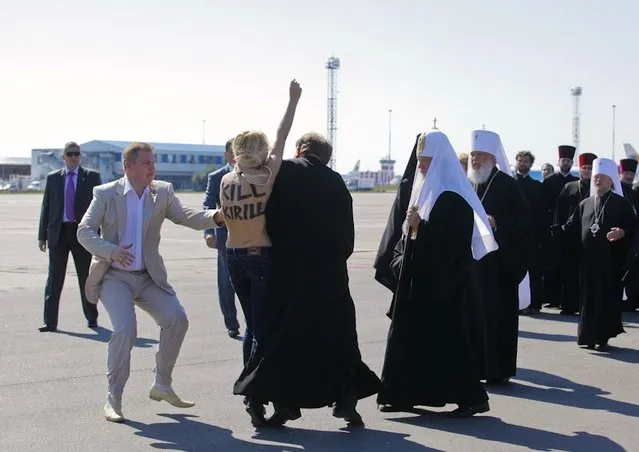
A topless protester from the Ukrainian feminist group Femen is blocked by a security guard and a priest as she tries to throw herself at the leader of the Russian Orthodox Church

“A bare-breasted feminist activist bearing a threatening message on her body tried to attack the Russian Orthodox Church's leader Thursday, July 26, 2012, to protest alleged anti-Ukrainian policies by the church and the Kremlin”. – HeraldNet.com

Photo: A topless protester from the Ukrainian feminist group FEMEN is blocked by a security guard and a priest as she tries to throw herself at the leader of the Russian Orthodox Church. (Photo by Associated Press)
Details
27 Jul 2012 10:27:00
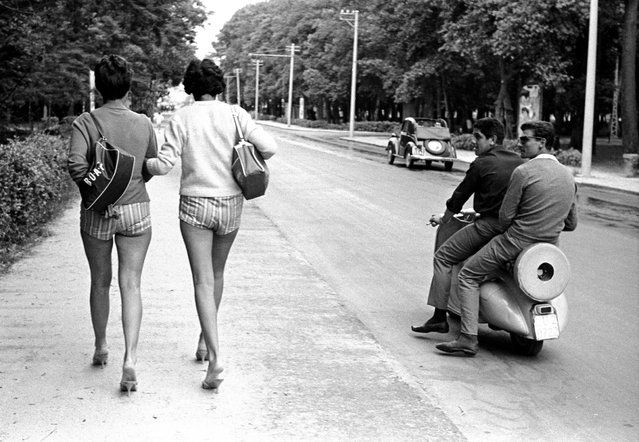
Viareggio in 1959. (Photo by Paolo Di Paolo/National Museum of 21st Century Arts)

The “Paolo Di Paolo: Lost World” exhibition presents more than 250 largely unseen images from the photographer’s archive. Di Paolo chronicled life in his country as an economic boom followed the destruction of the second world war. Although those were the years of la dolce vita he was an anti-paparazzo – he shunned the salacious and respected his subjects. The exhibition is at MAXXI, the National Museum of 21st Century Arts in Rome until 30 June. Here: Viareggio in 1959. (Photo by Paolo Di Paolo/National Museum of 21st Century Arts)
Details
01 May 2019 00:03:00


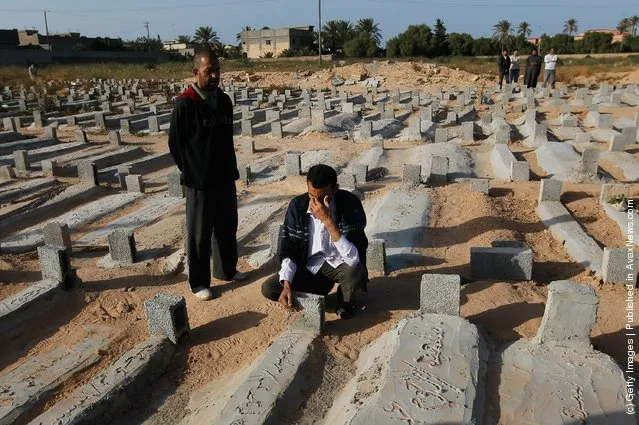
A man cries in a graveyard during the funeral of Nasser Ali Afglio, a young Libyan rebel killed during battle with government troops loyal to Libyan ruler Moammar Gaddafi April 19, 2011 in Misrata, Libya. The graveyard where Nasser was buried has hundreds of simple concrete graves; many dozens are those that have been killed during the last two months of fighting in the besieged town. Thousands of civilians are trapped in Misrata as fighting continues between Libyan government forces that have surrounded the city and anti-government rebels there. (Photo by Chris Hondros/Getty Images)
Details
22 Apr 2011 08:22:00
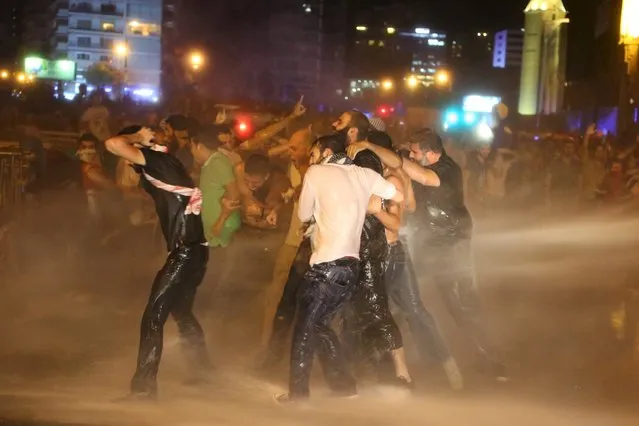
Protesters hold on to each other as they are sprayed with water from police water cannons in Martyr square, downtown Beirut, Lebanon October 8, 2015. (Photo by Aziz Taher/Reuters)

Protesters hold on to each other as they are sprayed with water from police water cannons in Martyr square, downtown Beirut, Lebanon October 8, 2015. Lebanese security forces fired tear gas and water cannons to break up an anti-government protest in Beirut on Thursday, and the country's fractious leaders postponed talks aimed at resolving a political crisis that is feeding public discontent. (Photo by Aziz Taher/Reuters)
Details
11 Oct 2015 08:01:00
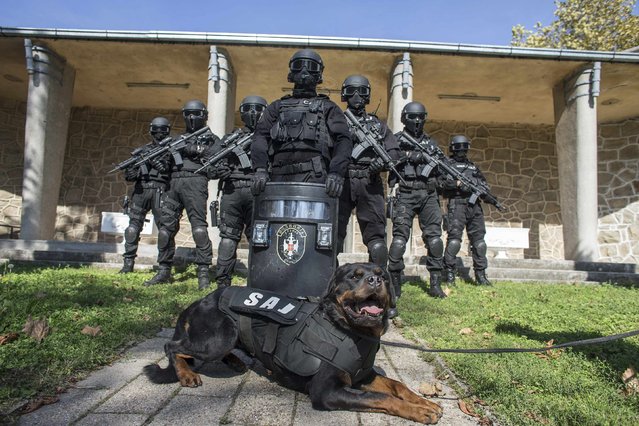
Serbian police officers of the Special Anti-Terrorist Unit pose for a picture in their base outside Belgrade October 8, 2014. (Photo by Marko Djurica/Reuters)

Serbian police officers of the Special Anti-Terrorist Unit pose for a picture in their base outside Belgrade October 8, 2014. When the killing of an unarmed black teenager by a white policeman in Ferguson, Missouri, in August sparked sometimes violent protests, the response of police in camouflage gear and armoured vehicles wielding stun grenades and assault rifles seemed more like a combat operation than a public order measure. Some U.S. police departments have recently acquired U.S. military-surplus hardware from wars abroad, but there are many law enforcers around the world whose rules of engagement also allow the use of lethal force with relatively few restrictions. But for every regulation that gives police wide scope to use firearms, there is another code that sharply limits their use. In Serbia, police may use measures ranging from batons to special vehicles, water cannon and tear gas on groups of people who have gathered illegally and are behaving in a way that is violent or could cause violence, but they may use firearms only when life is endangered. (Photo by Marko Djurica/Reuters)
Details
27 Nov 2014 14:53:00