Loading...
Done
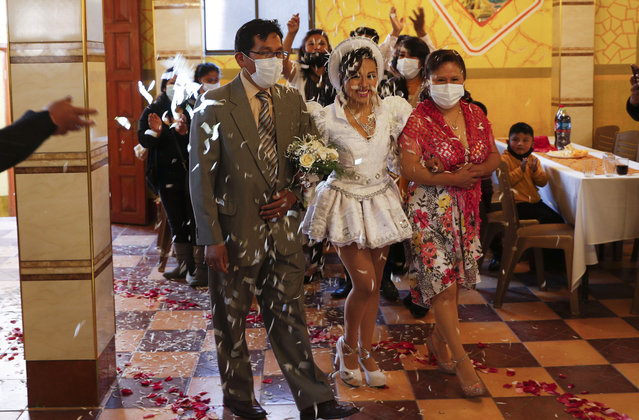
Bride Ana Vallejos, wearing a traditional “Caporales” Andean outfit, is escorted by her parents to her wedding celebration, in La Paz, Bolivia, Saturday, December 12, 2020. As a measure to reactivate the economy, the Bolivian government lifted restrictions to help curve the spread of the new coronavirus. Sporting, religious and cultural events may take place publicly until mid-January. (Photo by Juan Karita/AP Photo)

Bride Ana Vallejos, wearing a traditional “Caporales” Andean outfit, is escorted by her parents to her wedding celebration, in La Paz, Bolivia, Saturday, December 12, 2020. As a measure to reactivate the economy, the Bolivian government lifted restrictions to help curve the spread of the new coronavirus. Sporting, religious and cultural events may take place publicly until mid-January. (Photo by Juan Karita/AP Photo)
Details
14 Dec 2020 00:07:00
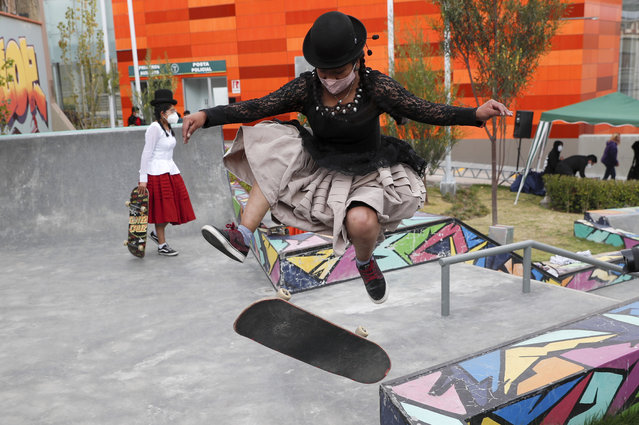
Aide Choque, wearing a mask amid the COVID-19 pandemic, jumps with her skateboard during a youth talent show in La Paz, Bolivia, Wednesday, September 30, 2020. Young women called “Skates Imillas”, using the Aymara word for girl Imilla, use traditional Indigenous clothing as a statement of pride of their Indigenous culture while playing riding their skateboards. (Photo by Juan Karita/AP Photo)

Aide Choque, wearing a mask amid the COVID-19 pandemic, jumps with her skateboard during a youth talent show in La Paz, Bolivia, Wednesday, September 30, 2020. Young women called “Skates Imillas”, using the Aymara word for girl Imilla, use traditional Indigenous clothing as a statement of pride of their Indigenous culture while playing riding their skateboards. (Photo by Juan Karita/AP Photo)
Details
07 Apr 2021 09:51:00
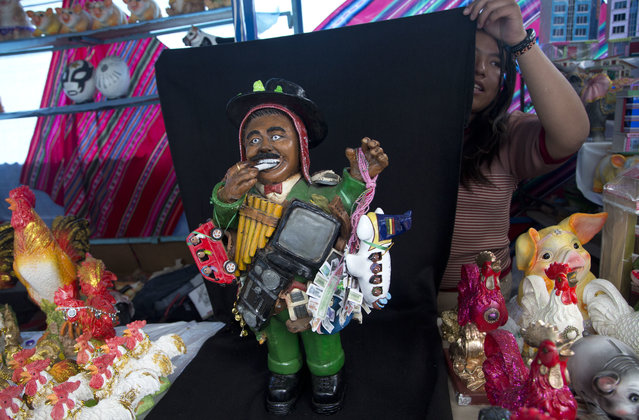
In this February 20, 2018 photo, fair vendor Noelia Flores holds up a black backdrop behind a small statue of an “Ekeko”, the god of prosperity, for a portrait at her booth during the annual Alasita Fair in La Paz, Bolivia. Every year, thousands of Bolivians head to the feast of Alasitas that is held in his honor to buy miniature cars, houses and toy dollar bills symbolizing their dreams of prosperity. (Photo by Juan Karita/AP Photo)

In this February 20, 2018 photo, fair vendor Noelia Flores holds up a black backdrop behind a small statue of an “Ekeko”, the god of prosperity, for a portrait at her booth during the annual Alasita Fair in La Paz, Bolivia. Every year, thousands of Bolivians head to the feast of Alasitas that is held in his honor to buy miniature cars, houses and toy dollar bills symbolizing their dreams of prosperity. (Photo by Juan Karita/AP Photo)
Details
23 Feb 2018 00:01:00
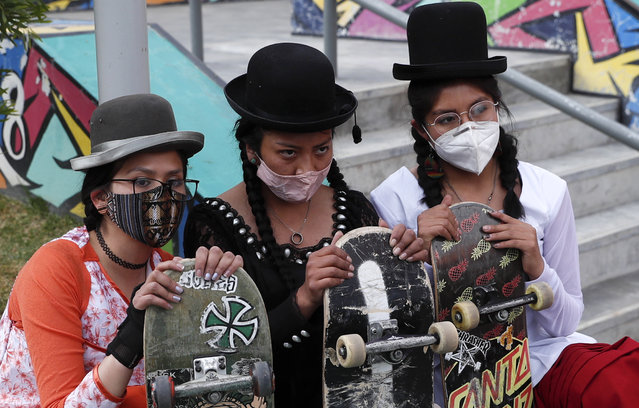
Yanira Villarreal, left, Ayde Choque, center, and Milenda Limachi, wearings masks amid the COVID-19 pandemic and dressed as a “Cholita” pose for a photo with their skateboards during a youth talent show in La Paz, Bolivia, Wednesday, September 30, 2020. Young women called “Skates Imillas”, using the Aymara word for girl Imilla, use traditional Indigenous clothing as a statement of pride of their Indigenous culture while playing riding their skateboards. (Photo by Juan Karita/AP Photo)

Yanira Villarreal, left, Ayde Choque, center, and Milenda Limachi, wearings masks amid the COVID-19 pandemic and dressed as a “Cholita” pose for a photo with their skateboards during a youth talent show in La Paz, Bolivia, Wednesday, September 30, 2020. Young women called “Skates Imillas”, using the Aymara word for girl Imilla, use traditional Indigenous clothing as a statement of pride of their Indigenous culture while playing riding their skateboards. (Photo by Juan Karita/AP Photo)
Details
02 Oct 2020 00:07:00
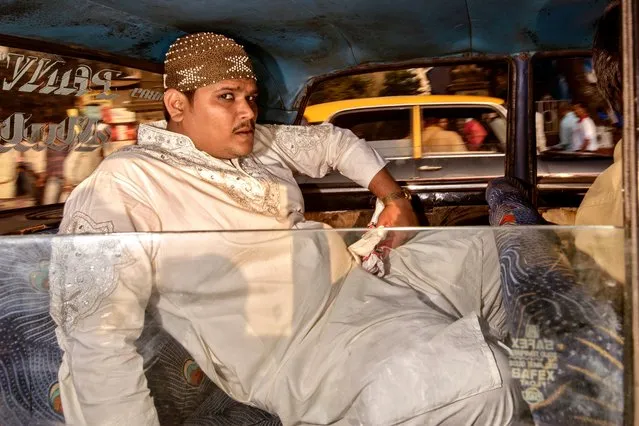
“I’m not scared of breaking the fourth wall”, Wallace has said of the photos where the subject is clearly aware of him taking the shot. “If they are looking at you in a photograph most photographers will think, oh, that’s not a good image. (But) people like to be involved and in the picture. You can see what they are thinking, see them talking”. (Photo by Dougie Wallace/The Guardian)

In Dougie Wallace’s photos of Mumbai taxis, the chatter, yelling, and constant horns of the city are almost audible. A selection of his images is on show at Gayfield Creative Spaces, Edinburgh, as part of the Retina photography festival until 30 July. For four years, the Glasgow-born Wallace focused his photos on one kind of taxi in particular: the Premier Padmini, a 1960s workhorse painted in black and yellow. Locally known as “Kaali-Peeli”, there were once more than 60,000 of them in the Indian city. But thanks to laws restricting pollution, the cars now are fast disappearing from Mumbai’s streets. (Photo by Dougie Wallace/The Guardian)
Details
13 Jul 2016 13:50:00
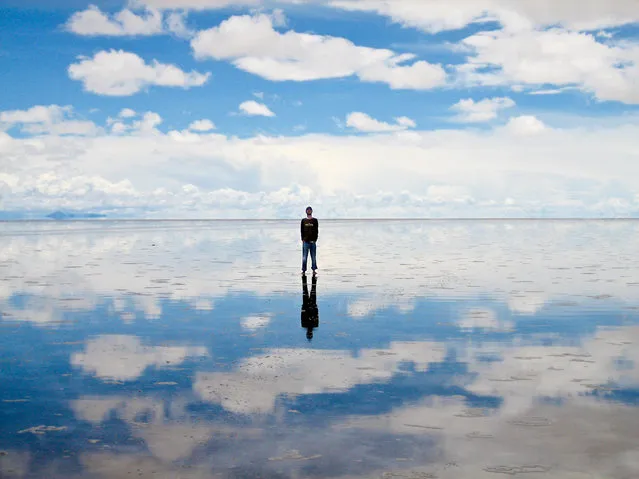
Salar de Uyuni

Salar de Uyuni (or Salar de Tunupa) is the world's largest salt flat at 10,582 square kilometers (4,086 sq mi). It is located in the Potosí and Oruro departments in southwest Bolivia, near the crest of the Andes, and is elevated 3,656 meters (11,995 ft) above mean sea level. The Salar was formed as a result of transformations between several prehistoric lakes. It is covered by a few meters of salt crust, which has an extraordinary flatness with the average altitude variations within one meter over the entire area of the Salar.
Details
04 Aug 2012 08:42:00
A performer dances at a housing exhibition in Wuhan, Hubei province, China, September 27, 2015. Picture taken September 27, 2015. (Photo by Reuters/Stringer)

A performer dances at a housing exhibition in Wuhan, Hubei province, China, September 27, 2015. (Photo by Reuters/Stringer)
Details
30 Sep 2015 08:07:00
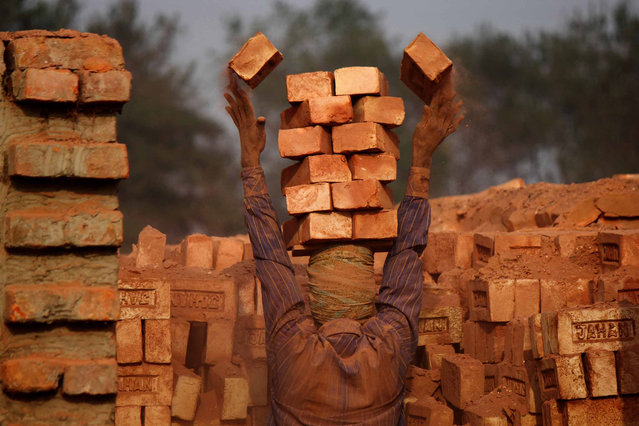
CGAP Photo Contest – South Asia Regional Winner: Bricks Worker, Bangladesh. A private enterprise worker is working at a brick field. These small businesses are creating new job opportunities for many poor people. (Photo by Moksumul Haque)

The shoemaker in Turkey, the potato seller in Vietnam, and the weaver in Bolivia are among the billions of low-income entrepreneurs who make the world go round. They are also the type of people who can benefit significantly from microfinance. Every year, the Consultative Group To Assist The Poor (or CGAP) hosts a photo contest asking entrants to submit photos based around the idea of microfinance.The purpose of the contest is to give amateur and professional photographers a chance to show the different ways that poor households manage their financial lives and make their lives better through financial inclusion. Photo: South Asia Regional Winner – “Bricks Worker”, Bangladesh. A private enterprise worker is working at a brick field. These small businesses are creating new job opportunities for many poor people. (Photo by Moksumul Haque)
Details
14 Aug 2014 10:58:00