Loading...
Done
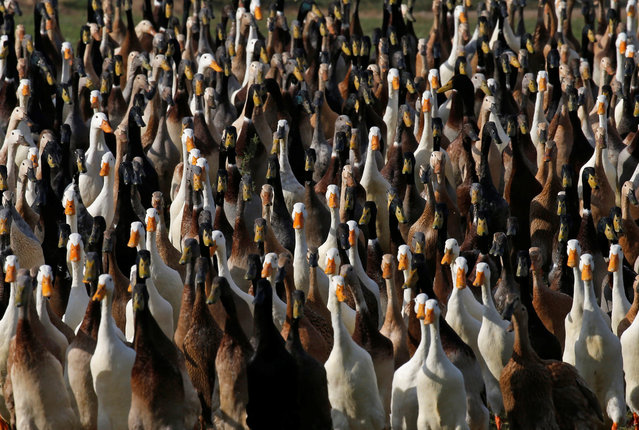
Indian Runner ducks march past farm buildings at the Vergenoegd wine estate near Cape Town, South Africa, May 16, 2016. (Photo by Mike Hutchings/Reuters)

Indian Runner ducks march past farm buildings at the Vergenoegd wine estate near Cape Town, South Africa, May 16, 2016. Each day, a quack squad of killer ducks are released for the first of two sorties at South Africa's Vergenoegd wine farm in Stellenbosch. Their mission – seek and destroy thousands of pests out to ruin the season's harvest. Fanning out across the vineyards, some 1,000 Indian Runner ducks hone in on their hidden targets with uncanny precision, locating the tiny white dune snails feasting on budding vines. (Photo by Mike Hutchings/Reuters)
Details
27 May 2016 13:06:00
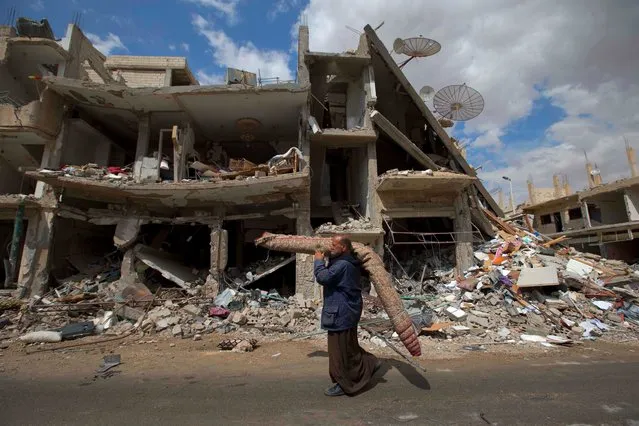
In this picture taken Thursday, April 14, 2016, a Syrian man carries a carpet as walk through a devastated part of the town of Palmyra as families load their belongings onto a bus in the central Homs province, Syria. (Photo by Hassan Ammar/AP Photo)

In this picture taken Thursday, April 14, 2016, a Syrian man carries a carpet as walk through a devastated part of the town of Palmyra as families load their belongings onto a bus in the central Homs province, Syria. Thousands of residents of this ancient town who fled Islamic State rule are returning briefly to check on their homes and salvage what they can – some carpets, blankets, a fridge or a few family mementos. There is no water or electricity in the town, and it will be at least few months before anyone can return to stay. (Photo by Hassan Ammar/AP Photo)
Details
16 Apr 2016 12:27:00
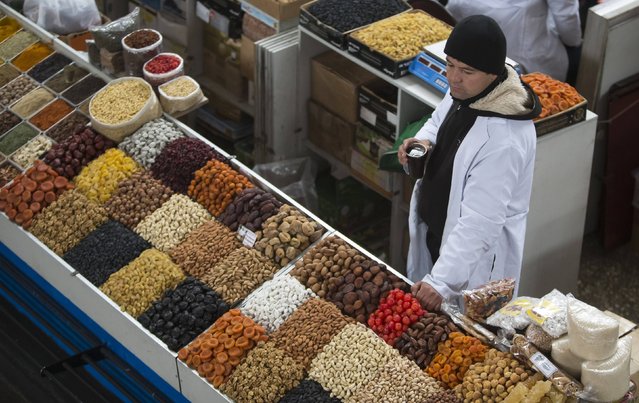
A vendor sells fruits and nuts at the Green Bazaar in Almaty January 23, 2015. Kazakhstan is spending billions of dollars of its reserves to keep devaluation of its currency gradual and reduce inflationary risks of the sort thrown up in Russia by the rouble's slide, analysts and former central bank officials say. (Photo by Shamil Zhumatov/Reuters)

A vendor sells fruits and nuts at the Green Bazaar in Almaty January 23, 2015. Kazakhstan is spending billions of dollars of its reserves to keep devaluation of its currency gradual and reduce inflationary risks of the sort thrown up in Russia by the rouble's slide, analysts and former central bank officials say. Kazakhstan, Central Asia's largest economy, is closely tied to Russia through trade and, like other ex-Soviet states, has been feeling the pain of the crisis which has driven the rouble down 50 percent against the dollar since the start of 2014. (Photo by Shamil Zhumatov/Reuters)
Details
28 Jan 2015 11:57:00
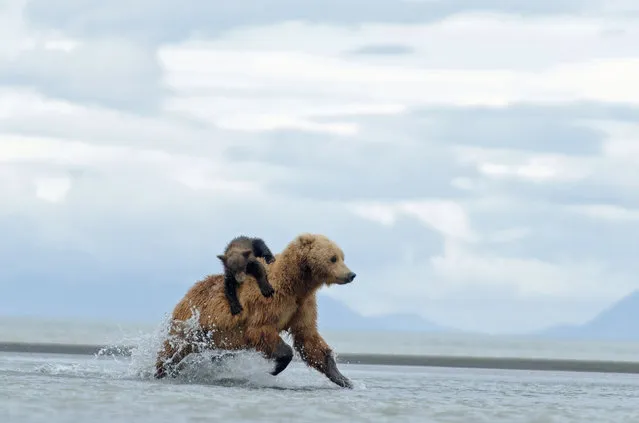
A adorable bear cub cant get enough of playing buckaroo – as it hangs onto its mum splashing about in a river. His mum was attempting to catch a fish supper for the pair as the plucky cub continued to jump on her back. And as she was concentrating on her meal the young bear became a distraction. So she sprung into life with him on her back before he was tossed into the water much to his delight. (Photo by Lisa Sidorsky/Caters News)

A adorable bear cub cant get enough of playing buckaroo – as it hangs onto its mum splashing about in a river. His mum was attempting to catch a fish supper for the pair as the plucky cub continued to jump on her back. And as she was concentrating on her meal the young bear became a distraction. So she sprung into life with him on her back before he was tossed into the water much to his delight. (Photo by Lisa Sidorsky/Caters News)
Details
15 Nov 2014 13:10:00
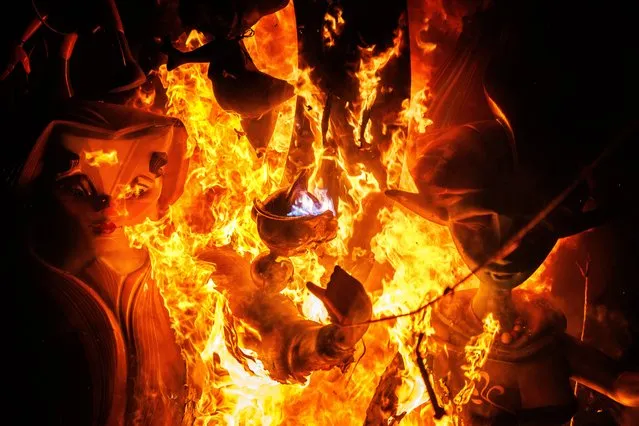
Papier-mache sculptures, also known as “ninots”, burn during the “Nit de la Crema” (Fire Night) of the Fallas Festival in Valencia, eastern Spain, 19 March 2024. Fallas is a fortnight-long fiesta in which installations of parodic papier-mache, cardboard, and wooden sculptures are traditionally burnt every year on the last day of the event in the so-called “Crema” to end the festivities. (Photo by Biel Alino/EPA/EFE)

Papier-mache sculptures, also known as “ninots”, burn during the “Nit de la Crema” (Fire Night) of the Fallas Festival in Valencia, eastern Spain, 19 March 2024. Fallas is a fortnight-long fiesta in which installations of parodic papier-mache, cardboard, and wooden sculptures are traditionally burnt every year on the last day of the event in the so-called “Crema” to end the festivities. (Photo by Biel Alino/EPA/EFE)
Details
29 Apr 2024 05:27:00
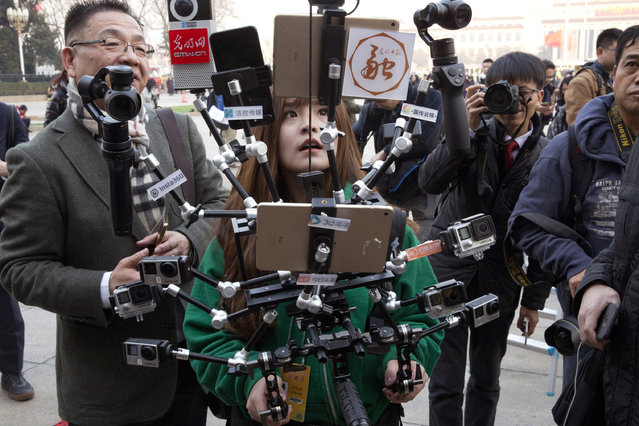
A journalist operate a harness with multiple recording devices capable of recording and live streaming outside the Great Hall of the People where the opening session of the Chinese People's Political Consultative Conference (CPPCC) was held in Beijing, China, Friday, March 3, 2017. Thousands of delegates have gathered at the Chinese capital for the opening of the annual session of the Chinese People's Political Consultative Conference, which advises the rubberstamp parliament, whose annual session begins Sunday. (Photo by Ng Han Guan/AP Photo)

A journalist operate a harness with multiple recording devices capable of recording and live streaming outside the Great Hall of the People where the opening session of the Chinese People's Political Consultative Conference (CPPCC) was held in Beijing, China, Friday, March 3, 2017. Thousands of delegates have gathered at the Chinese capital for the opening of the annual session of the Chinese People's Political Consultative Conference, which advises the rubberstamp parliament, whose annual session begins Sunday. (Photo by Ng Han Guan/AP Photo)
Details
04 Mar 2017 09:58:00
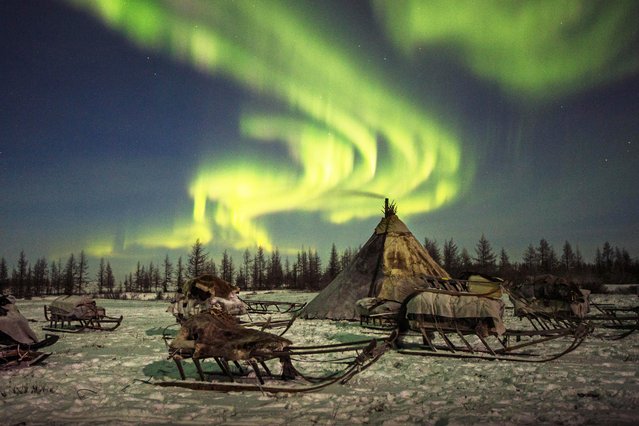
An empty camp is shown beneath a colourful sky in Siberia, December 2016. (Photo by Timothy Allen/Barcroft Productions)

A British photographer has captured life at the “edge of the world”. Timothy Allen, best known for his work on BBC's Human Planet, trekked through the freezing Siberian wilderness for 16 days as he joined part of an 800km migration of reindeer in the Yamal-Nenets region – a name that roughly translates to “edge of the world”. The stunning pictures feature the nomadic Nenets tribe, who drink blood to survive in -45°C temperatures. Timothy's epic journey, which will be revealed in an eight-minute documentary on Animal Planet USA, saw him travel across the bleak terrain of the frozen Ob River with the Nenets people in December last year. Here: An empty camp is shown beneath a colourful sky in Siberia, December 2016. (Photo by Timothy Allen/Barcroft Productions)
Details
19 Sep 2017 07:48:00
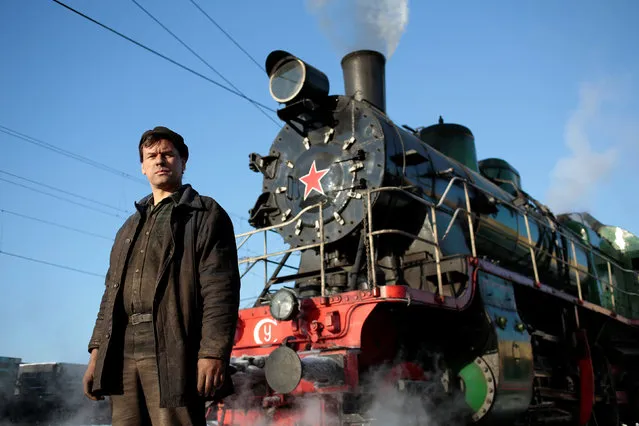
Alexei Gruk, 45, mechanic and supporter of presidential candidate Pavel Grudinin, poses for a picture in St. Petersburg, Russia, January 31, 2018. “The most important thing for me is that our foreign policy stays the same”, said Gruk. “To hell with the sanctions… So what if they don’t bring foreign stuff here anymore? As if that means we have to give up. I don't care”. (Photo by Anton Vaganov/Reuters)

Most Russians intending to vote for Vladimir Putin in Sunday's election say stability is at the root of their faith in their candidate – though many young voters believe it's time for a change of leader. Putin, 65, is expected to win a fourth term in office with 69 percent of the vote, according to the latest survey by a state-run pollster. Reuters correspondents and photographers who travelled around the country talking to voters ahead of the March 18 election found nothing to contradict expectation of an emphatic Putin victory. (Photo by Anton Vaganov/Reuters)
Details
15 Mar 2018 00:01:00