Loading...
Done
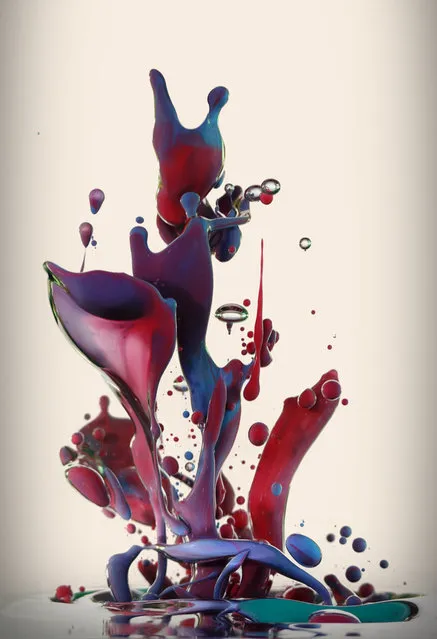
“Dropping” – Artist uses high-speed photography to capture the beauty of ink and oil. (Photo by Alberto Seveso)

“Dropping” is the work of Italian graphic artist Alberto Seveso. Seveso captured these amazing images or “fluid sculpture” with the use of high-speed photography while mixing ink with oil, as a tribute to the dripping technique of Jackson Pollock. Seveso works from his home town of Portoscuso, Italy creating cutting edge imagery for ad campaigns for companies such as Adobe, Sony, ESPN, Nikon and more. Sevese says of his work: “I don't consider myself as an artist, I'm just someone playing with software and creativity”... (Photo by Alberto Seveso)
Details
05 Jun 2015 08:17:00
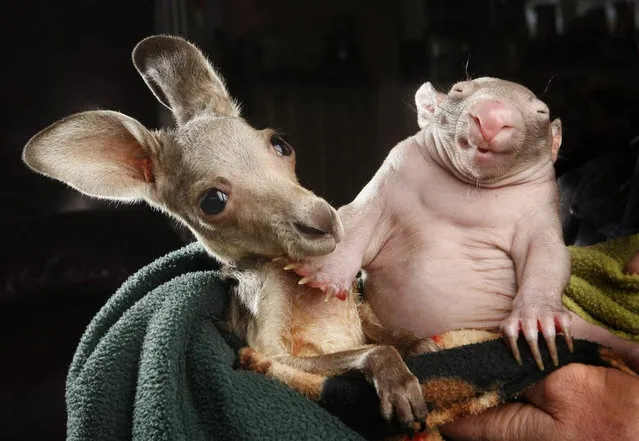
Orphaned Wombat Baby And Kangaroo Joey Are Best Friends

Opposites can attract and Anzac a doe-eyed baby kangaroo has become best friends with Peggy, a tiny squint-eyed wombat. Their unlikely union developed after the pair - both orphans - shared a pouch at the Wildlife Kilmore Rescue Centre in Victoria, Australia. At just over five months old, Anzac was brought to the centre after being rescued in the Macedon Ranges. The joey is in the mother kangaroo's pouch for about eight months, depending on the species, but Anzac was abandoned a few months before he was ready to be free.
Details
11 Oct 2013 10:11:00
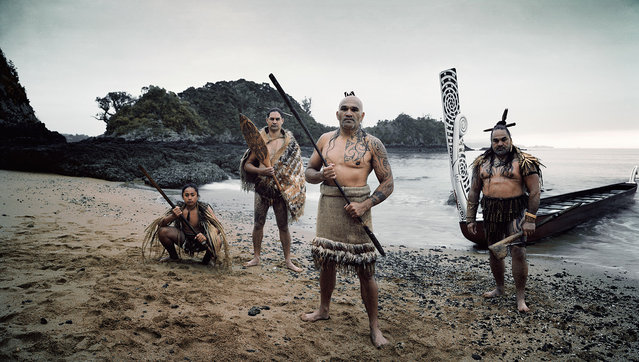
Maori  People New Zealand

The long and intriguing story of the origine of the indigenous Maori people can be traced back to the 13th century, the mythical homeland Hawaiki, Eastern Polynesia. Due to centuries of isolation, the Maori established a distinct society with characteristic art, a separate language and unique mythology. Defining aspects of Maori traditional culture include art, dance, legends, tattoos and community. While the arrival of European colonists in the 18th centure had a profound impact on the Maori way of life, many aspects of traditional society have survived into the 21th century.
Details
11 Mar 2014 14:40:00
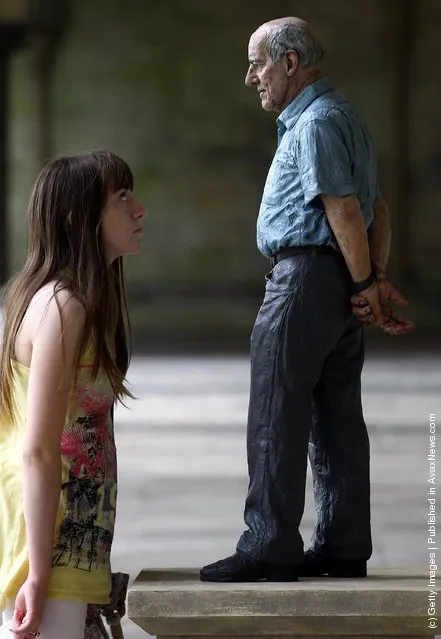
Visitors to Salisbury Cathedral stop to look at Sean Henry's sculpture Standing Man

Visitors to Salisbury Cathedral stop to look at Sean Henry's sculpture Standing Man (2007) currently being exhibited in the Cloisters on August 2, 2011 in Salisbury, United Kingdom. The exhibition, “Conflux: A Union of the Sacred and the Anonymous”, features over 20 contemporary sculptures of dramatically different scales occupying vacant plinths and open spaces on both the inside and exterior of the iconic 13th century building. This exhibition brings to the Cathedral the biggest single group of polychrome sculpture since the Reformation and runs until the end of October. (Photo by Matt Cardy/Getty Images)
Details
03 Aug 2011 11:28:00
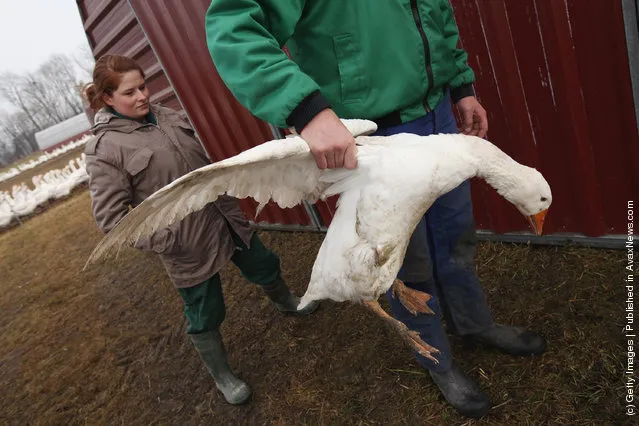
Domestic geese

Farmhand Beatrice Jasiewicz (L) looks on as a colleague carries an injured goose on an open field at the Oekohof Kuhhorst organic farm near Berlin on November 24, 2011 in Kuhhorst, Germany. Goose is the traditional Christmas Eve dinner in Germany. (Photo by Sean Gallup/Getty Images)
Details
25 Nov 2011 12:47:00
German kickboxer Christine Theiss hits challenger Olja Zerajic of Bosnia during their WKA middleweight title fight at Postpalast

German kickboxer Christine Theiss (L) hits challenger Olja Zerajic of Bosnia during their WKA middleweight title fight at Postpalast on March 2, 2012 in Munich, Germany. (Photo by Alexandra Beier/Bongarts/Getty Images)
Details
05 Mar 2012 11:44:00
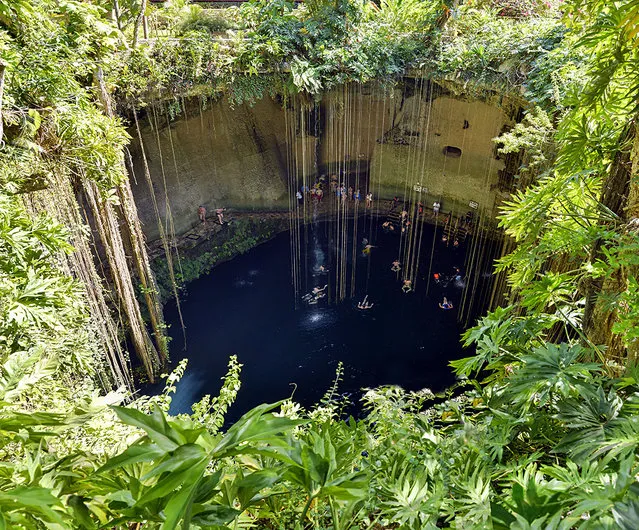
Cenote In Mexico

A cenote is a natural phenomenon, a sinkhole in the Earth’s surface. The Yucatan Peninsula in Mexico has an estimated 7,000 cenotes because it is primarily made up of porous limestone. For millions of years, rainfall slowly ate away at the limestone and a huge system of underground caves and caverns was formed. Many filled with water from rain or from the underground water table. When the roof of a water filled cave collapses, a cenote is born. The water found in a cenote may be fresh water, salt water, or both. Structurally it may be completely open, like a lake, almost completely closed with just a small opening at the top, or somewhere in between.
Details
06 Oct 2013 09:45:00
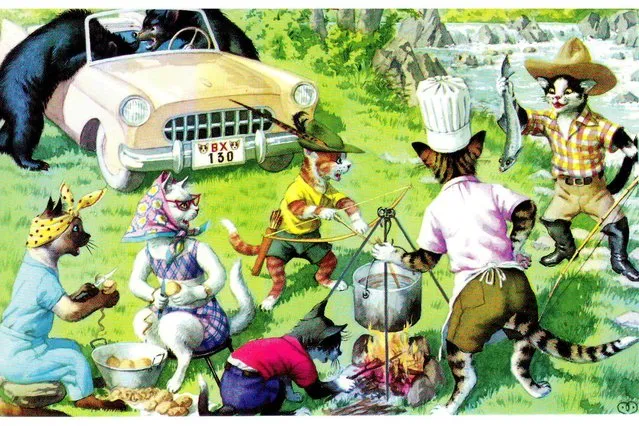
Dressed Cats By  Alfred Mainzer

From the 1940s through the 1960s, the Alfred Mainzer Company of Long Island City, NY published a series of linen and photochrome humorous cat postcards illustrated by Eugen Hartung (or Hurtong) (1897–1973), sometimes referred to as “Mainzer Cats”. These postcards normally illustrate settings that are filled with action, often with a minor disaster just about to occur. While the dressed cats were by far the most popular and most plentiful cards, Hartung also painted other dressed animals – primarily mice, dogs, and hedgehogs.
Details
31 Jan 2014 13:57:00