Loading...
Done
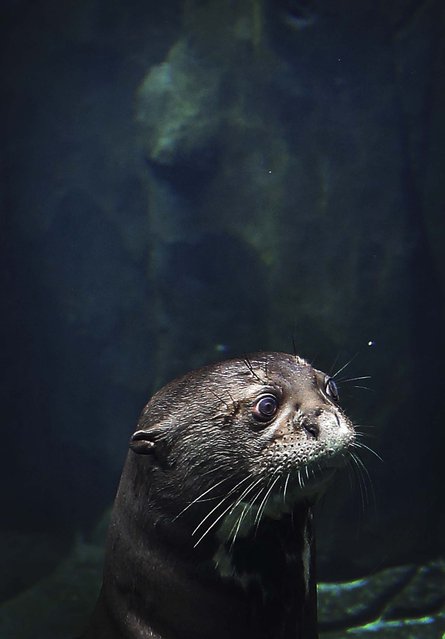
A giant river otter, the world's largest otter species, looks out of its enclosure at the newly completed River Safari in Singapore, on March 25, 2013. (Photo by Wong Maye-E/Associated Press)

A giant river otter, the world's largest otter species, looks out of its enclosure at the newly completed River Safari in Singapore, on March 25, 2013. (Photo by Wong Maye-E/Associated Press)
Details
30 Mar 2013 12:22:00
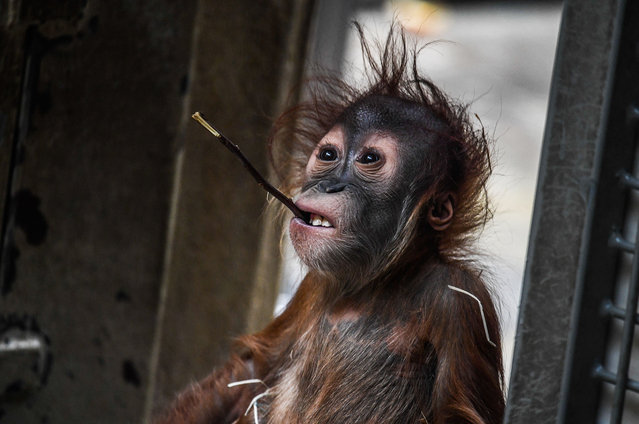
Almost two years old male baby orang-utan Dalai looks on in the zoo in Dresden, Germany, 30 March 2017. Dalai was born to mother Daisy in June 2016. (Photo by Filip Singer/EPA)

Almost two years old male baby orang-utan Dalai looks on in the zoo in Dresden, Germany, 30 March 2017. Dalai was born to mother Daisy in June 2016. (Photo by Filip Singer/EPA)
Details
01 Apr 2017 10:23:00
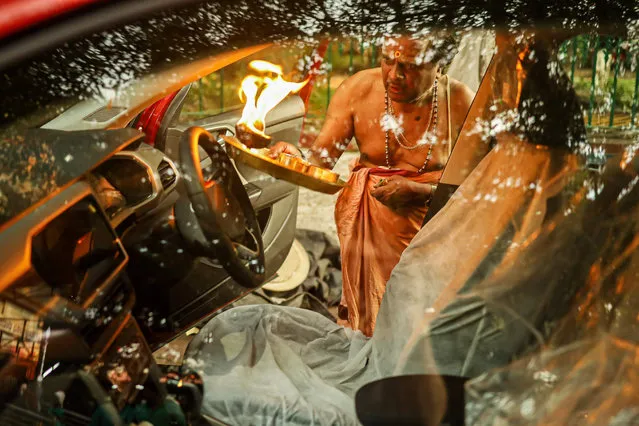
In this picture taken on August 1, 2022, a priest performs a ritual on a newly purchased car to seek blessings from the deities for safety outside a temple in Bangalore. (Photo by Sebastien Berger/AFP Photo)

In this picture taken on August 1, 2022, a priest performs a ritual on a newly purchased car to seek blessings from the deities for safety outside a temple in Bangalore. (Photo by Sebastien Berger/AFP Photo)
Details
08 Aug 2022 06:09:00
Staff members clean the court during the Women's Preliminary Round - Pool B volleyball match between China and Argentina on day ten of the Tokyo 2020 Olympic Games at Ariake Arena on August 2, 2021 in Tokyo, Japan. (Photo by Carlos Garcia Rawlins/Reuters)

Staff members clean the court during the Women's Preliminary Round - Pool B volleyball match between China and Argentina on day ten of the Tokyo 2020 Olympic Games at Ariake Arena on August 2, 2021 in Tokyo, Japan. (Photo by Carlos Garcia Rawlins/Reuters)
Details
15 Aug 2021 07:17:00


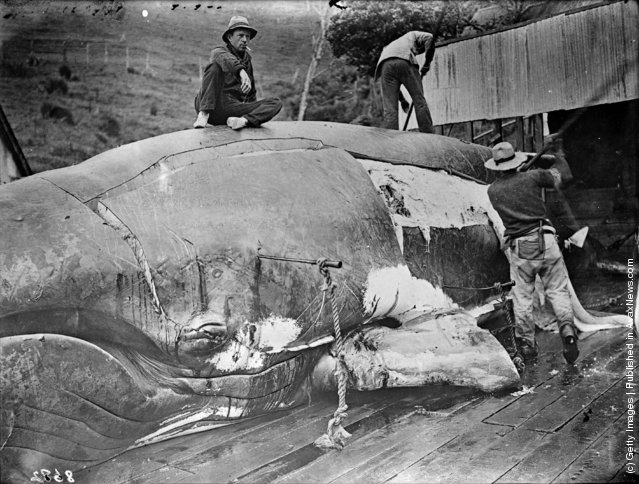
Men slicing blubber off a large, dead whale. (Photo by Topical Press Agency/Getty Images). Circa 1912
Details
08 Jun 2011 09:12:00
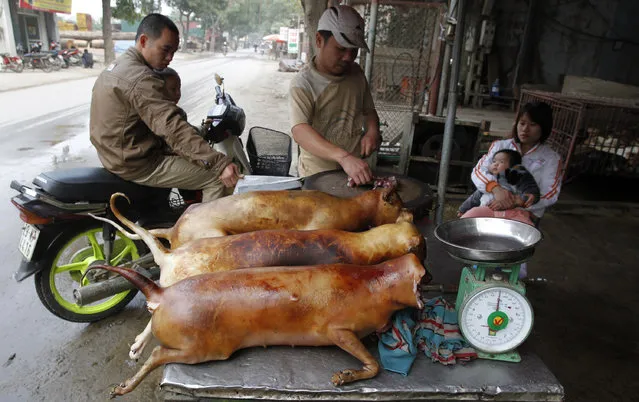
A vendor (C) cuts slaughtered dogs for sale at his roadside stall in Duong Noi village, outside Hanoi December 16, 2011. While animal rights activists have condemned eating dog meat as cruel treatment of the animals, it is still an accepted popular delicacy for some Vietnamese, as well in some other Asian countries. (Photo by Reuters/Kham)

A vendor (C) cuts slaughtered dogs for sale at his roadside stall in Duong Noi village, outside Hanoi December 16, 2011. While animal rights activists have condemned eating dog meat as cruel treatment of the animals, it is still an accepted popular delicacy for some Vietnamese, as well in some other Asian countries. Duong Noi is well-known as a dog-meat village, where hundreds of dogs are killed each day for sale as popular traditional food. Dog-eating as a custom is rooted in Vietnam and was developed as a result of poverty. One kilogram of dog meat costs about 130,000 dongs ($6.2). (Photo by Reuters/Kham)
Details
16 Jul 2013 11:40:00
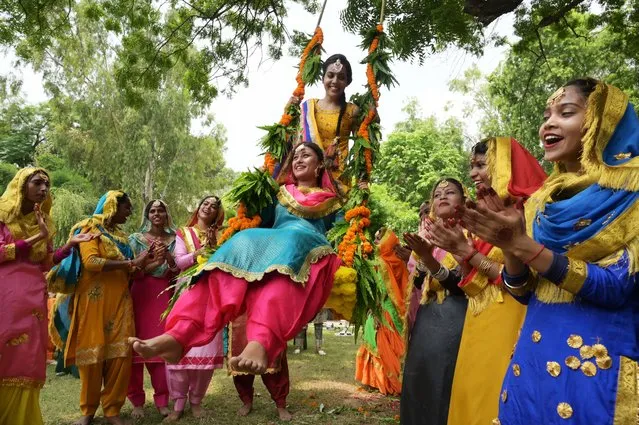
College students wearing traditional Punjabi attires celebrate the “Teej” festival in Amritsar on August 4, 2023. (Photo by Narinder Nanu/AFP Photo)

College students wearing traditional Punjabi attires celebrate the “Teej” festival in Amritsar on August 4, 2023. (Photo by Narinder Nanu/AFP Photo)
Details
12 Aug 2023 03:12:00
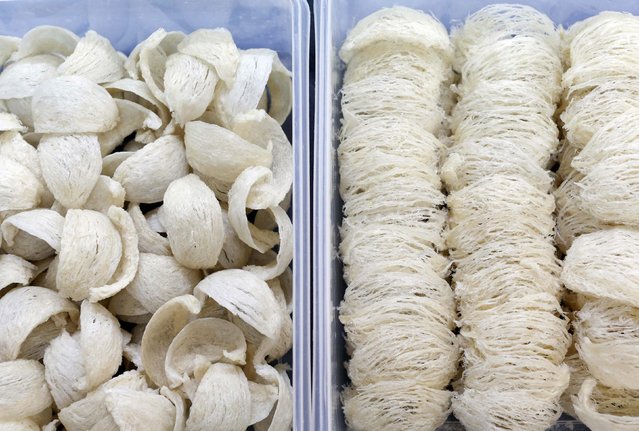
Two styles of cleaned bird's nest, Yan Zhan (L) and Su Zhan (R) await repacking at a processing plant in Kuala Lumpur, February 17, 2015. Prized in China for is alleged health benefits for hundreds of years, nests made from swiftlets' saliva are being mixed into coffee and cereal as the Southeast Asian producers of the delicacy seek to broaden its appeal, and their profit margins. (Photo by Olivia Harris/Reuters)

Two styles of cleaned bird's nest, Yan Zhan (L) and Su Zhan (R) await repacking at a processing plant in Kuala Lumpur, February 17, 2015. Prized in China for is alleged health benefits for hundreds of years, nests made from swiftlets' saliva are being mixed into coffee and cereal as the Southeast Asian producers of the delicacy seek to broaden its appeal, and their profit margins. The nests are among the world's most expensive foods, selling for up to $2,500 a kg and the swiftlets that weave them are indigenous to Indonesia, Malaysia, Thailand and Vietnam. (Photo by Olivia Harris/Reuters)
Details
24 Feb 2015 13:57:00