At a “Guts” tour stop in Seattle, American singer-songwriter Olivia Rodrigo in the first decade of August 2024 basks in the glow her ensemble creates. (Photo by Olivia Rodrigo/Instagram)
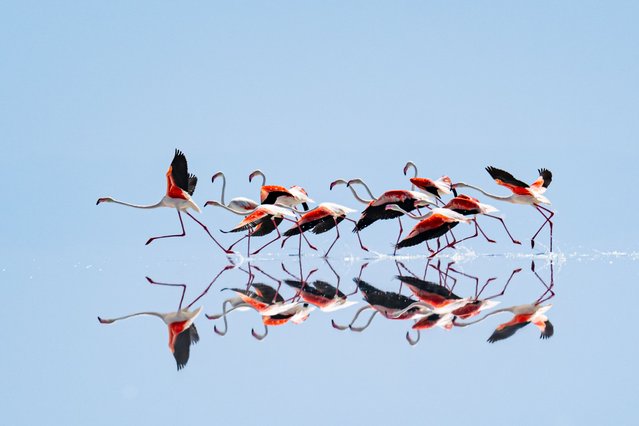
Flamingos preparing to take flight are reflected on Lake Tuz, which hosts thousands of flamingos every year, in Ankara, Turkiye, on June 24, 2025. This year, the lake has seen a decline in flamingo numbers due to drought, prompting the birds to shift their migration route to other wetlands across Turkiye. (Photo by Harun Ozalp/Anadolu via Getty Images)
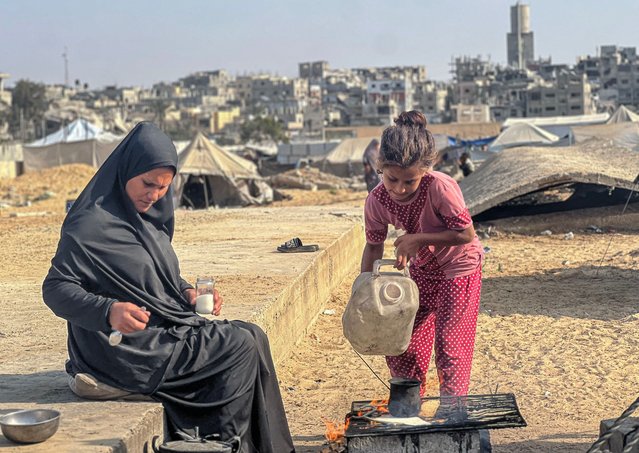
Alaa Shabat lives with her six children in a tent erected inside the Austrian cemetery in Khan Younis, southern Gaza Strip, on November 13, 2025, after her husband became ill and unable to work. (Photo by Tariq Mohammad/APAImages/Rex Features/Shutterstock)
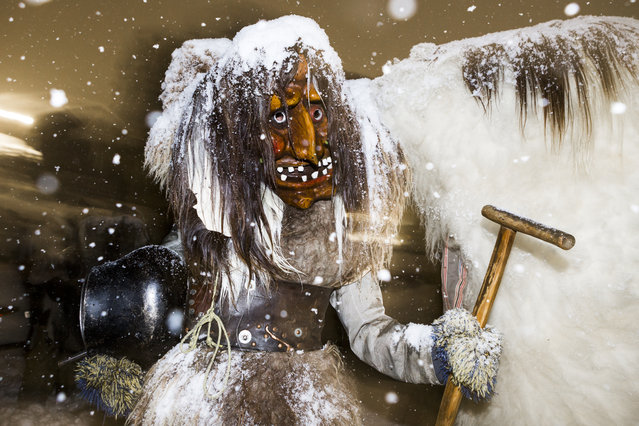
In this February 4, 2016 picture a masked participant of the traditional carnival parade poses in the streets of the village of Kippel in the Loetschental valley, southwestern part of Switzerland. During this sinister carnival, participants wearing wooden masks and animal furs, crowd the streets of the villages to scare the people. (Photo by Dominic Steinmann/Keystone via AP Photo)
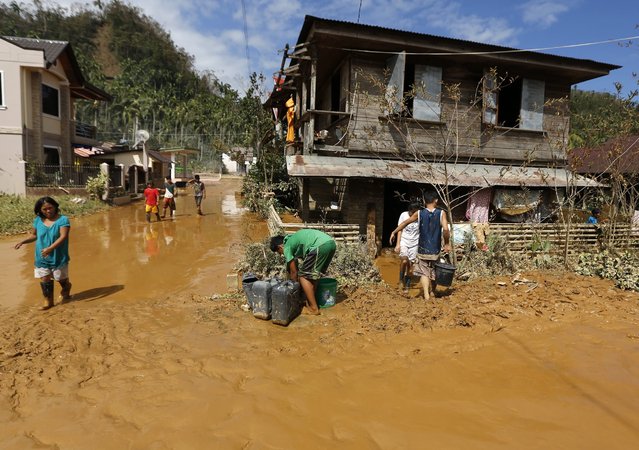
Filipino typhoon victims walk through heavy mud in the typhoon hit town of Taft, Samar island, Philippines, 08 December 2014. Typhoon Hagupit weakened into a tropical storm as it moved towards the Philippine capital after killing at least 27 people and displacing more than one million people in the eastern and central provinces. Hagupit slammed into the country's eastern coast on 06 December evening, bringing heavy rains and gale-force winds that flattened homes, ripped off roofs, and knocked out power and communications. (Photo by Francis R. Malasig/EPA)
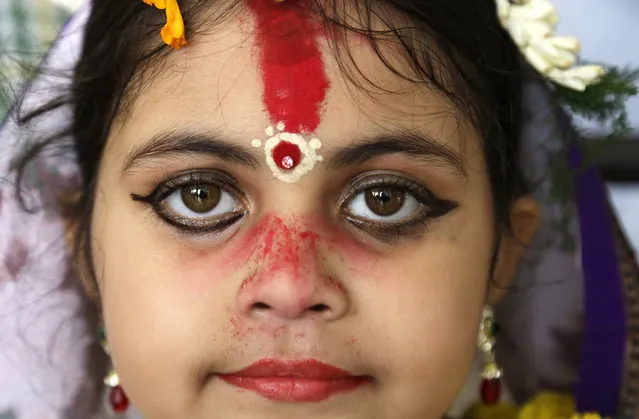
A young Hindu girl sits for a ceremony where she and other girls are worshipped as “Kumari”, or living goddess, during Ram Navami festival, at a temple in Kolkata, India, Saturday, March 28, 2015. Ram Navami marks the birth of Hindu God Rama. (Photo by Bikas Das/AP Photo)
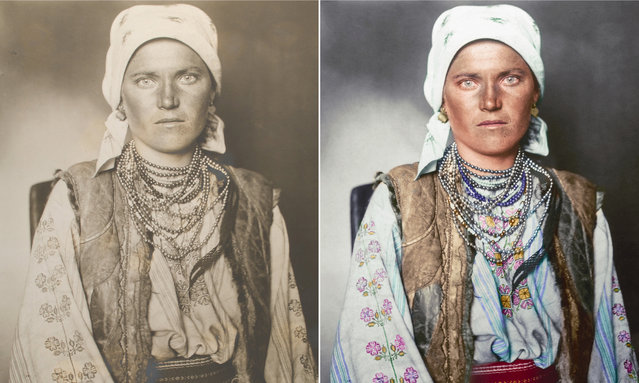
Many of the 12 million people who entered the US through New York’s Ellis Island wore traditional dress from their homelands. Here: A Ruthenian woman circa 1906 from the region historically inhabiting the kingdom of the Rus, incorporating parts of modern-day Slavic speaking countries. Her outfit consists of a shirt and underskirt made from linen embroidered with traditional floral-based patterns. (Photo by Augustus Francis Sherman/New York Public Library/The Guardian)