Loading...
Done
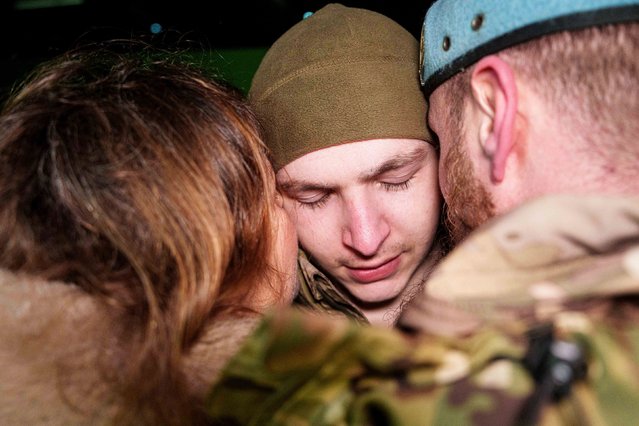
A Ukrainian serviceman hugs his relative after returning from captivity during a POWs exchange between Russia and Ukraine, in Ukraine, Monday December 30, 2024. (Photo by Evgeniy Maloletka/AP Photo)

A Ukrainian serviceman hugs his relative after returning from captivity during a POWs exchange between Russia and Ukraine, in Ukraine, Monday December 30, 2024. (Photo by Evgeniy Maloletka/AP Photo)
Details
20 Jan 2025 00:10:00
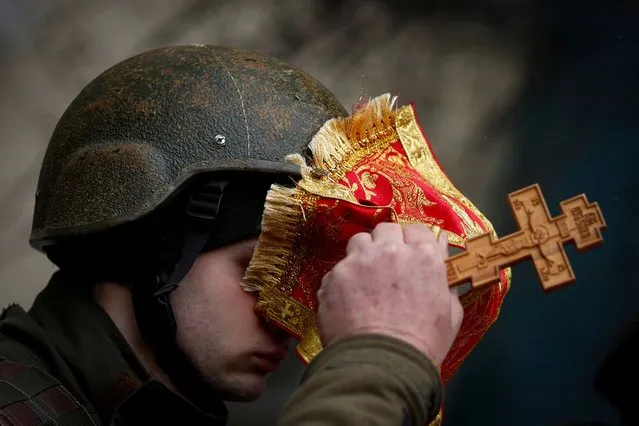
Military Chaplain Nikolay Medynsky blesses a Ukrainian soldier before he goes into battle, as Russia's attack on the Ukraine continues, in Kyiv, Ukraine, March 13, 2022. (Photo by Thomas Peter/Reuters)

Military Chaplain Nikolay Medynsky blesses a Ukrainian soldier before he goes into battle, as Russia's attack on the Ukraine continues, in Kyiv, Ukraine, March 13, 2022. (Photo by Thomas Peter/Reuters)
Details
14 Mar 2022 05:06:00
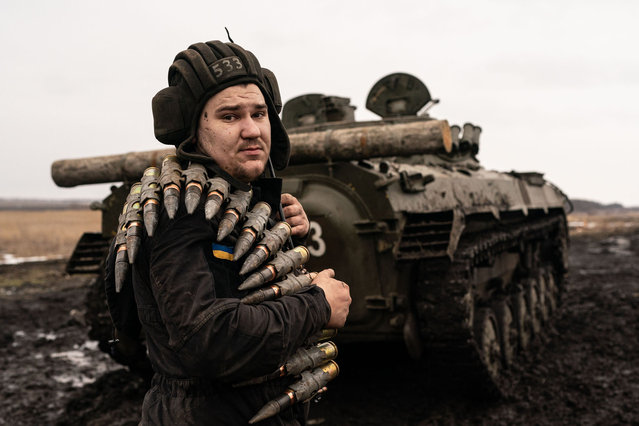
Ukrainian servicemen are seen training with a BMP-2 in Donetsk Region, Ukraine on February 10, 2022. (Photo by Wolfgang Schwan/Anadolu Agency via Getty Images)

Ukrainian servicemen are seen training with a BMP-2 in Donetsk Region, Ukraine on February 10, 2022. (Photo by Wolfgang Schwan/Anadolu Agency via Getty Images)
Details
02 Apr 2022 06:00:00
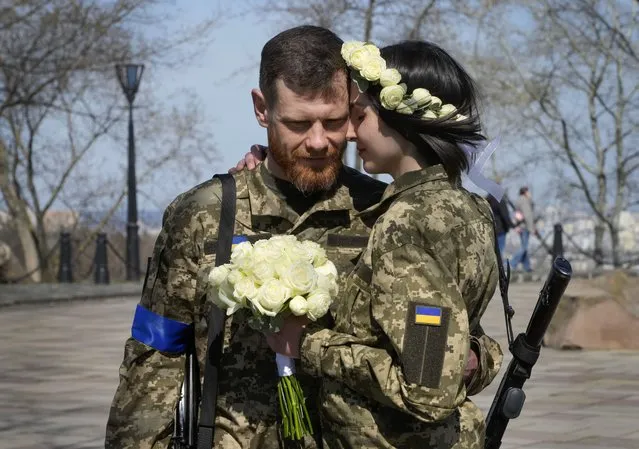
Ukrainian soldiers Anastasia and Vyacheslav embrace prior to their wedding ceremony in a city park in Kyiv, Ukraine, Thursday, April 7, 2022. (Photo by Efrem Lukatsky/AP Photo)

Ukrainian soldiers Anastasia and Vyacheslav embrace prior to their wedding ceremony in a city park in Kyiv, Ukraine, Thursday, April 7, 2022. (Photo by Efrem Lukatsky/AP Photo)
Details
16 May 2022 04:49:00
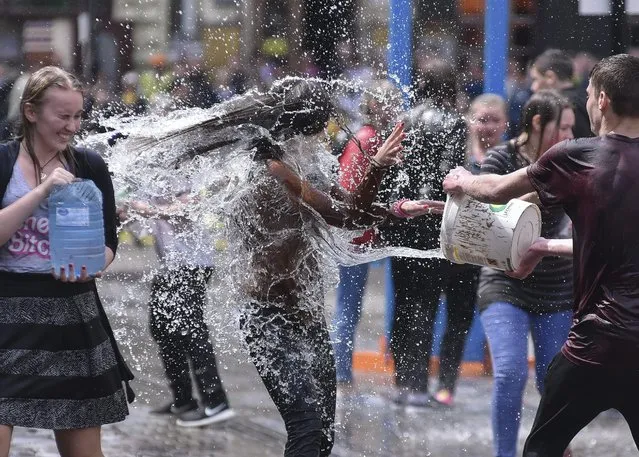
Ukrainians pour water on each other on a street in Lviv, Ukraine, 02 May 2016. The tradition of pouring water was an ancient spring ritual of cleansing on first Monday after Orthodox Easter. (Photo by Mykola Tys/EPA)

Ukrainians pour water on each other on a street in Lviv, Ukraine, 02 May 2016. The tradition of pouring water was an ancient spring ritual of cleansing on first Monday after Orthodox Easter. (Photo by Mykola Tys/EPA)
Details
03 May 2016 13:38:00
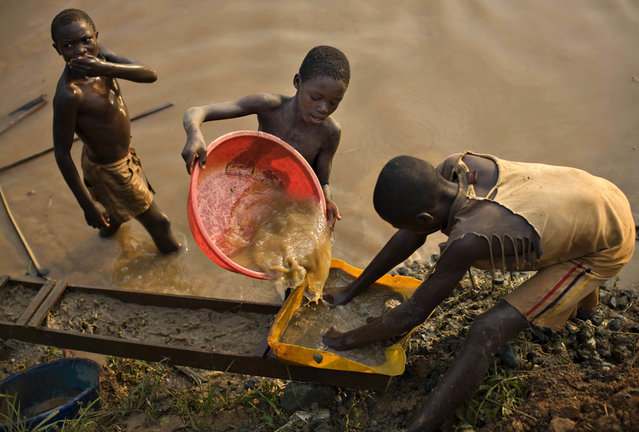
Boys pan for gold on a riverside at Iga Barriere, 25 km (15 miles) from Bunia, in the resource-rich Ituri region of eastern Congo February 16, 2009. Ituri is one of many areas of the country to have experienced bitter ethnic conflict between rival tribes in recent years. Massacres have left tens of thousands dead. It is this fighting that led U.S. authorities to take the unprecedented step of naming Congo in section 1502 of the Dodd-Frank financial regulation act, which says U.S.-listed companies that source gold, tungsten, tantalum and tin from Congo or its neighbours must assure the U.S. stock exchange regulator that their business is not helping fund conflict. (Photo by Finbarr O'Reilly/Reuters)

Boys pan for gold on a riverside at Iga Barriere, 25 km (15 miles) from Bunia, in the resource-rich Ituri region of eastern Congo February 16, 2009. Ituri is one of many areas of the country to have experienced bitter ethnic conflict between rival tribes in recent years. Massacres have left tens of thousands dead. It is this fighting that led U.S. authorities to take the unprecedented step of naming Congo in section 1502 of the Dodd-Frank financial regulation act, which says U.S.-listed companies that source gold, tungsten, tantalum and tin from Congo or its neighbours must assure the U.S. stock exchange regulator that their business is not helping fund conflict. (Photo by Finbarr O'Reilly/Reuters)
Details
12 Nov 2016 10:24:00
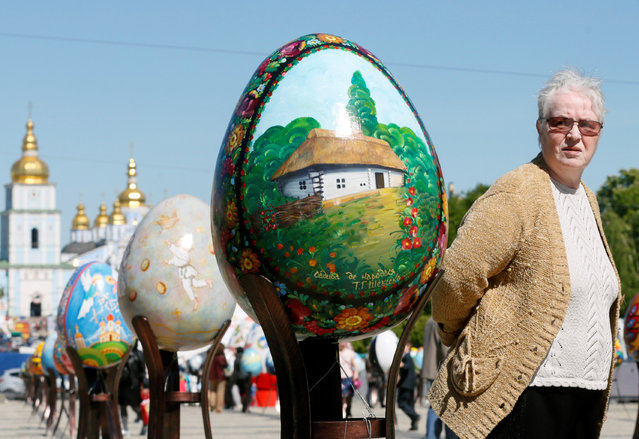
A woman looks at traditional Ukrainian Easter eggs “Pysanka”, installed as part of the upcoming celebrations of Easter, in central Kiev, Ukraine, April 29, 2016. A pysanka is a Ukrainian Easter egg, decorated with traditional Ukrainian folk designs using a wax-resist (batik) method. The word pysanka comes from the verb pysaty, “to write”, as the designs are not painted on, but written with beeswax. Many other eastern European ethnic groups decorate eggs using wax resist for Easter. These include the Belarusians, Bulgarians, Croats, Czechs, Hungarians, Lithuanians, Poles, Romanians, Serbs, Slovaks, Slovenes and Sorbs. (Photo by Valentyn Ogirenko/Reuters)

A woman looks at traditional Ukrainian Easter eggs “Pysanka”, installed as part of the upcoming celebrations of Easter, in central Kiev, Ukraine, April 29, 2016. A pysanka is a Ukrainian Easter egg, decorated with traditional Ukrainian folk designs using a wax-resist (batik) method. The word pysanka comes from the verb pysaty, “to write”, as the designs are not painted on, but written with beeswax. Many other eastern European ethnic groups decorate eggs using wax resist for Easter. These include the Belarusians, Bulgarians, Croats, Czechs, Hungarians, Lithuanians, Poles, Romanians, Serbs, Slovaks, Slovenes and Sorbs. (Photo by Valentyn Ogirenko/Reuters)
Details
30 Apr 2016 09:00:00
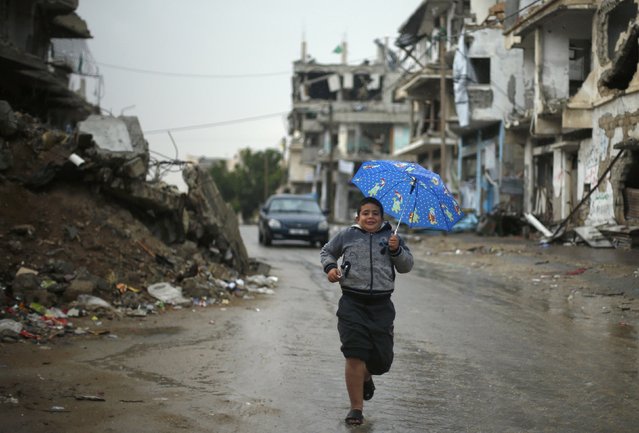
A Palestinian boy holds an umbrella as he runs near houses that witnesses said were destroyed or damaged by Israeli shelling during the most recent conflict between Israel and Hamas, on a rainy day in the east of Gaza City November 16, 2014. (Photo by Suhaib Salem/Reuters)

A Palestinian boy holds an umbrella as he runs near houses that witnesses said were destroyed or damaged by Israeli shelling during the most recent conflict between Israel and Hamas, on a rainy day in the east of Gaza City November 16, 2014. (Photo by Suhaib Salem/Reuters)
Details
17 Nov 2014 12:01:00