Loading...
Done
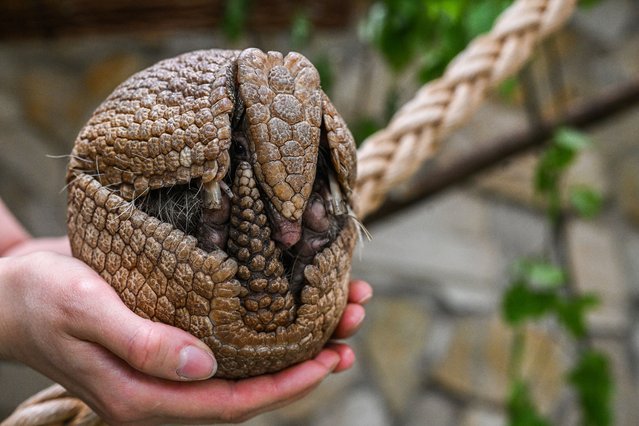
Zookeeper Agata holds a rare newborn Brazilian three-banded armadillo inside its enclosure at the Wroclaw Zoo in Wroclaw, Poland on May 11, 2023. The Tolypeutes matatus, or the southern armor also known as bolita or tatu-bola, is a fairly popular animal in South America but is increasingly rare. The new zoo child was born on March 23. The species is listed as vulnerable by the International Union for the Conservation of Nature (IUCN) and threatened by habitat loss and hunting. (Photo by Omar Marques/Anadolu Agency via Getty Images)

Zookeeper Agata holds a rare newborn Brazilian three-banded armadillo inside its enclosure at the Wroclaw Zoo in Wroclaw, Poland on May 11, 2023. The Tolypeutes matatus, or the southern armor also known as bolita or tatu-bola, is a fairly popular animal in South America but is increasingly rare. The new zoo child was born on March 23. The species is listed as vulnerable by the International Union for the Conservation of Nature (IUCN) and threatened by habitat loss and hunting. (Photo by Omar Marques/Anadolu Agency via Getty Images)
Details
28 May 2023 04:09:00
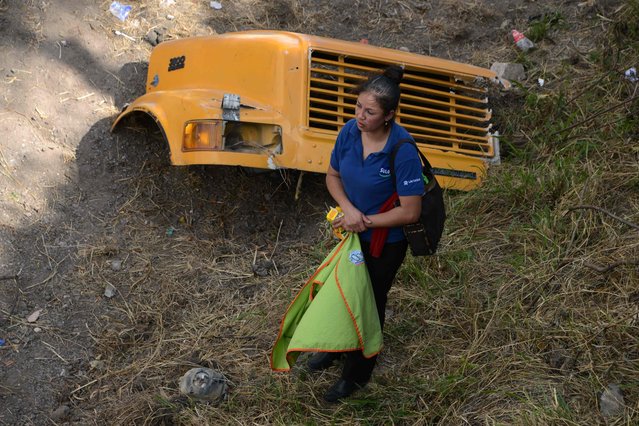
A woman watches rescue operations after a bus and a truck crashed on the road that links the Honduran capital with the south of the country, near Germania, 11 km south of Tegucigalpa on February 5, 2017. At least 12 people were killed and 35 injured of some 70 who were on board the bus. (Photo by Orlando Sierra/AFP Photo)

A woman watches rescue operations after a bus and a truck crashed on the road that links the Honduran capital with the south of the country, near Germania, 11 km south of Tegucigalpa on February 5, 2017. At least 12 people were killed and 35 injured of some 70 who were on board the bus. (Photo by Orlando Sierra/AFP Photo)
Details
07 Feb 2017 00:00:00
In this April 20, 2018, file aerial photo released by China's Xinhua News Agency, advection fog drifts across skyscrapers on the waterfront in Qingdao in eastern China's Shandong Province. Chinese leaders have long been sensitive about their communist country’s international image. Now, they are battling back, investing in diplomacy and a courtship of hearts and minds, just as the United States digs in on the Trump administration’s “America First” mindset. (Photo by Lu Hui/Xinhua via AP Photo/File)

In this April 20, 2018, file aerial photo released by China's Xinhua News Agency, advection fog drifts across skyscrapers on the waterfront in Qingdao in eastern China's Shandong Province. Chinese leaders have long been sensitive about their communist country’s international image. Now, they are battling back, investing in diplomacy and a courtship of hearts and minds, just as the United States digs in on the Trump administration’s “America First” mindset. (Photo by Lu Hui/Xinhua via AP Photo/File)
Details
15 Feb 2020 00:03:00
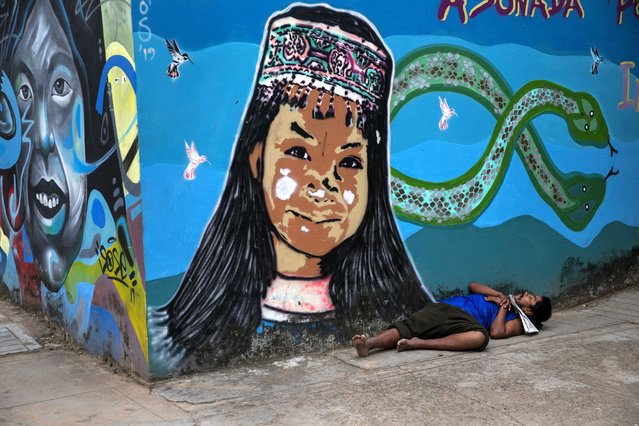
A homeless man sleeps against a wall adorned with a mural featuring a Shipibo Indigenous girl and Amazon rainforest animals, in Pucallpa, in Peru's Ucayali region, Wednesday, September 2, 2020. Peru is home to one of Latin America's largest Indigenous populations, whose ancestors lived in the Andean country before the arrival of Spanish colonists. (Photo by Rodrigo Abd/AP Photo)

A homeless man sleeps against a wall adorned with a mural featuring a Shipibo Indigenous girl and Amazon rainforest animals, in Pucallpa, in Peru's Ucayali region, Wednesday, September 2, 2020. Peru is home to one of Latin America's largest Indigenous populations, whose ancestors lived in the Andean country before the arrival of Spanish colonists. (Photo by Rodrigo Abd/AP Photo)
Details
23 Oct 2020 00:03:00


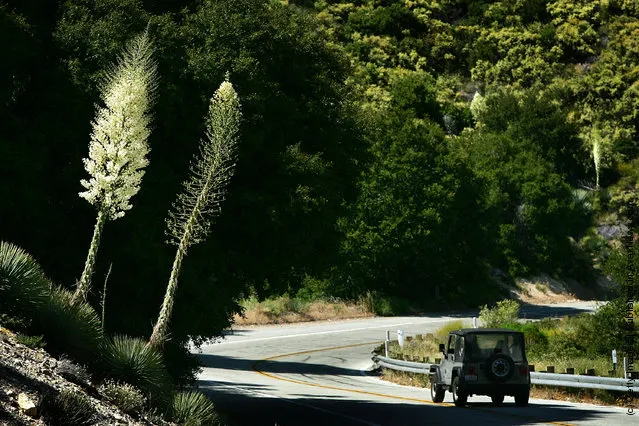
“Yucca is a genus of perennial shrubs and trees in the agave family, Agavaceae. Its 40-50 species are notable for their rosettes of evergreen, tough, sword-shaped leaves and large terminal panicles of white or whitish flowers. They are native to the hot and dry (arid) parts of North America, Central America, South America, and the Caribbean. Early reports of the species were confused with the cassava (Manihot esculenta). Consequently, Linnaeus mistakenly derived the generic name from the Carib word for the latter, yuca. It is also colloquially known in the midwest United States as “Ghosts in the graveyard”, as it is commonly found growing in rural graveyards and when in bloom the flowers appear as an apparition floating.” – Wikipedia

Photo: A yucca standing among flowers bursts forth a very large stalk of flowers as a heavy wildflower bloom on June 21, 2005 in the Angeles National Forest northwest of La Canada, California. (Photo by David McNew/Getty Images)
Details
29 Mar 2011 07:31:00
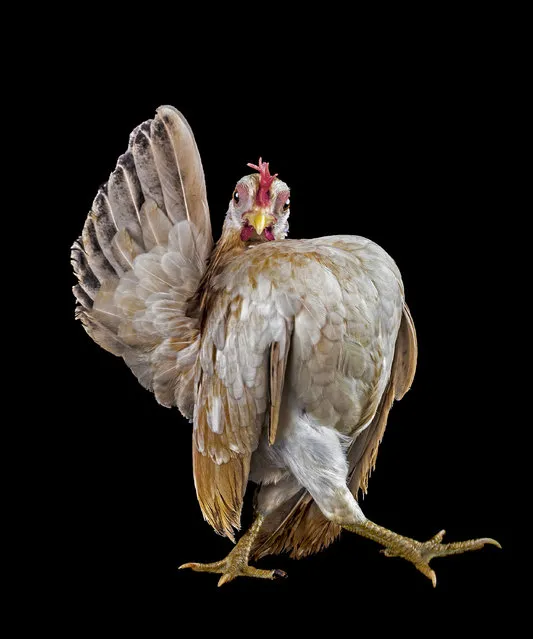
Ornamental chicken breeding clubs have emerged in Indonesia, Thailand, North America and even European countries such as the UK and France. Malaysia is however the epicenter of this cultural phenomenon. (Photo by Ernest Goh/2013 Sony World Photography Awards)

Ornamental chicken breeding clubs have emerged in Indonesia, Thailand, North America and even European countries such as the UK and France. Malaysia is however the epicenter of this cultural phenomenon. These chickens are prized for their build, size, behavior and showmanship by their owners and competitions or beauty contests as they are often described are held almost every week in at least one village in Malaysia. Judges sit around a square table inspecting each chicken for a few minutes trying to determine a champion specimen in its own weight class based on its stance, temperament and physical assets like wings, tails and comb. The walk or strut by an ornamental chicken in a beauty contest, much like a runway model, constitutes a large part of the scoring system. (Photo by Ernest Goh/2013 Sony World Photography Awards)
Details
28 Apr 2013 08:32:00
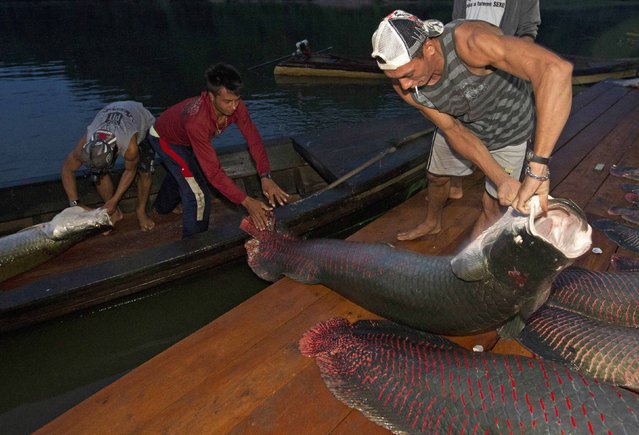
Villagers from the Medio Jurua nature reserve of Brazil's Amazon rainforest arrive with their catch of pirarucus, the largest freshwater fish in South America, after a night of fishing in Manaria Lake, Carauari municipality, September 3, 2012. Catching the pirarucu, a fish that is sought after for its meat and is considered by biologists to be a living fossil, is only allowed once a year by Brazil's environmental protection agency. (Photo by Bruno Kelly/Reuters)

Villagers from the Medio Jurua nature reserve of Brazil's Amazon rainforest arrive with their catch of pirarucus, the largest freshwater fish in South America, after a night of fishing in Manaria Lake, Carauari municipality, September 3, 2012. Catching the pirarucu, a fish that is sought after for its meat and is considered by biologists to be a living fossil, is only allowed once a year by Brazil's environmental protection agency. (Photo by Bruno Kelly/Reuters)
Details
19 Jul 2013 08:53:00
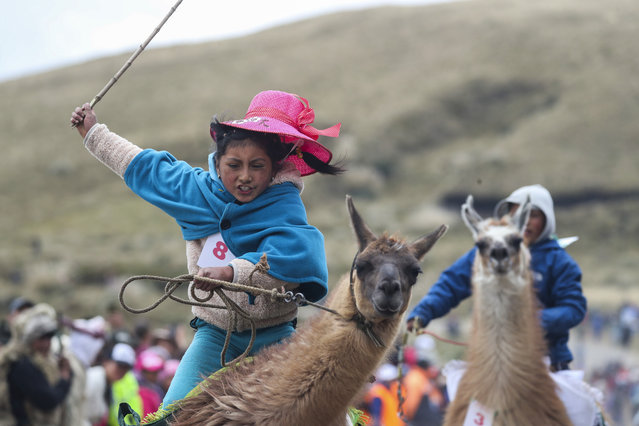
Milena Jami whips her llama to win the first place in the a race for children of ages seven and eight at the Llanganates National Park, Ecuador, Saturday, February 8, 2020. Wooly llamas, an animal emblematic of the Andean mountains in South America, become the star for a day each year when Ecuadoreans dress up their prized animals for children to ride them in 500-meter races. (Photo by Dolores Ochoa/AP Photo)

Milena Jami whips her llama to win the first place in the a race for children of ages seven and eight at the Llanganates National Park, Ecuador, Saturday, February 8, 2020. Wooly llamas, an animal emblematic of the Andean mountains in South America, become the star for a day each year when Ecuadoreans dress up their prized animals for children to ride them in 500-meter races. (Photo by Dolores Ochoa/AP Photo)
Details
02 Jan 2021 00:01:00