Loading...
Done
Rabbit Island in Japan

Only after World War II did the secret spill: Ōkunoshima, located in the Inland Sea of Japan between Hiroshima and Shikoku, was the top-secret site for manufacturing chemical warfare. When the factories were closed down, a number of exotic wild rabbits were seen freely roaming the island. They were assumed to have been the test subjects for the chemical weapons, which the military failed to eradicate when the factory was demolished.
Details
17 Feb 2014 12:23:00
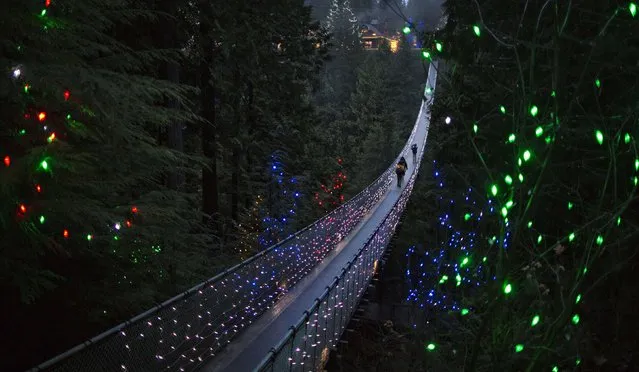
Capilano Suspension Bridge, North Vancouver, British Columbia

The Capilano Suspension Bridge is a simple suspension bridge crossing the Capilano River in the District of North Vancouver, British Columbia, Canada. The current bridge is 140 metres (460 ft) long and 70 metres (230 ft) above the river. It is part of a private facility, with an admission fee, and draws over 800,000 visitors a year.
Details
21 Apr 2014 15:49:00
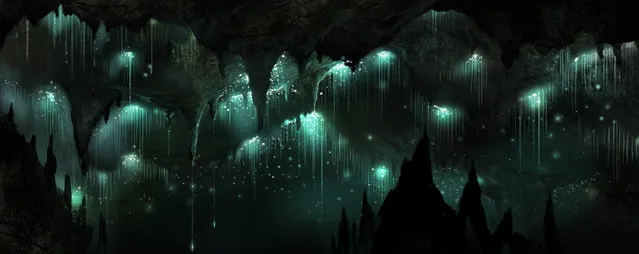
Waitomo Glowworm Caves New Zealand

The Waitomo Glowworm Caves attraction is a cave at Waitomo on the North Island of New Zealand, known for its population of glowworms, Arachnocampa luminosa. This species is found exclusively in New Zealand. They are around the size of an average mosquito. This cave is part of the Waitomo Caves system that includes the Ruakuri Cave and the Aranui Cave.
Details
12 May 2014 09:55:00
National September 11 Memorial And Museum

The National September 11 Memorial & Museum (branded as 9/11 Memorial and 9/11 Memorial Museum) is the principal memorial and museum commemorating the September 11 attacks of 2001, which killed nearly 3,000 people, and the World Trade Center bombing of 1993, which killed six. The memorial is located at the World Trade Center site, on the former location of the Twin Towers, which were destroyed during the attacks. The World Trade Center Memorial Foundation was renamed the National September 11 Memorial & Museum at the World Trade Center in 2007.
Details
16 May 2014 15:58:00
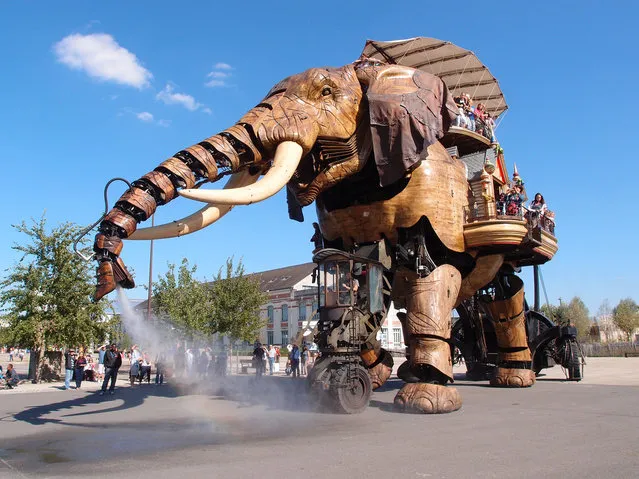
The Machines Of The Isle Of Nantes

Due to the influence of Sci-Fi movies, many of us have an obsession with giant robots. How cool would it be to ride a gigantic robotic dinosaur or elephant? It would be even cooler to control one! Regretfully, the modern technologies are not yet sophisticated enough to fulfill this dream. Pierre Orefice and François Delarozière, however, came very close. These two artists have made it their goal to turn Nantes, France, into a hot tourist destination spot for people who love robots. In their project of Machines de l'île in Nantes, they have created a whole park of robotic monstrosities, ranging from a giant 3 story high elephant to a 2 meter long centipede crawling on a rail track.
Details
05 Jan 2015 13:21:00
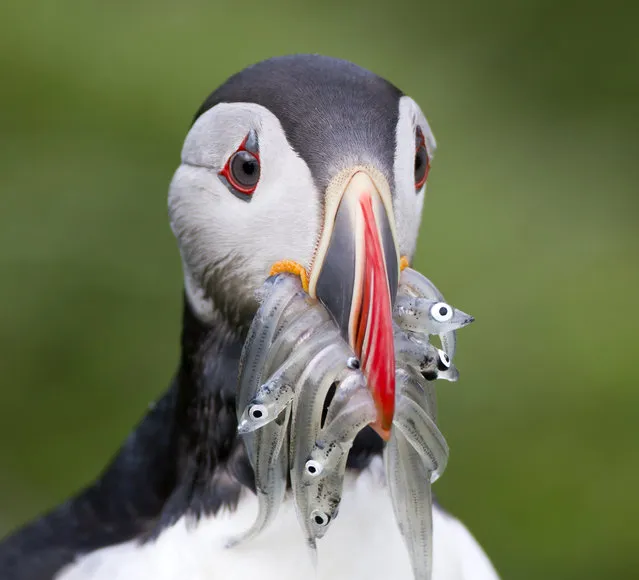
Atlantic Puffin Is AKA Puffins Or Puffin Birds

The Atlantic Puffin is definitely a curious-looking bird. The special coloring that this bird develops for the breeding season in the spring is very reminiscent of tropical birds. The bright colors of the beak and the markings around the eyes serve no particular advantage and have evolved as a result of sexual selection. However, Puffins don’t look that pretty all year round. They shed all these festive colors in partial moult after the breeding season is over. They lose the ornaments around their eyes, their face becomes darker, and their beak becomes very different. The natural habitat of these birds is the cold waters of the North Atlantic Ocean.
Details
12 Nov 2014 13:40:00
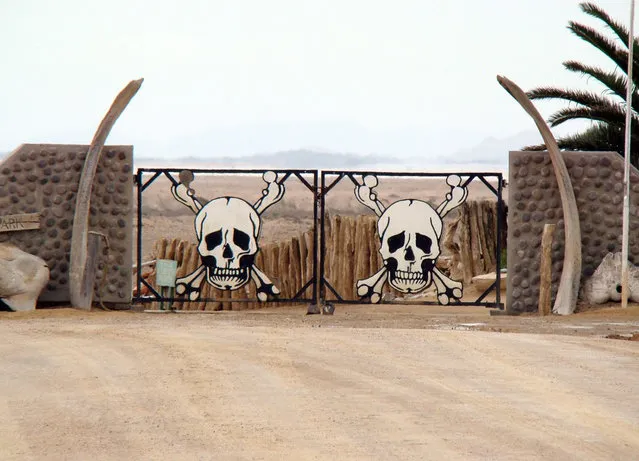
The Skeleton Coast, Namibia

The Skeleton Coast is the northern part of the Atlantic Ocean coast of Namibia and south of Angola from the Kunene River south to the Swakop River, although the name is sometimes used to describe the entire Namib Desert coast. The Bushmen of the Namibian interior called the region "The Land God Made in Anger", while Portuguese sailors once referred to it as "The Gates of Hell".
Details
23 Feb 2014 09:27:00
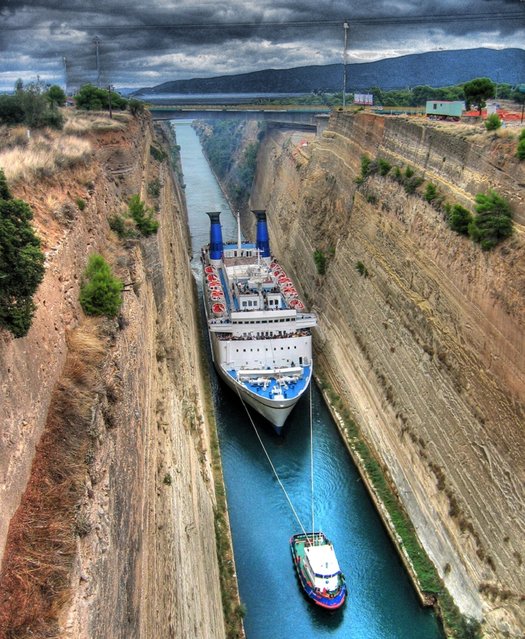
Corinth Canal

The Corinth Canal is a canal that connects the Gulf of Corinth with the Saronic Gulf in the Aegean Sea. It cuts through the narrow Isthmus of Corinth and separates the Peloponnesian peninsula from the Greek mainland, thus effectively making the former an island. The builders dug the canal through the Isthmus at sea level; no locks are employed. It is 6.4 kilometres (4.0 mi) in length and only 21.3 metres (70 ft) wide at its base, making it unpassable for most modern ships. It now has little economic importance.

Details
12 Mar 2013 12:21:00