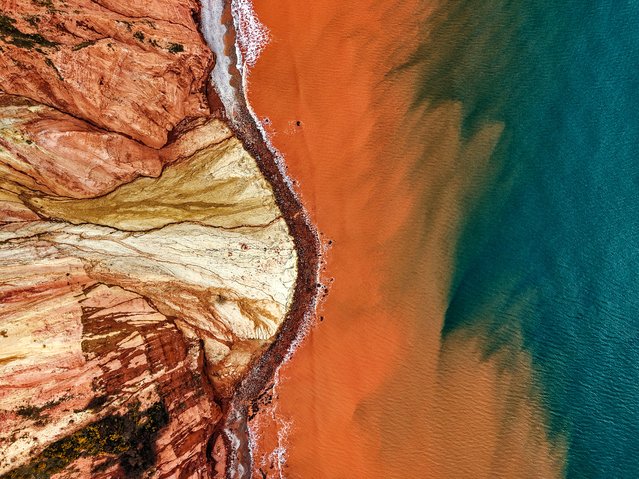
The clear blue water off Sidmouth in Devon, UK in March 2025 turned an orangey-red hue as tonnes of 200 million-year-old sandstone was mixed in by the tide. The 500ft cliff suffered a massive fall in October last year, and took a large section of Otter sandstone and Mercia mudstone with it. (Phoot by Dean Penn/RedZepplin/Bournemouth News)
Palestinians react as they gather at the site of an explosion, following Israeli strikes in Gaza City on August 5, 2022. (Photo by Mohammed Salem/Reuters)
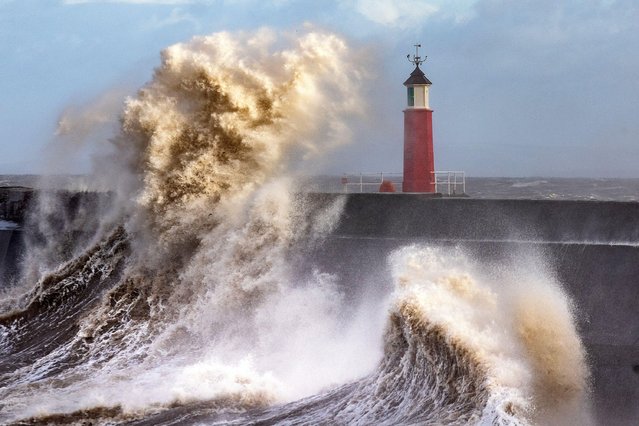
Large waves batter the North Somerset coast at Watchet on December 22, 2024, as Storm Enol hits the UK. The storm has prompted a yellow warning from the Met office forecasting 70mph winds. (Photo by Mark Passmore/Alamy Live News)
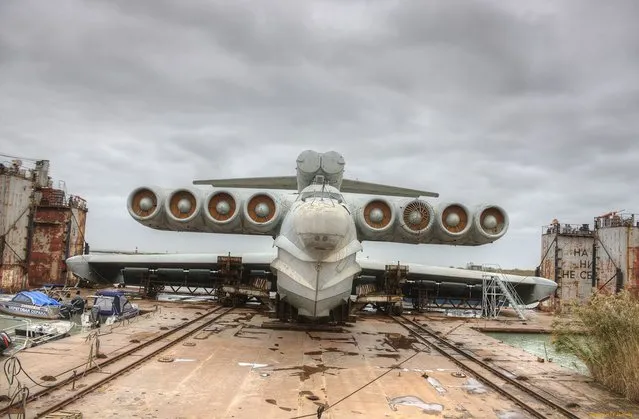
“The Lun-class ekranoplan (NATO reporting name Duck) was a ground effect vehicle (GEV) designed by Rostislav Evgenievich Alexeev and used by the Soviet and Russian navies from 1987 until sometime in the late 1990s. It “flew” using the lift generated by the ground effect of its large wings when close to the surface of the water – about four metres or less. Although they might look similar and/or have related technical characteristics, ekranoplans like the Lun are not aircraft, seaplanes, hovercraft, or hydrofoils – ground effect is a separate technology altogether. The International Maritime Organization classifies these vehicles as maritime ships. The name Lun comes from the Russian for harrier”. – Wikipedia (Photo by Igor113)
A girls’ Friday night out on the town, in Bristol, England, 2009. As in most big cities in the UK, around the weekend you see women with very minimal clothing on, wandering around regardless of the temperature. (Photo by Martin Parr/Magnum Photos)