Loading...
Done
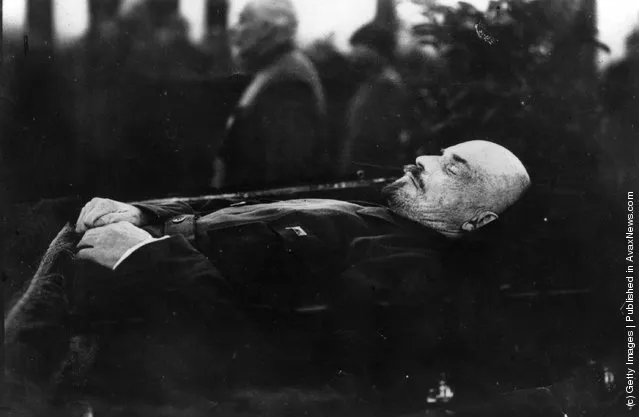
1924:  Vladimir Ilyich Lenin lying in state in the Kremlin

Photo: Vladimir Ilyich Lenin (1870 – 1924) lying in state in the Kremlin. (Photo by Hulton Archive/Getty Images). 1924

Important! For the same article in Russian language click here.

Something quite intriguing is happening within Russian-speaking internet during the last few – should you type a fully academic inquiry (at least, according to Russian academic requirements) in national search engines for "Lenin's mausoleum" – the first thing you get (even in top 10 searches) is website pages talking about black magic and occult. Website authors view this construction differently, but unconditionally agree on one thing: the mausoleum of the "leader of the world proletariat” – the essence of a magical artifact, a sort of “energy vampire”. It was built with a certain purpose: to drain the energy out of miserable Soviet citizens on one hand; and to poison the anthroposphere of one-sixth part of the earth with its vibes (the exact territory that was occupied by the former Soviet Union), depriving the Russian people of will to resist on the other hand. Complete nonsense? No doubt. Nevertheless, an intriguing one. Well, probably because some oddities do exist in mausoleum's history. These oddities are the thing we are going to discuss this time. First, let me refresh you memory on the subject.
Details
16 Oct 2011 11:27:00
A woman walks past graffiti in Beirut, Lebanon, Wednesday, May 4, 2016. Graffiti artists have been trying to re-engage disillusioned youth in a debate about the country's latest wave of political turmoil. (Photo by Hassan Ammar/AP Photo)

A woman walks past graffiti in Beirut, Lebanon, Wednesday, May 4, 2016. Graffiti artists have been trying to re-engage disillusioned youth in a debate about the country's latest wave of political turmoil. (Photo by Hassan Ammar/AP Photo)
Details
05 May 2016 14:07:00
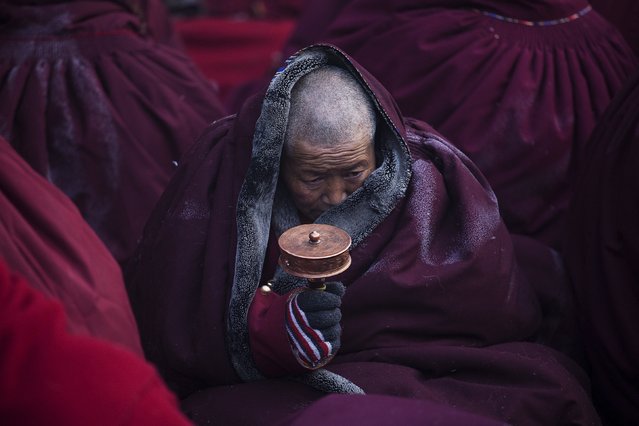
A Tibetan Buddhist nun spins a prayer wheel in sub zero temperatures at a Buddhist laymen lodge where thousands of people gather for daily chanting session during the Utmost Bliss Dharma Assembly, the last of the four Dharma assemblies at Larung Wuming Buddhist Institute in remote Sertar county, Garze Tibetan Autonomous Prefecture, Sichuan province, China November 1, 2015. (Photo by Damir Sagolj/Reuters)

A Tibetan Buddhist nun spins a prayer wheel in sub zero temperatures at a Buddhist laymen lodge where thousands of people gather for daily chanting session during the Utmost Bliss Dharma Assembly, the last of the four Dharma assemblies at Larung Wuming Buddhist Institute in remote Sertar county, Garze Tibetan Autonomous Prefecture, Sichuan province, China November 1, 2015. (Photo by Damir Sagolj/Reuters)
Details
06 Nov 2015 08:06:00
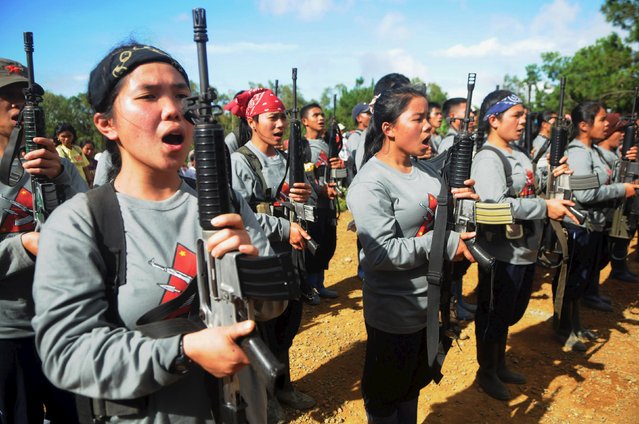
Members of the New People's Army (NPA) female guerrillas perform a cultural show during the release of a Philippines army soldier in Sugbongcogon town, Misamis Oriental, southern Philippines, November 20, 2015. NPA spokesperson Allan Juanito warned that they will seize more soldiers to exchange them with the government as "Prisoners of war". (Photo by Froilan Gallardo/Reuters)

Members of the New People's Army (NPA) female guerrillas perform a cultural show during the release of a Philippines army soldier in Sugbongcogon town, Misamis Oriental, southern Philippines, November 20, 2015. NPA spokesperson Allan Juanito warned that they will seize more soldiers to exchange them with the government as "Prisoners of war". (Photo by Froilan Gallardo/Reuters)
Details
21 Nov 2015 08:07:00
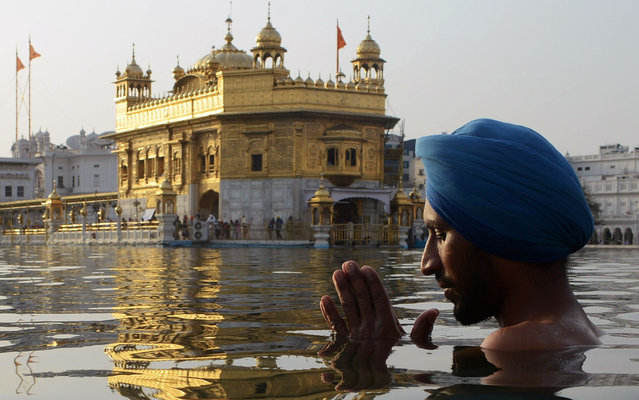
An Indian Sikh devotee takes a dip in the holy sarover (water tank) at the Golden Temple on the eve of “Ghallughara Diwas”, the 29th Anniversary of Operation Bluestar, in Amritsar on June 5, 2013. The 1984 assault on the Golden Temple complex by the Indian army was conducted in an attempt to arrest separatists Sikh leader Sant Jarnail Singh Bhindranwale and his militant followers who had initiated a movement for a separate Sikh state. (Photo by Narinder Nanu/AFP Photo)

An Indian Sikh devotee takes a dip in the holy sarover (water tank) at the Golden Temple on the eve of “Ghallughara Diwas”, the 29th Anniversary of Operation Bluestar, in Amritsar on June 5, 2013. The 1984 assault on the Golden Temple complex by the Indian army was conducted in an attempt to arrest separatists Sikh leader Sant Jarnail Singh Bhindranwale and his militant followers who had initiated a movement for a separate Sikh state. (Photo by Narinder Nanu/AFP Photo)
Details
08 Jun 2013 11:00:00
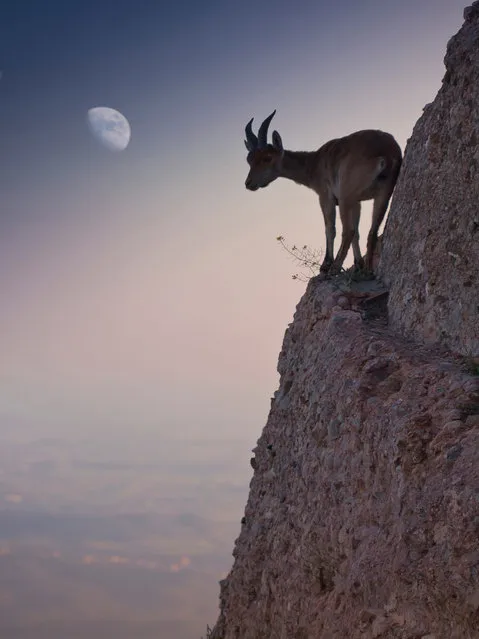
“For a bouquet of flowers”. Photographs made ​​in the last hours of the day. A goat is directed by a dangerous way to eat a small bouquet of flowers. Location: España, Barcelona, Montserrat. (Photo and caption by Renato Lopez Baldo/National Geographic Traveler Photo Contest)

“For a bouquet of flowers”. Photographs made ​​in the last hours of the day. A goat is directed by a dangerous way to eat a small bouquet of flowers. Location: España, Barcelona, Montserrat. (Photo and caption by Renato Lopez Baldo/National Geographic Traveler Photo Contest)

ATTENTION! All pictures are presented in high resolution. To see Hi-Res images – just TWICE click on any picture. In other words, click small picture – opens the BIG picture. Click BIG picture – opens VERY BIG picture.
Details
25 Jun 2013 12:51:00
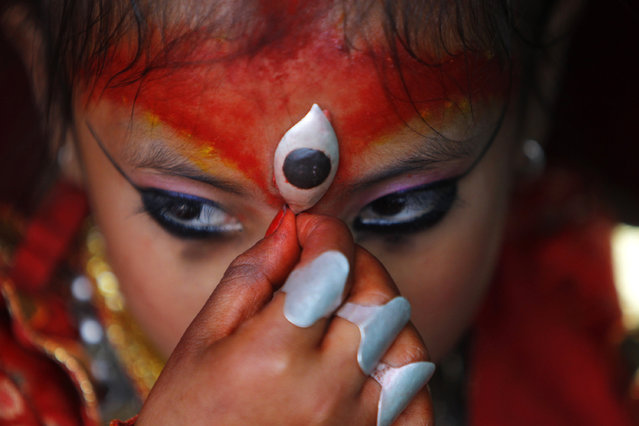
Nepal's Kumari, or living goddess, adjusts her ornament as she watches the Rato Machindranath chariot Festival in Lalitpur, Nepal, Friday, April 24, 2015. Nepal's living goddesses are young pre-pubescent girls considered by devotees to be incarnations of a Hindu goddess. Selected as toddlers, living goddesses usually keep their positions until they reach puberty. (Photo by Niranjan Shrestha/AP Photo)

Nepal's Kumari, or living goddess, adjusts her ornament as she watches the Rato Machindranath chariot Festival in Lalitpur, Nepal, Friday, April 24, 2015. Nepal's living goddesses are young pre-pubescent girls considered by devotees to be incarnations of a Hindu goddess. Selected as toddlers, living goddesses usually keep their positions until they reach puberty. (Photo by Niranjan Shrestha/AP Photo)
Details
25 Apr 2015 10:05:00
“Thunderstruck”. Summer stom. A super cell formed off the coast of New Zealand, intensified and swept across Christchurch and North Canterbury, February 23, 2014. Photo location: Christchurch, New Zealand. (Photo and caption by David Hardy/National Geographic Photo Contest)

“Thunderstruck”. Summer stom. A super cell formed off the coast of New Zealand, intensified and swept across Christchurch and North Canterbury, February 23, 2014. Photo location: Christchurch, New Zealand. (Photo and caption by David Hardy/National Geographic Photo Contest)
Details
15 Apr 2014 11:46:00