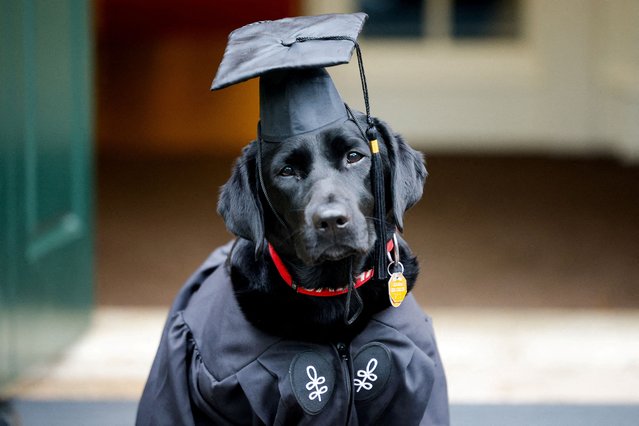
Sasha, a police dog, wears a cap and gown, on the day of the 374th Commencement exercises at Harvard University in Cambridge, Massachusetts on May 29, 2025. (Photo by Brian Snyder/Reuters)
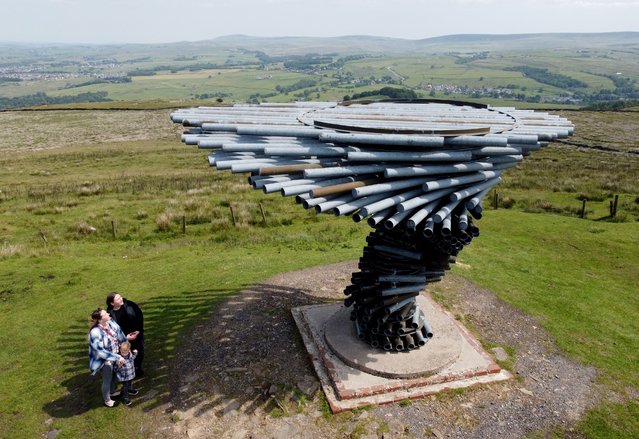
Migle Politike (left) with son Aaron and friend Goda Zubkaityte on Wednesday, June 11, 2025 stop to look at the Singing Ringing Tree, a musical sculpture designed to look like a windswept tree, at Crown Point overlooking Burnley, Lancashire, UK. The wind-powered musical sculpture emits a low, tuneful song when the wind blows. (Photo by Martin Rickett/PA Wire)
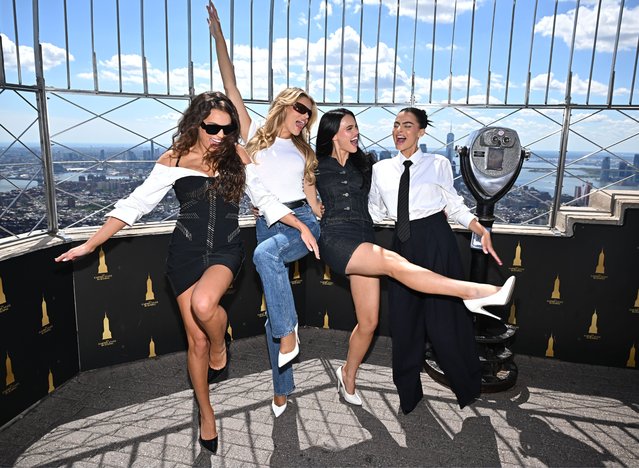
Grace Ann Nader, Brooks Nader, Mary Holland Nader and Sarah Jane Nader celebrate their new show “Love Thy Nader” at the top of the Empire State Building in NYC on August 26, 2025. (Photo by Erik Pendzich/Rex Features/Shutterstock)
Arisa Trew of Australia competes during the women's skateboarding park final at the 2024 Summer Olympics, Tuesday, August 6, 2024, in Paris, France. (Photo by Frank Franklin II/AP Photo)
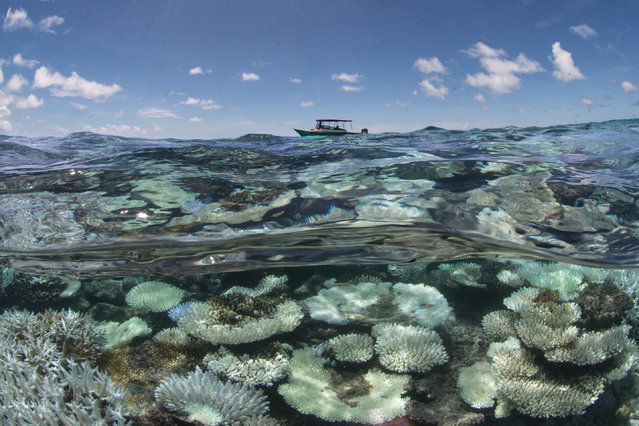
In this May 2016 photo released by The Ocean Agency/XL Catlin Seaview Survey, a boat sails near a coral reef that has been bleached white by heat stress in the Maldives. oral reefs, unique underwater ecosystems that sustain a quarter of the world's marine species and half a billion people, are dying on an unprecedented scale. Scientists are racing to prevent a complete wipeout within decades. (Photo by The Ocean Agency/XL Catlin Seaview Survey via AP Photo)
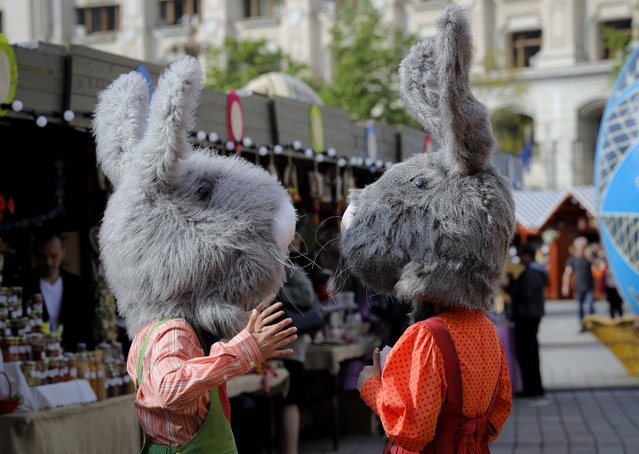
In this Thursday, April 13, 2017, picture entertainers wearing rabbit costumes speak at a fair in Bucharest, Romania. Ahead of Easter, celebrated by both Orthodox and Catholic believers on April 16 processions of priests clad in golden robes carrying foliage on Palm Sunday in a recreation of Jesus' ride into Jerusalem, mixed with more commercial flavored celebrations like an Easter fair outside the giant palace built by late Communist leader Nicolae Ceausescu where entertainers strutted around wearing giant rabbit heads. (Photo by Vadim Ghirda/AP Photo)
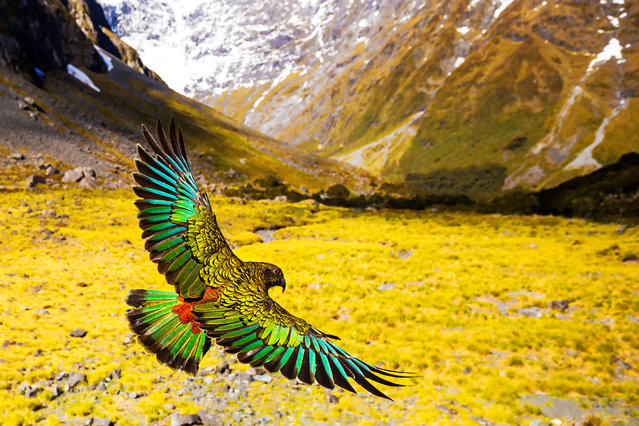
Kea are the only true alpine parrots in the world and thrive as cunning opportunists in the freezing conditions of the Southern Alps. Kea are thought to have developed their wide array of food-finding strategies during the last great ice age, where they learned to adapt using their unusual powers of curiosity. (Photo by Tom Walker/BBC Pictures/The Guardian)