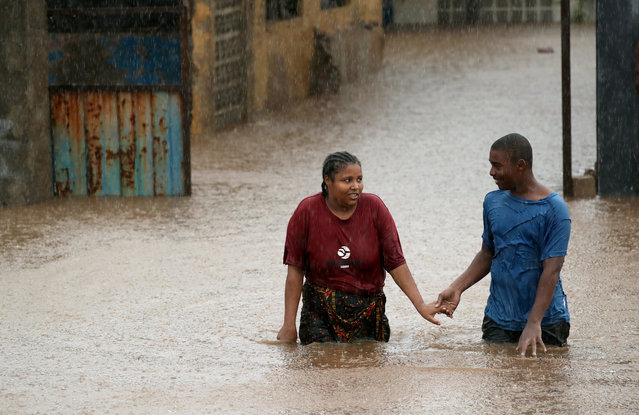
A man helps a woman through a flooded neighbourhood in the aftermath of Cyclone Kenneth, in Pemba, Mozambique, April 28, 2019. (Photo by Mike Hutchings/Reuters)
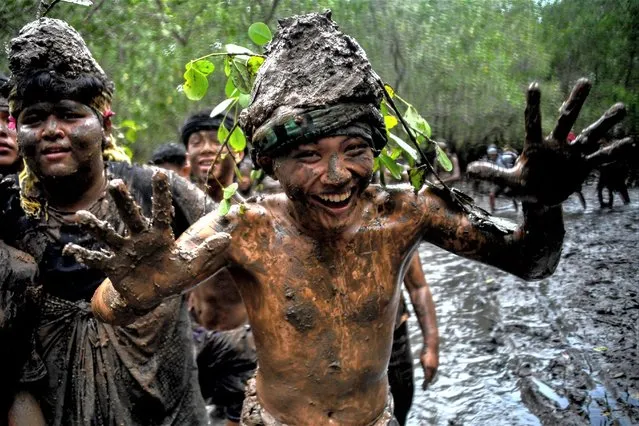
Balinese children take part in a traditional mud bath known as Mebuug-buugan, a day after Nyepi – the “Day of Silence”, aimed at neutralising bad traits in Kedonganan village on Indonesia's resort island of Bali on March 23, 2023. (Photo by Sonny Tumbelaka/AFP Photo)
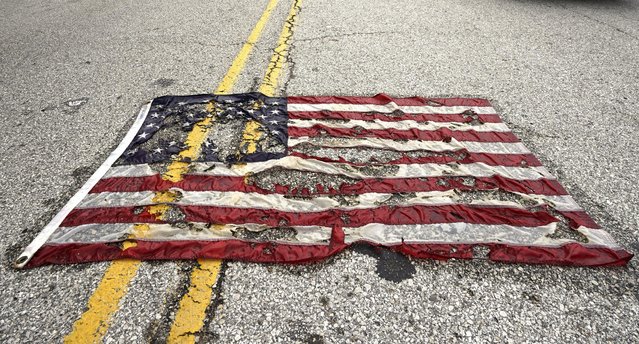
A partially burned American flag lies on the street near the spot where Michael Brown was killed before an event to mark the one year anniversary of his killing in Ferguson, Missouri August 9, 2015. (Photo by Rick Wilking/Reuters)
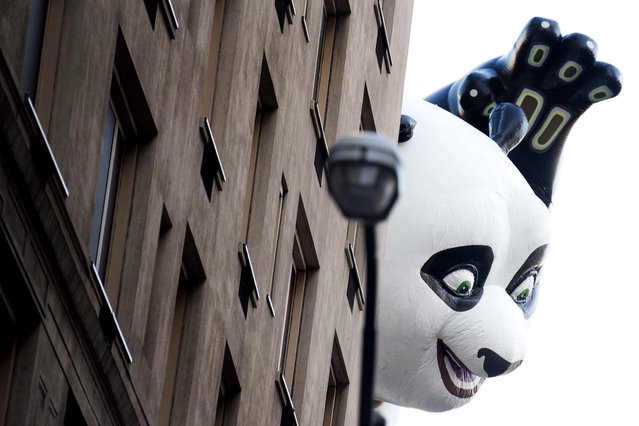
The Kung Fu Panda balloon is lifted before the 86th Annual Macy's Thanksgiving Day Parade November 22, 2012 in New York City. Macy's donated tickets and transportation to this year's Thanksgiving Day Parade to 5,000 people from neighborhoods hardest hit by Superstorm Sandy. (Photo by Charles Sykes/Associated Press)
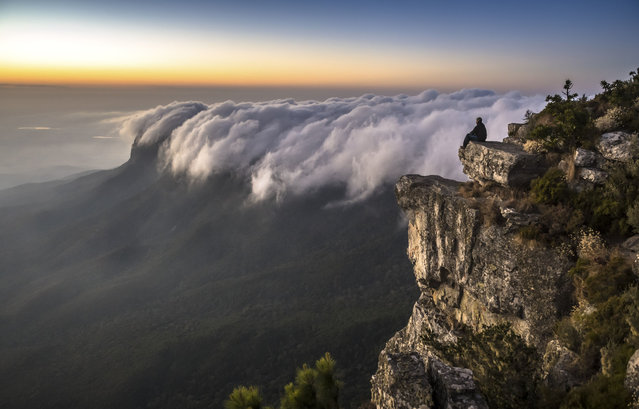
Clouds in Drakensberg Escarpment in the lowveld, also known as Mariepskop, South Africa in July 2019. Snapped by professional Photographer, Em Gatland, 37, from Greater Kruger, South Africa, the unique shot could easily be mistaken for a dangerous wave rather than clouds passing through a sunset. (Photo by Em Gatland/Caters News Agency)
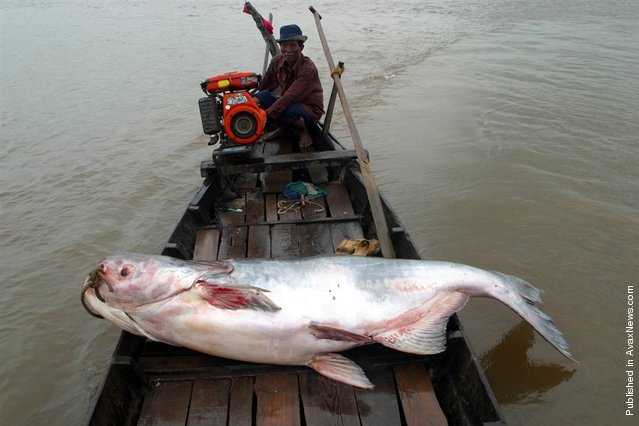
Among the fish populations that could be harmed by the Xayaburi dam in Laos is the critically endangered Mekong giant catfish, considered by the Guinness Book of World Records to be the world’s largest freshwater fish. The fish, which grows to 650 pounds and about 10 feet long, is only found in the Mekong River. It is migratory, moving between downstream habitats in Cambodia upstream to northern Thailand and Laos each year to spawn. Some experts fear the Xayaburi dam could block the migration and drive the giant catfish to extinction. (Photo by Courtesy of Zeb Hogan/University of Nevada, Reno)