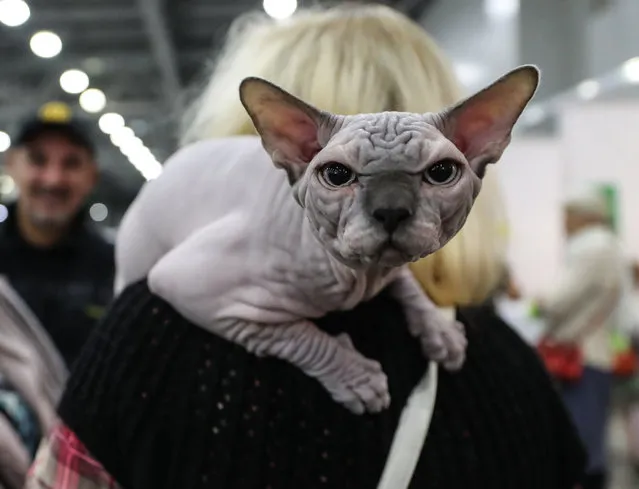
A Sphynx cat at the 2017 Grand Prix Royal Canin international cat show at the Crocus Expo Exhibition Centre in Moscow, Russia on December 2, 2017. (Photo by Sergei Savostyanov/TASS/Barcroft Images)
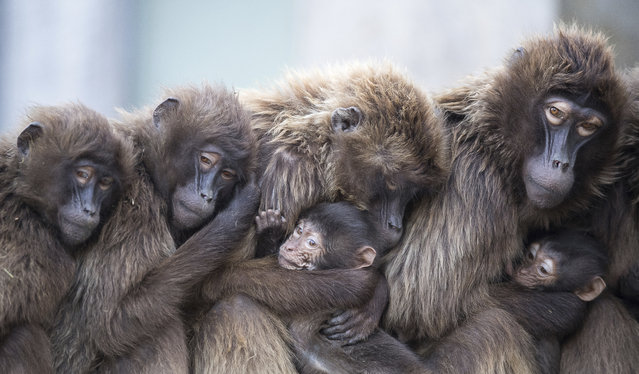
In this January 3, 2018 photo several female Gelada baboons, also known as bleeding-heart baboons, cuddle with their youngs in order to keep warm at the Wilhelma zoo in Stuttgart, Germany. (Photo by Sebastian Gollnow/DPA via AP Photo)
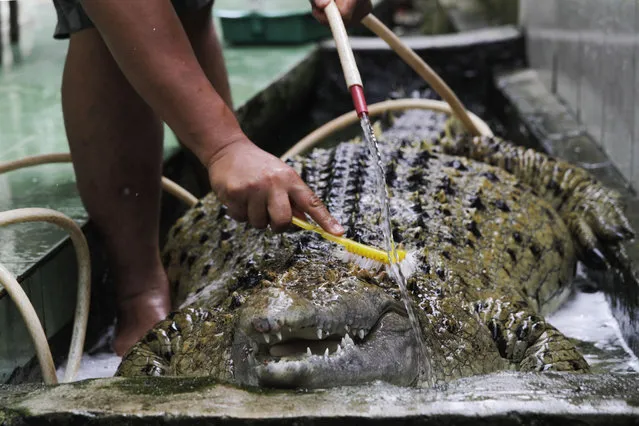
Irwan bathes a domesticated crocodile at his house in Bogor, Indonesia on January 22, 2018. Irwan found it as a baby and now it has been living with Irwans family for 20 years. Indonesia is known as a hotbed of exotic pet domestication and trade. People have been known to keep endangered animals such as slow lorises, eagles and pangolins, angering conservationists and animal rights activists. (Photo by Eko Siswono Toyudho/Anadolu Agency/Getty Images)
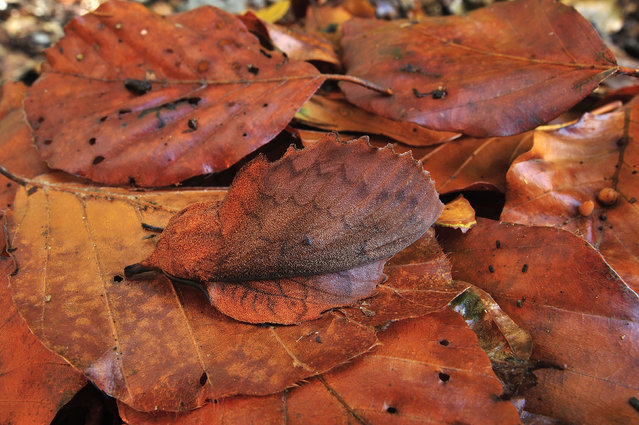
Whether they are the hunter or the hunted, these camouflage animals show natures incredible ability to blend in with its surroundings. Pictured perfectly concealed against their natural environment, the stunning pictures show the amazing lengths some animals will go to to stay out of sight. Here: The camouflage mappet moth looks like a fall lead in Switzerland. (Photo by Thomas Marent/Caters News/Ardea)
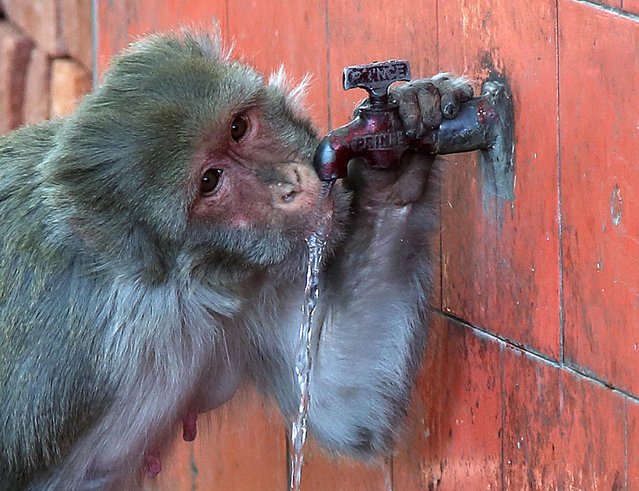
A monkey drinks water from a tap on a hot afternoon in Jammu, the winter capital Kashmir, India, 17 May 2016. Temperatures of around 42 degrees Celsius were forecast in the region. According to the news reports the Indian government decided to divert water by its river interlinking plans from rivers like Brahmaputra and the Ganges towards those rivers facing the drought likesituation . Many Indian states have been affected by drought and have been hit hard by water scarcity. (Photo by Jaipal Singh/EPA)
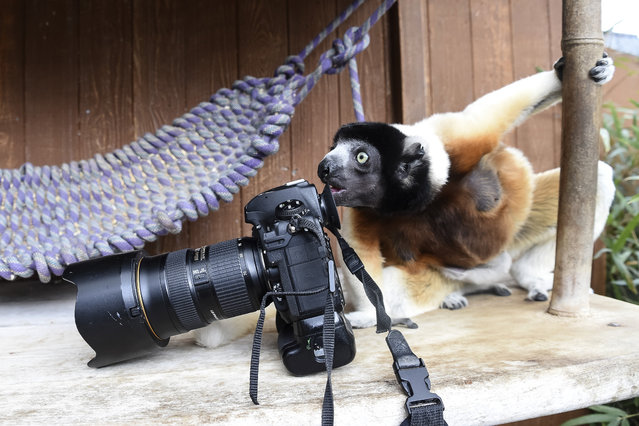
Poppy, a female Crowned sifaka, inspects a photographer's camera in the enclosure at the zoo of Mulhouse, eastern France, on March 5, 2019. The Crowned sifaka is a critically endangered species from Madagascar. (Photo by Sebastien Bozon/AFP Photo)
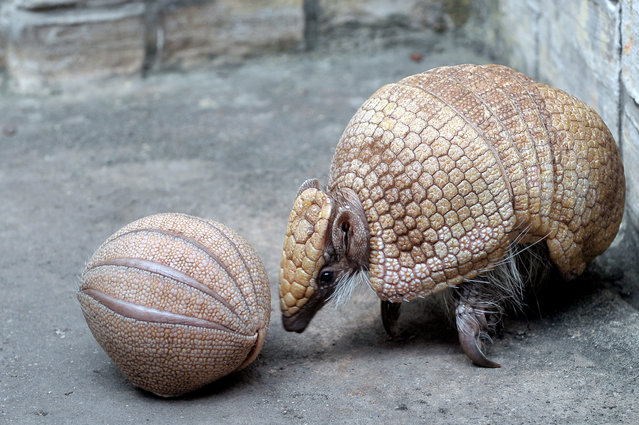
A four-week old southern three-banded armadillo (Tolypeutes matacus) is rolled up into a ball next to its mother in the tropical house of Budapest Zoo in Budapest, Hungary on May 3, 2019. The South American insect-eating mammal and its close relative, the Brasilian three-banded armadillo (Tolypeutes tricinctus) are the only two species of armadillos capable of rolling into a complete ball to defend themselves when feeling threatened. (Photo by Attila Kovács/EPA/EFE)