Loading...
Done
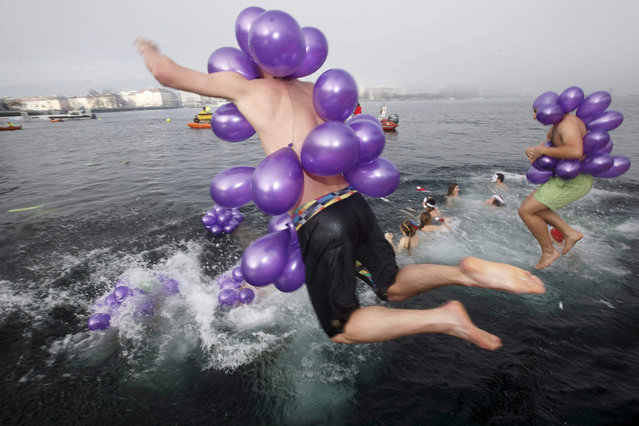
Participants of the 77th edition of the annual Christmas swimming 'Coupe de Noel' jump into the waters of Lake Geneva, in Geneva, Switzerland, 20 December 2015. More than 1,540 men and women braved the water temperature of just 8 degrees Celsius as they swam a 120 meters distance at the traditional Christmas swimming in Geneva. (Photo by Salvatore Di Nolfi/EPA)

Participants of the 77th edition of the annual Christmas swimming 'Coupe de Noel' jump into the waters of Lake Geneva, in Geneva, Switzerland, 20 December 2015. More than 1,540 men and women braved the water temperature of just 8 degrees Celsius as they swam a 120 meters distance at the traditional Christmas swimming in Geneva. (Photo by Salvatore Di Nolfi/EPA)
Details
21 Dec 2015 11:27:00
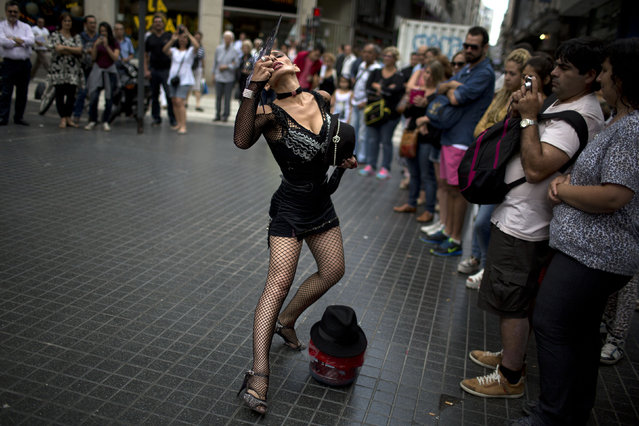
A street artist dances tango in Buenos Aires, Argentina, Tuesday, January 20, 2015. Tango is a partner dance that originated in the 1890's along the Rio de la Plata, the border between Uruguay and Argentina. UNESCO approved in 2009, a joint proposal by the two nations to include the dance in its Intangible Cultural Heritage List. (Photo by Rodrigo Abd/AP Photo)

A street artist dances tango in Buenos Aires, Argentina, Tuesday, January 20, 2015. Tango is a partner dance that originated in the 1890's along the Rio de la Plata, the border between Uruguay and Argentina. UNESCO approved in 2009, a joint proposal by the two nations to include the dance in its Intangible Cultural Heritage List. (Photo by Rodrigo Abd/AP Photo)
Details
23 Jan 2015 12:56:00
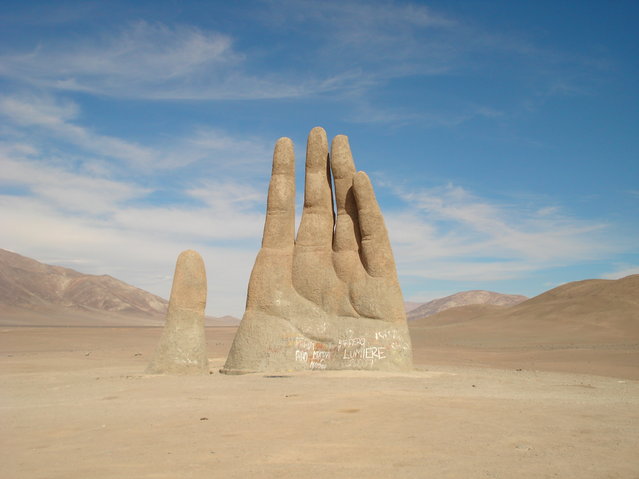
The Giant Hand of Atacama

The Mano de Desierto is a large-scale sculpture of a hand located in the Atacama Desert in Chile, 75 km to the south of the city of Antofagasta, on the Panamerican Highway. The nearest point of reference is the “Ciudad Empresarial La Negra” (La Negra Business City). The sculpture was constructed by the Chilean sculptor Mario Irarrázabal at an altitude of 1,100 meters above sea level. Irarrázabal used the human figure to express emotions like injustice, loneliness, sorrow and torture. Its exaggerated size is said to emphasize human vulnerability and helplessness. The work has a base of iron and cement, and stands 11 metres (36 ft) tall. Funded by Corporación Pro Antofagasta, a local booster organization, the sculpture was inaugurated on March 28, 1992.
Details
21 Dec 2013 10:18:00
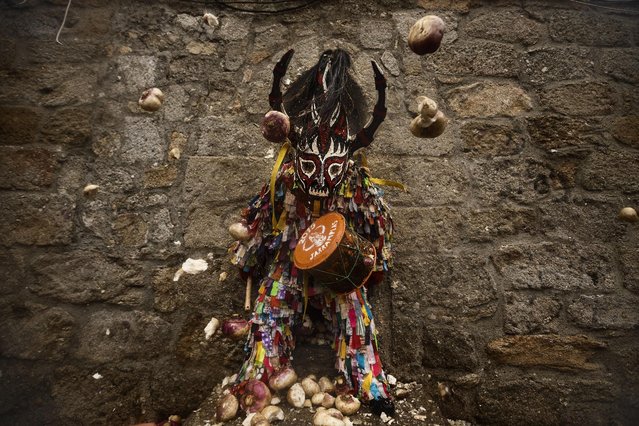
People throw turnips at the Jarramplas as he makes his way through the streets beating his drum during the Jarramplas Festival in Piornal, Spain, Tuesday, January 20, 2015. Jarramplas is a character that wears a costume made from colorful strips of fabric, and a devil-like mask and beats a drum through the streets of Piornal while residents throw turnips as a punishment for stealing cattle. (Photo by Daniel Ochoa de Olza/AP Photo)

People throw turnips at the Jarramplas as he makes his way through the streets beating his drum during the Jarramplas Festival in Piornal, Spain, Tuesday, January 20, 2015. Jarramplas is a character that wears a costume made from colorful strips of fabric, and a devil-like mask and beats a drum through the streets of Piornal while residents throw turnips as a punishment for stealing cattle. The exact origin of the festival are not known, various theories exist from the mythological punishment of Caco by Hercules, to a cattle thief ridiculed and expelled by his neighbors. The Jarramplas Festival takes place every year from the 19th till the 20th of January on Saint Sebastian Day. (Photo by Daniel Ochoa de Olza/AP Photo)
Details
21 Jan 2015 13:42:00
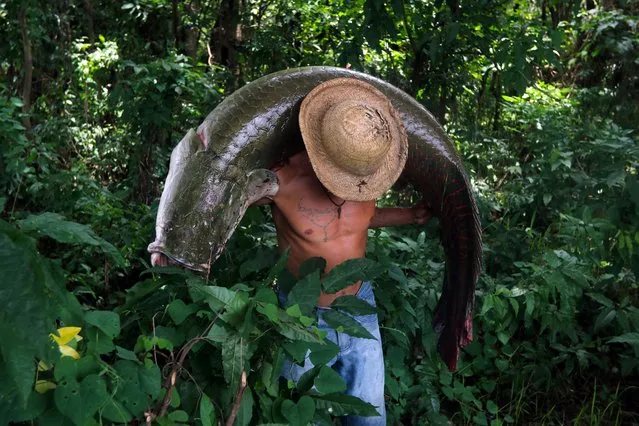
A fisherman carries a large Pirarucu (Arapaima gigas) at the Piagacu-Purus Sustainable Development Reserve in Amazonas state, Brazil, on October 24, 2019. The pirarucu -a giant fish of the Amazon, that had been on the verge of extinction- can measure up to three meters and weigh more than 200 kilos. The soft and tasty white meat fish is nowadays served in renowned restaurants in Rio de Janeiro. (Photo by Ricardo Oliveira/AFP Photo)

A fisherman carries a large Pirarucu (Arapaima gigas) at the Piagacu-Purus Sustainable Development Reserve in Amazonas state, Brazil, on October 24, 2019. The pirarucu -a giant fish of the Amazon, that had been on the verge of extinction- can measure up to three meters and weigh more than 200 kilos. The soft and tasty white meat fish is nowadays served in renowned restaurants in Rio de Janeiro. (Photo by Ricardo Oliveira/AFP Photo)
Details
31 Oct 2019 00:07:00
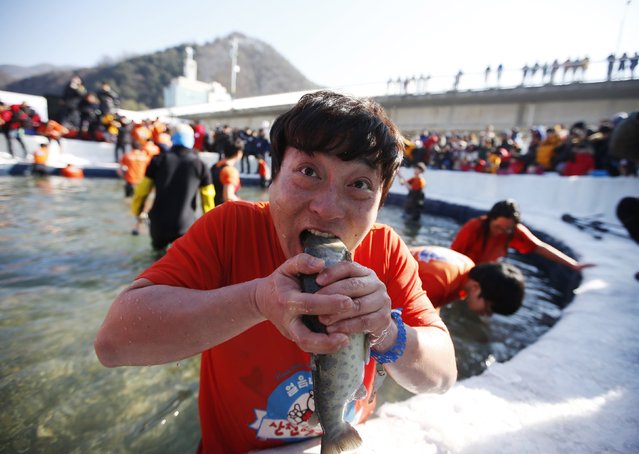
A man reacts after catching a trout with his hands during an event promoting the Ice Festival on a frozen river in Hwacheon, about 20 km (12 miles) south of the demilitarized zone separating the two Koreas, January 10, 2015. (Photo by Kim Hong-Ji/Reuters)

A man reacts after catching a trout with his hands during an event promoting the Ice Festival on a frozen river in Hwacheon, about 20 km (12 miles) south of the demilitarized zone separating the two Koreas, January 10, 2015. The annual ice festival, which is one of the most famous and biggest festivals in South Korea, expects to see more than 1,000,000 people attend. The festival lasts for three weeks from January 10 this year. (Photo by Kim Hong-Ji/Reuters)
Details
11 Jan 2015 13:54:00
A woman wearing a mask walk in a street in a Yonghegong Lama temple compound seen shrouded in smog in Beijing, China, 30 November 2015. Beijing issued an orange alert for heavy smog 30 November, the highest level this year. Authorities in the Chinese capital warned of 'severe pollution' and advised the capital's 20 million inhabitants to stay indoors. (Photo by How Hwee Young/EPA)

A woman wearing a mask walk in a street in a Yonghegong Lama temple compound seen shrouded in smog in Beijing, China, 30 November 2015. Beijing issued an orange alert for heavy smog 30 November, the highest level this year. Authorities in the Chinese capital warned of 'severe pollution' and advised the capital's 20 million inhabitants to stay indoors. (Photo by How Hwee Young/EPA)
Details
02 Dec 2015 08:01:00
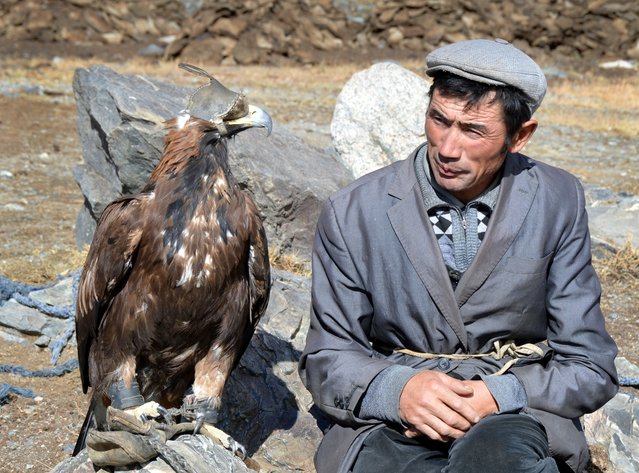
Hunter Berek and his eagle outside his home. (Photo by Brad Ruoho/The Star Tribune)

“I’d come to the Altai Mountains on an Adventure Sherpas tour. Our group of 12 was made up mostly of Minnesotans who’d left warm weather and falling leaves for frosty Mongolia. We’d come to sleep in cozy ger tents, the traditional yurt abode of the Mongolian steppe; sip mare’s milk tea; climb mountain glaciers; ride horses to an ancient battle site, and attend the annual Eagle Hunting Festival in Ölgiy...”. – Kathryn Kysar via The Star Tribune. Here: hunter Berek and his eagle outside his home. (Photo by Brad Ruoho/The Star Tribune)
Details
11 Jan 2015 12:57:00