Loading...
Done
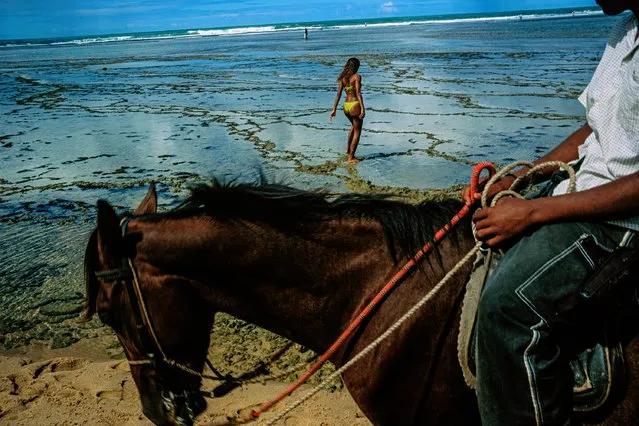
Praia du Forte, Bahia. “This was the lead picture for a National Geographic story on Bahia, because it was both mysterious as well as a “geography” picture showing where the slaves arrived from Nigeria. Beach pictures seem like they should be easy to take, but for me they are actually quite difficult. Too easy to fall into cliche. When I saw the kid coming on the horse, I quickly ran to see if I could make something with a woman in a bikini that was not a bikini shot”. (Photo by David Alan Harvey/The Guardian)

Praia du Forte, Bahia. “This was the lead picture for a National Geographic story on Bahia, because it was both mysterious as well as a “geography” picture showing where the slaves arrived from Nigeria. Beach pictures seem like they should be easy to take, but for me they are actually quite difficult. Too easy to fall into cliche. When I saw the kid coming on the horse, I quickly ran to see if I could make something with a woman in a bikini that was not a bikini shot”. (Photo by David Alan Harvey/The Guardian)
Details
20 Aug 2016 11:35:00
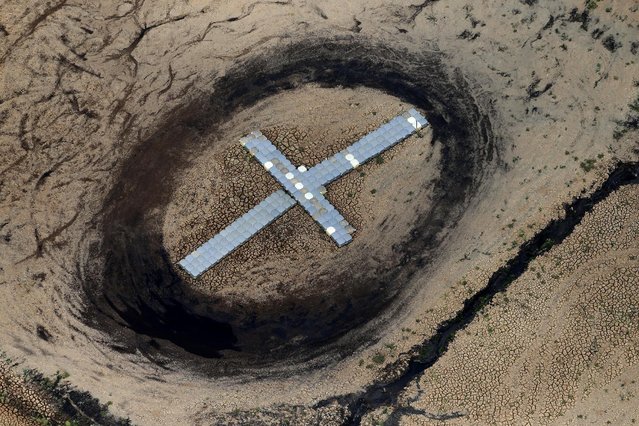
Pontoons, which were previously used as a floating jetty, are seen on the cracked ground of the Atibainha dam, part of the Cantareira reservoir, during a drought in Nazare Paulista, Sao Paulo state February 12, 2015. (Photo by Paulo Whitaker/Reuters)

Pontoons, which were previously used as a floating jetty, are seen on the cracked ground of the Atibainha dam, part of the Cantareira reservoir, during a drought in Nazare Paulista, Sao Paulo state February 12, 2015. Brazil's worst drought in 80 years has left the Cantareira system, that provides greater Sao Paulo with most of its water, with the lowest water level on record. Brazil's economy is already expected to post zero growth this year. Worse yet, since Brazil depends on hydroelectric dams for about three quarters of its electricity, power shortages are also possible due to the drought, federal officials have said. (Photo by Paulo Whitaker/Reuters)
Details
15 Feb 2015 14:19:00
Performers in costume kiss as they take part in the carnival on the main Parade day of the Notting Hill Carnival in west London on August 27, 2018. Nearly one million people are expected by the organizers Sunday and Monday in the streets of west London' s Notting Hill to celebrate Caribbean culture at a carnival considered the largest street demonstration in Europe. (Photo by Daniel Leal-Olivas/AFP Photo)

Performers in costume kiss as they take part in the carnival on the main Parade day of the Notting Hill Carnival in west London on August 27, 2018. Nearly one million people are expected by the organizers Sunday and Monday in the streets of west London' s Notting Hill to celebrate Caribbean culture at a carnival considered the largest street demonstration in Europe. (Photo by Daniel Leal-Olivas/AFP Photo)
Details
29 Aug 2018 00:01:00
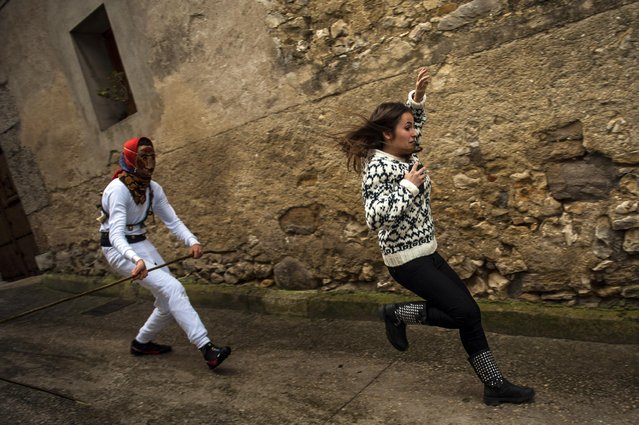
In this photo taken on Sunday, February 15, 2015 a girl runs away from a “Mamuxarro” during the carnival, in the small town of Unanu, northern Spain. While Rio de Janeiro may boast the world’s most famous carnival, the festive period of masquerades and wild and colorful costumes that precedes the Christian religious season of Lent is also a permanent and popular fixture for celebration in Spain and Portugal, with each country having its own strange and unique way of doing it. (Photo by Alvaro Barrientos/AP Photo)

In this photo taken on Sunday, February 15, 2015 a girl runs away from a “Mamuxarro” during the carnival, in the small town of Unanu, northern Spain. In the northern Spanish ancient village of Unamu, people dress up as “Mamuxarro”, folkloric figures in white with a red sash and a metal mask to cover their faces as they pursue townsfolk with sticks. According to custom, their “victims” (usually young women) must kneel and kiss the mamuxarro’s knee after he makes the sign of the cross on their forehead. (Photo by Alvaro Barrientos/AP Photo)
Details
22 Feb 2015 10:51:00
Members of Brazil's Movimento dos Sem-Teto (Roofless Movement) stand in the hallway of one of the 11 empty buildings that the movement took over recently, in the centre of Sao Paulo, November 6, 2012. According to City Hall, there are some 400,000 people in need of stable housing, including the 4,000 families of the Roofless Movement who are squatting in abandoned or vacant buildings that range from apartment blocks to hotels, in Sao Paulo, the largest city in South America. Picture taken November 6, 2012

Members of Brazil's Movimento dos Sem-Teto (Roofless Movement) stand in the hallway of one of the 11 empty buildings that the movement took over recently, in the centre of Sao Paulo, November 6, 2012. According to City Hall, there are some 400,000 people in need of stable housing, including the 4,000 families of the Roofless Movement who are squatting in abandoned or vacant buildings that range from apartment blocks to hotels, in Sao Paulo, the largest city in South America. (Photo by Nacho Doce/Reuters)
Details
18 Dec 2012 09:40:00
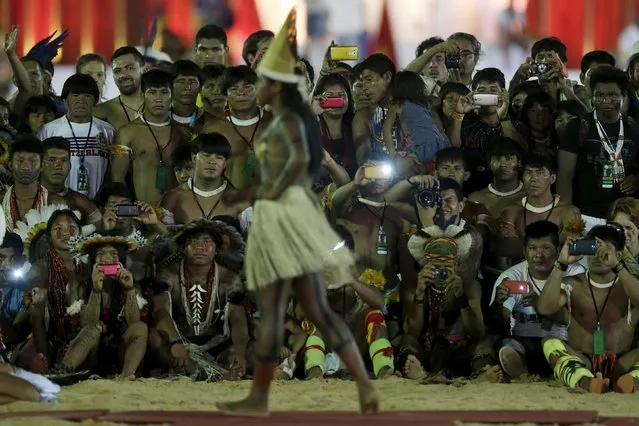
An indigenous woman participates in a parade called "International Indigenous Beauty" during the first World Games for Indigenous Peoples in Palmas, Brazil, October 24, 2015. (Photo by Ueslei Marcelino/Reuters)

An indigenous woman participates in a parade called "International Indigenous Beauty" during the first World Games for Indigenous Peoples in Palmas, Brazil, October 24, 2015. Billed as the indigenous Olympics, the games are expected to attract nearly 2,000 athletes from dozens of Brazilian ethnicities, as well as from such far-flung nations as Ethiopia and New Zealand. (Photo by Ueslei Marcelino/Reuters)
Details
28 Oct 2015 08:04:00
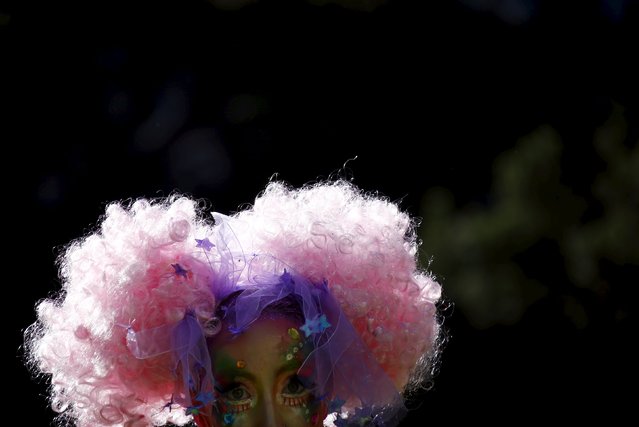
A performer dressed in costume prepares to participate in the Gay and Lesbian Mardi Gras parade in Sydney, Australia, March 5, 2016. (Photo by David Gray/Reuters)

A performer dressed in costume prepares to participate in the Gay and Lesbian Mardi Gras parade in Sydney, Australia, March 5, 2016. The Sydney Mardi Gras parade began in 1978 as a march and commemoration of the 1969 Stonewall Riots of New York. It is an annual event promoting awareness of gay, lesbian, bisexual and transgender issues and themes. (Photo by David Gray/Reuters)
Details
06 Mar 2016 09:52:00
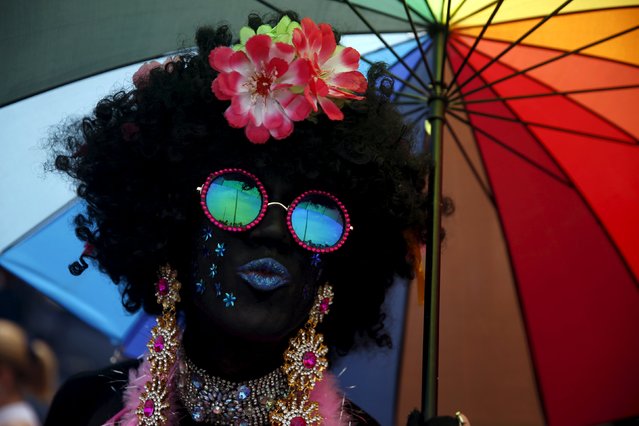
A reveller poses for a photo during the LGBT Pride Parade in Copacabana beach in Rio de Janeiro, Brazil, November 15, 2015. (Photo by Pilar Olivares/Reuters)

A reveller poses for a photo during the LGBT Pride Parade in Copacabana beach in Rio de Janeiro, Brazil, November 15, 2015. (Photo by Pilar Olivares/Reuters)
Details
17 Nov 2015 08:03:00