Loading...
Done
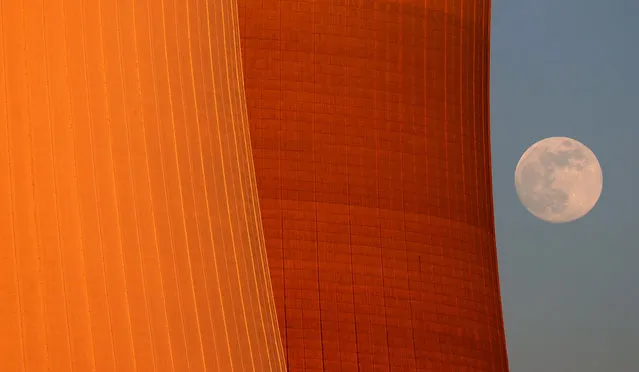
The full moon rises behind the cooling towers of the nuclear power station in Philippsburg, Germany, 06 May 2020. The nuclear power plant in Philippsburg was completely shut down by 31 December 2019. According to the operator EnBW, the two cooling towers are expected to be demolished by blasting on 14-15 May 2020. (Photo by Ronald Wittek/EPA/EFE)

The full moon rises behind the cooling towers of the nuclear power station in Philippsburg, Germany, 06 May 2020. The nuclear power plant in Philippsburg was completely shut down by 31 December 2019. According to the operator EnBW, the two cooling towers are expected to be demolished by blasting on 14-15 May 2020. (Photo by Ronald Wittek/EPA/EFE)
Details
29 Jun 2020 00:03:00
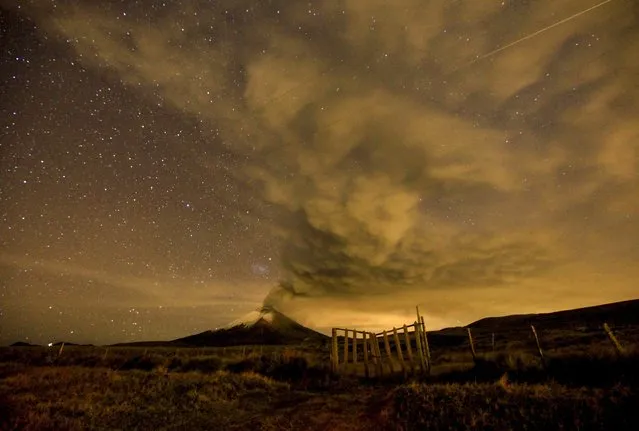
A general view shows smoke and volcanic ashes billowing from volcano Cotopaxi in Pedregal, Ecuador, late 07 October 2015. (Photo by Jose Jacome/EPA)

A general view shows smoke and volcanic ashes billowing from volcano Cotopaxi in Pedregal, Ecuador, late 07 October 2015. (Photo by Jose Jacome/EPA)
Details
23 Nov 2015 08:04:00
A sifaka lemur eats leaves at the Berenty Reserve in Toliara province, Madagascar, February 15, 2022. (Photo by Alkis Konstantinidis/Reuters)

A sifaka lemur eats leaves at the Berenty Reserve in Toliara province, Madagascar, February 15, 2022. (Photo by Alkis Konstantinidis/Reuters)
Details
06 Mar 2022 05:40:00
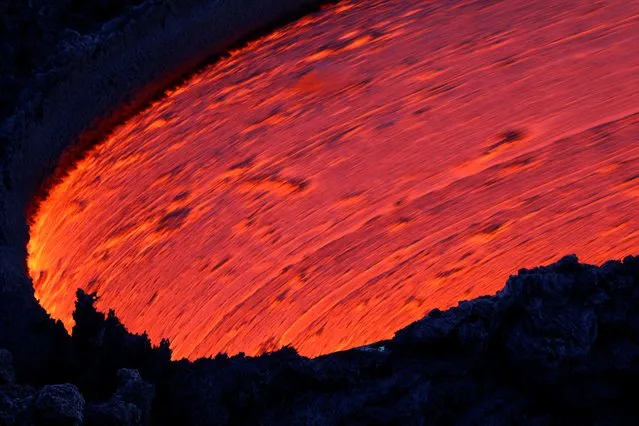
Long streams of red-hot lava flow down the southeast crater of Mount Etna, Europe's tallest and most active volcano, seen from Zafferana Etnea, Italy, June 11, 2022. (Photo by Antonio Parrinello/Reuters)

Long streams of red-hot lava flow down the southeast crater of Mount Etna, Europe's tallest and most active volcano, seen from Zafferana Etnea, Italy, June 11, 2022. (Photo by Antonio Parrinello/Reuters)
Details
16 Jun 2022 02:01:00
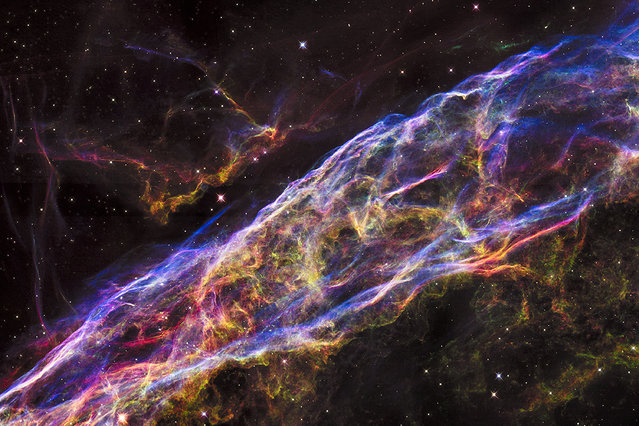
A small section of the expanding remains of the Veil Nebula, a massive star that exploded about 8,000 years ago. The entire nebula is 110 light-years across, covering six full moons on the sky as seen from Earth, and resides about 2,100 light-years away in the constellation Cygnus, the Swan. Image taken by NASA's Hubble Space Telescope. Released September 24, 2015. (Photo by Reuters/NASA/ESA/Hubble Heritage Team)

A small section of the expanding remains of the Veil Nebula, a massive star that exploded about 8,000 years ago. The entire nebula is 110 light-years across, covering six full moons on the sky as seen from Earth, and resides about 2,100 light-years away in the constellation Cygnus, the Swan. Image taken by NASA's Hubble Space Telescope. Released September 24, 2015. (Photo by Reuters/NASA/ESA/Hubble Heritage Team)
Details
10 Dec 2015 08:01:00
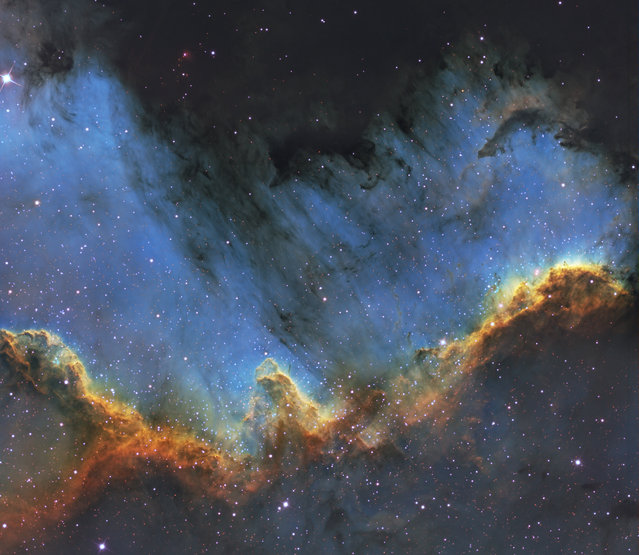
The Cygnus Wall is in the southern  area of NGC7000 also known as the North America Nebula. It is approximately 1800 light years from Earth, and is in the constellation Cygnus. The Wall is an energized shock front and contains the most concentrated star formations in the nebula. The size of the North America Nebula is about 4 full moons. (Bill Snyder)

Amateur astronomer Bill Snyder has been involved with astrophotography since 2007. Photo: The Cygnus Wall is in the southern area of NGC7000 also known as the North America Nebula. It is approximately 1800 light years from Earth, and is in the constellation Cygnus. The Wall is an energized shock front and contains the most concentrated star formations in the nebula. The size of the North America Nebula is about 4 full moons. (Photo and caption by Bill Snyder)
Details
30 Oct 2013 09:15:00
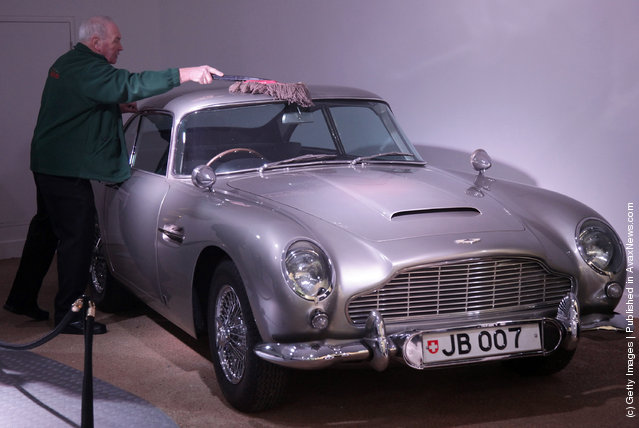
A member of the musuem team attends to a Aston Martin DB5 used in the James Bond film Goldfinger and being displayed at the Bond In Motion exhibition

A member of the musuem team attends to a Aston Martin DB5 used in the James Bond film Goldfinger and being displayed at the Bond In Motion exhibition at National Motor Museum on January 17, 2012 in Beaulieu, England. (Photo by Matt Cardy/Getty Images)
Details
18 Jan 2012 08:29:00
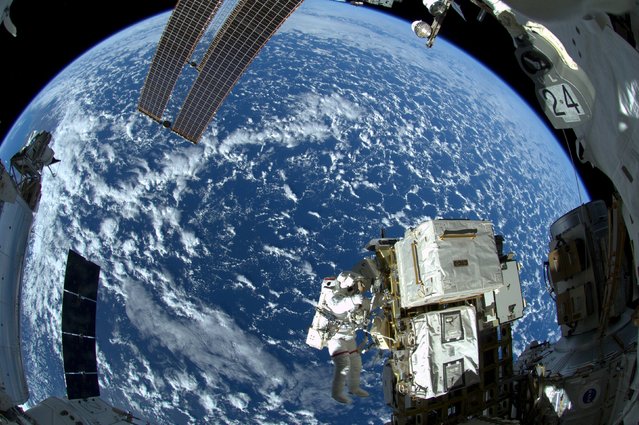
NASA astronaut Reid Wiseman and European Space Agency astronaut Alexander Gerst (not shown) works outside the space station's Quest airlock in the first of three spacewalks for the Expedition 41 crew aboard the International Space Station in this NASA image released October 8, 2014. (Photo by Reuters/NASA)

NASA astronaut Reid Wiseman and European Space Agency astronaut Alexander Gerst (not shown) works outside the space station's Quest airlock in the first of three spacewalks for the Expedition 41 crew aboard the International Space Station in this NASA image released October 8, 2014. (Photo by Reuters/NASA)
Details
05 Nov 2015 08:02:00