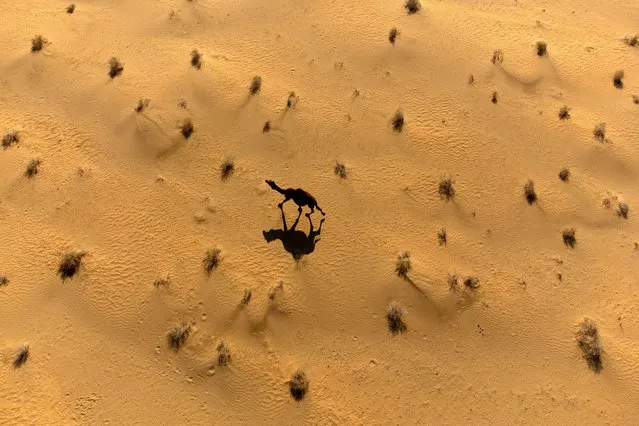
This aerial photograph taken on January 27, 2024 shows a camel in the desert of Samawa in Iraq's southern province of al-Muthanna. (Photo by Hussein Faleh/AFP Photo)
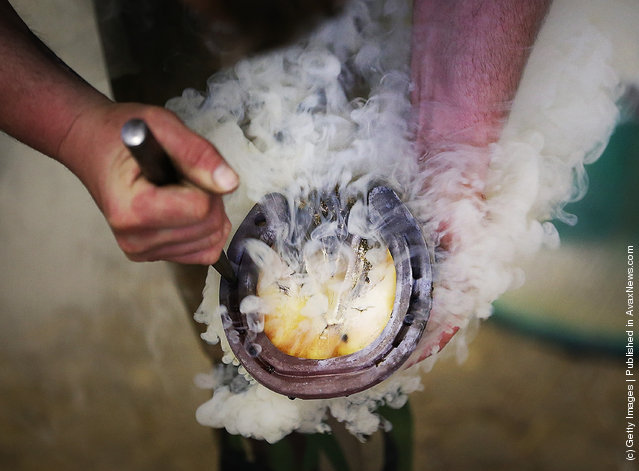
A farrier attaches a horse shoe still hot from the furnace at The Household Cavalry Mounted Regiment (HCMR) at Hyde Park Barracks on March 28, 2012 in London, England. (Photo by Peter Macdiarmid/Getty Images)
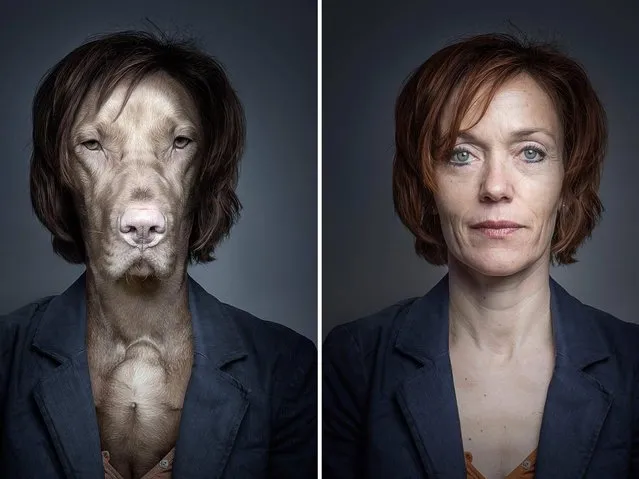
This barking set of images takes the saying “dogs look like their owners” to the ultimate conclusion. Photographer Sebastian Magnani, 28, has cleverly spliced the features of four-legged friends with the head and shoulders of their owners. In a series called “Underdogs”, the Swiss photographer shot the owners and their respective pets in the same portrait style. Then he used expert photo-manipulation techniques to seamlessly transplant the canine faces onto the human bodies. (Photo by Sebastian Magnani)
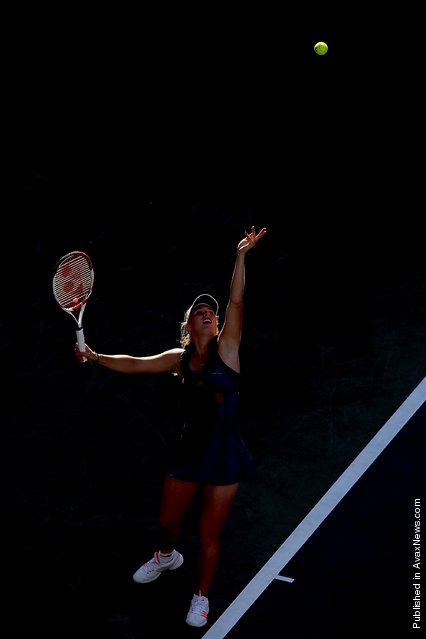
Caroline Wozniacki of Denmark serves to Alisa Kleybanova of Russia during the BNP Paribas Open at the Indian Wells Tennis Garden on March 15, 2011 in Indian Wells, California. (Photo by Matthew Stockman/Getty Images)
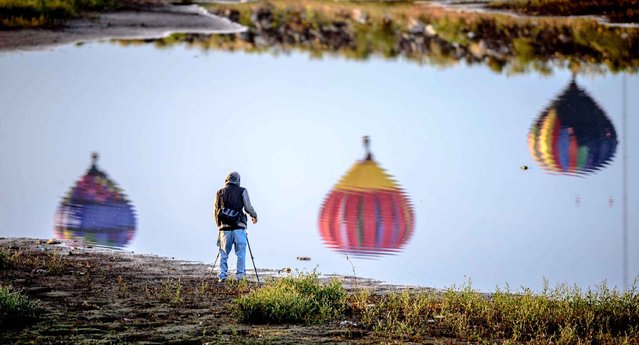
A photographer takes a snapshot of the reflection of balloons as they take off from Balloon fiesta park in Corrales, N.M., near a north diversion channel reservoir Wednesday, October 7, 2015. (Photo by Roberto E. Rosales/Albuquerque Journal via AP Photo)
The “Assignments” exhibition is an annual chance to see the top images by UK photojournalists, as chosen by the British Press Photographers’ Association. Here: Wales’s Cory McKenna dominates Micol DiSegni during their fight at Cage Warriors 97 in Cardiff, 29 September 2018. (Photo by Chris Fairweather/Huw Evans Agency)
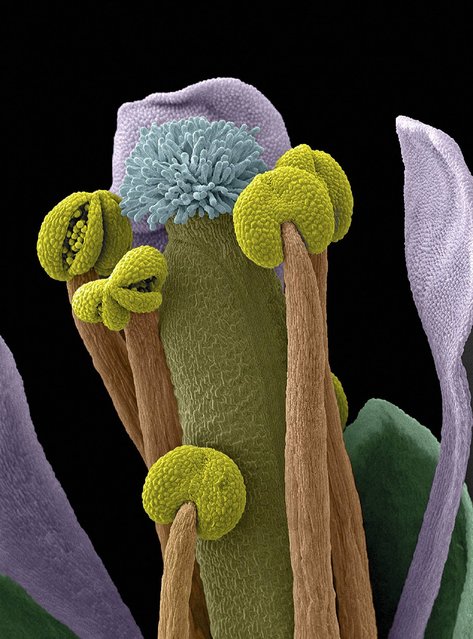
Beautiful, strange and occasionally alarming pictures from the shortlist for this year’s Wellcome image awards – which celebrate the very best in science photography and imaging – from an x-ray of a bat to a micrograph of a kidney stone. The exhibition opens on 12 March at three science centres and the Museum of Science and Industry in Manchester. Photo: Scanning electron micrograph (SEM) of an Arabidopsis thaliana flower, also commonly known as thale cress. Some of the anthers are open, revealing pollen grains ready for dispersal. Arabidopsis was the first plant to have its entire genome sequenced and is widely used as a model organism in molecular and plant biology. Horizontal width of image is 1200 microns. Magnification 100x. (Photo by Stefan Eberhard/Wellcome Images)
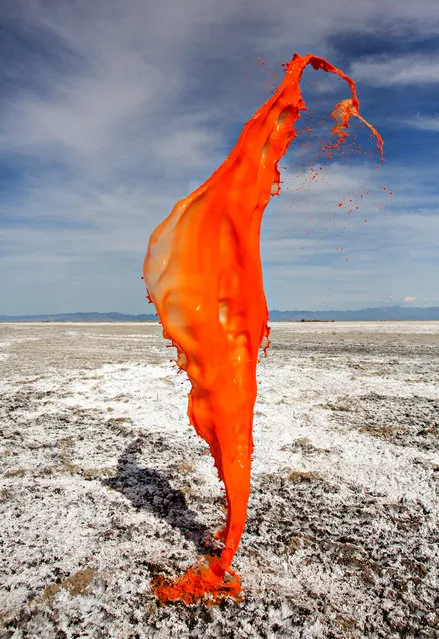
The photography duo of Floto+Warner created the series, “Colorant”, from an idea that stemmed out of a previous series and the fascination of landscapes, with results that leave one in awe. Creating shapes, not experienced in nature, they tossed colored water in the air to capture “a momentary graffiti of air and space”. Using a high shutter speed to capture these fleeting moments, Floto/Warner has produced a multi-medium series with jaw-dropping results. Photo: “Orange Salt Flats”. (Photo by Floto/Warner)