Loading...
Done
World's Oldest Marathon Runner

Centenarian Sikh runner Fauja Singh poses for pictures after being the first person to officially enter for next year's Edinburgh Marathon on September 1, 2011 in Edinburgh, Scotland. A world record holder, aged 100, Fajua Singh has run seven marathons, all after his 89th birthday. He officially opened the entry process by signing up for his last ever 26 mile event in Edinburgh. (Photo by Jeff J Mitchell/Getty Images)
Details
02 Sep 2011 09:52:00
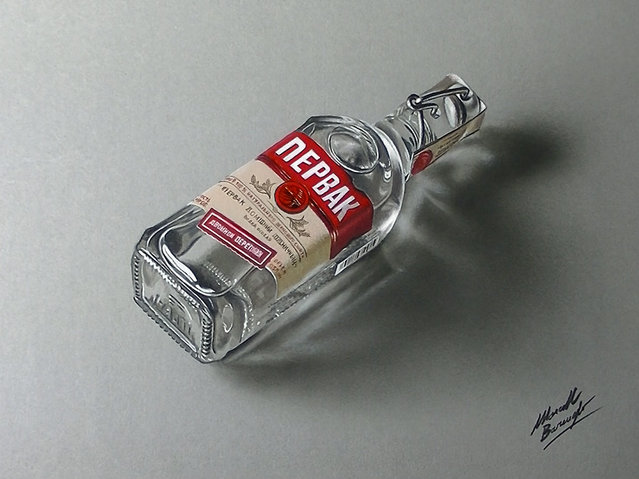
 Photorealistic Illustration By Marcello Barenghi Part1

Italian artist Marcello Barenghi draws incredibly realistic everyday objects that appear almost three dimensional with the help of colored pencils and occasional enhancements using markers or watercolor. Each work appears ever so slightly stylized which I think sets these apart from similar hyperrealistic drawings that are meant to ‘trick’ a viewer. If you want to see more, Barenghi runs a YouTube channel where he documents the process of almost every drawing.
Details
31 May 2015 15:04:00


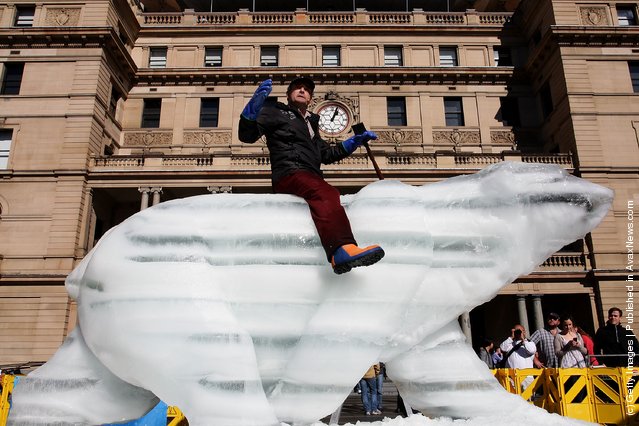
British artist, Mark Coreth sits on top of the “Sydney Ice Bear” carved from a 10 tonne block of ice to illustrate how humans affect climate change in the Arctic at Customs House on June 3, 2011 in Sydney, Australia. The public will be welcomed to touch the bear, and leave an imprint which will begin the melting process and act as a metaphor for how humans affect the environment. The ice bear's has visited six cities on it's global tour since 2009; the visit to Sydney coincides with World Environment Day on June 5. (Photo by Lisa Maree Williams/Getty Images)
Details
03 Jun 2011 08:21:00
“Cold Feet” Project by Photographer Davide Luciano

“Animals take on human characteristics in this photo series by Davide Luciano. Davide’s goal was to achieve personification of these animals’ body parts without the use of motion. Using photography’s ability to manipulate time, Davide presents a snippet of these creature “active” lives by photographing a process, thus creating the illusion of life in these lifeless animal limbs. Recreating the uncomfortable into quizzical and whimsical photos that are bold, colorful, and always comical and satirical”. (Photos and caption by Davide Luciano)
Details
12 Mar 2014 12:08:00
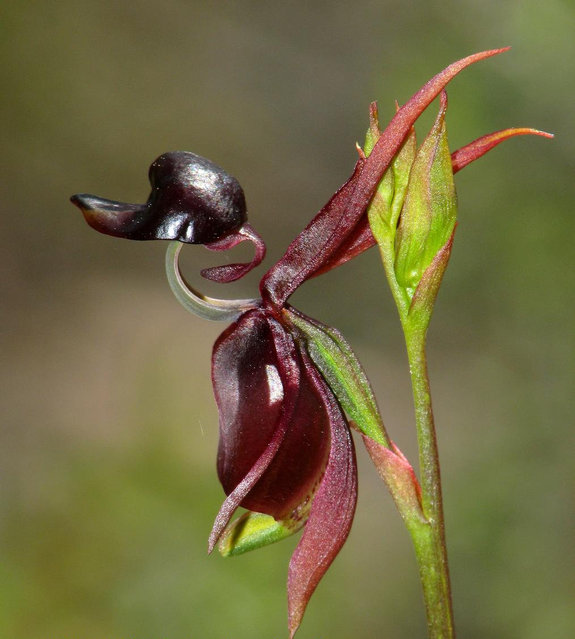
The Flying Duck Orchid

Caleana major, the Flying Duck Orchid is a small orchid found in eastern and southern Australia. This terrestrial plant features a remarkable flower, resembling a duck in flight. The flower is an attractant to insects, such as male sawflies which pollinate the flower in a process known as pseudocopulation. In 1986 this orchid was featured on an Australian postage stamp.


See Also: Monkey Orchid
Details
22 Apr 2013 10:56:00
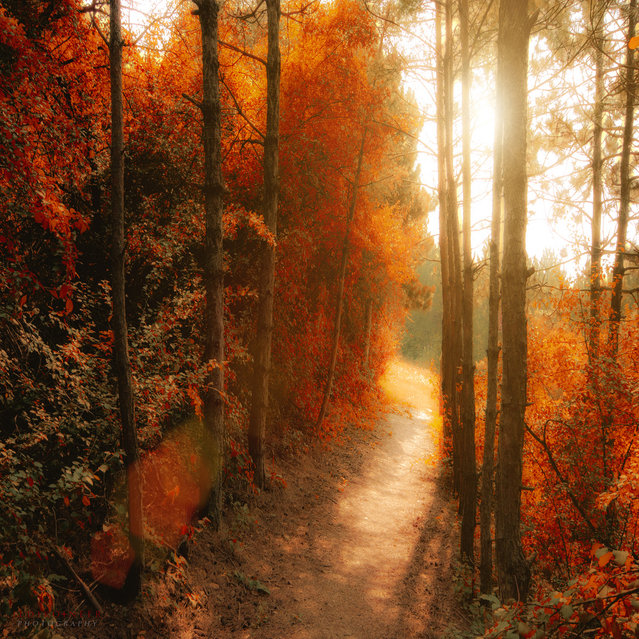
Path to the shine. (Ildiko Neer)

“I bought my first dlsr camera in 2009 may. The first part of my life is gone but the other i dedicate to photography. If i try to imagine myself, i saw someone on the road, who walking straight to the light. This kind of light is the photography and the post-processing in my life. My pictures express the feelings, moods what i felt under my trip in the last few years”. – Ildiko Neer

Photo: “Path to the shine”, 2011. (Photo by Ildiko Neer)


Details
12 Dec 2012 06:39:00
Steampunk Lion By Paula Duta

Paula Duta is a Romanian illustrator who loves creating her artworks using pens, markers, and watercolors. This set of pictures shows the process through which she went to draw her most beloved creation – The Steampunk Lion. The picture came alive piece by piece, starting with the eyes, goggles, nose, and then the mane. All the little details of the lion were drawn with outmost precision, which clearly shows that Paula has poured all her soul into this piece of art. (Photo by Paula Duta)
Details
14 Dec 2014 11:20:00
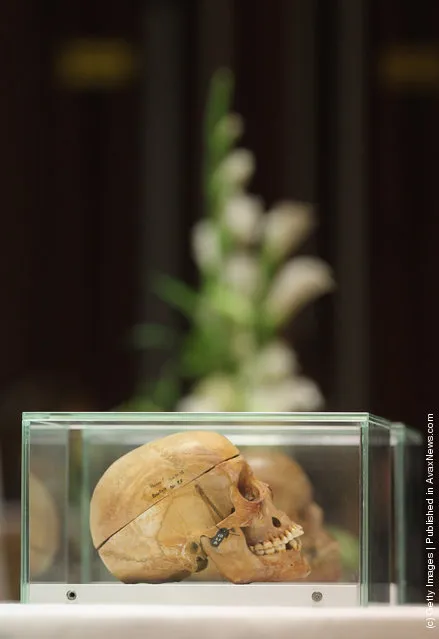
Charite Hospital Returns Herero Skulls To Namibia

Two of 20 skulls to be taken possession of by a delegation from Namibia stand on display at a ceremony at Charite hospital on September 30, 2011 in Berlin, Germany. The skulls are from Herero and Nama tribespeople taken by German colonial forces between 1904 and 1908, when the Germans violently suppressed an uprising in what was then German Southwest Africa, which is today's Namibia, and in the process killed tens of thousand of Herero and Nama. German scientists at the time took the skulls back to Berlin to demonstrate the racial superiority of Europeans over black Africans. Many Namibians demand a formal apology from the German government. (Photo by Sean Gallup/Getty Images)
Details
02 Oct 2011 11:42:00