Loading...
Done
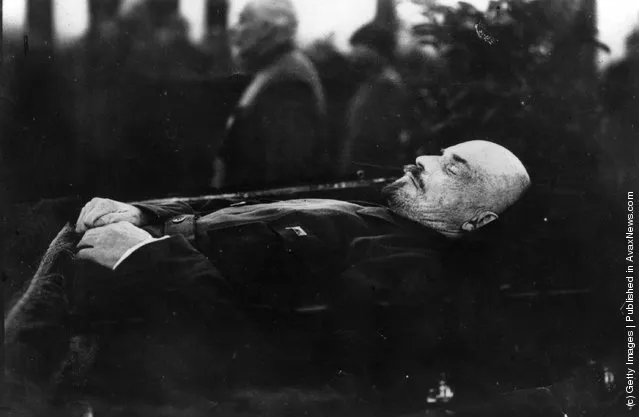
1924:  Vladimir Ilyich Lenin lying in state in the Kremlin

Photo: Vladimir Ilyich Lenin (1870 – 1924) lying in state in the Kremlin. (Photo by Hulton Archive/Getty Images). 1924

Important! For the same article in Russian language click here.

Something quite intriguing is happening within Russian-speaking internet during the last few – should you type a fully academic inquiry (at least, according to Russian academic requirements) in national search engines for "Lenin's mausoleum" – the first thing you get (even in top 10 searches) is website pages talking about black magic and occult. Website authors view this construction differently, but unconditionally agree on one thing: the mausoleum of the "leader of the world proletariat” – the essence of a magical artifact, a sort of “energy vampire”. It was built with a certain purpose: to drain the energy out of miserable Soviet citizens on one hand; and to poison the anthroposphere of one-sixth part of the earth with its vibes (the exact territory that was occupied by the former Soviet Union), depriving the Russian people of will to resist on the other hand. Complete nonsense? No doubt. Nevertheless, an intriguing one. Well, probably because some oddities do exist in mausoleum's history. These oddities are the thing we are going to discuss this time. First, let me refresh you memory on the subject.
Details
16 Oct 2011 11:27:00
The best man in a wedding party, who all declined to be identified, holds an AR-10 rifle he was handed while the party was having their pre-wedding portraits taken on the steps of the capitol before a rally nearby by gun-rights advocates to protest a new expanded gun background check law in Washington state Saturday, December 13, 2014, in Olympia, Wash. (Photo by Elaine Thompson/AP Photo)

The best man in a wedding party, who all declined to be identified, stands near the bride and groom as he holds an AR-10 rifle he was handed while the party was having their pre-wedding portraits taken on the steps of the capitol before a rally nearby by gun-rights advocates to protest a new expanded gun background check law in Washington state Saturday, December 13, 2014, in Olympia, Wash. The wedding party was not part of the protest, but posed for pictures with it after being handed it by gun activist Brandon Lyons, who said “we've all just broken the law”, by handing the gun over. Saturday's protest was called the “I Will Not Comply” rally, and those attending said they will openly exchange firearms in opposition to the state's new voter-approved universal background check law, Initiative 594. The law, which took effect on December 4, requires background checks on all sales and transfers, including private transactions and many loans and gifts. (Photo by Elaine Thompson/AP Photo)
Details
15 Dec 2014 11:17:00
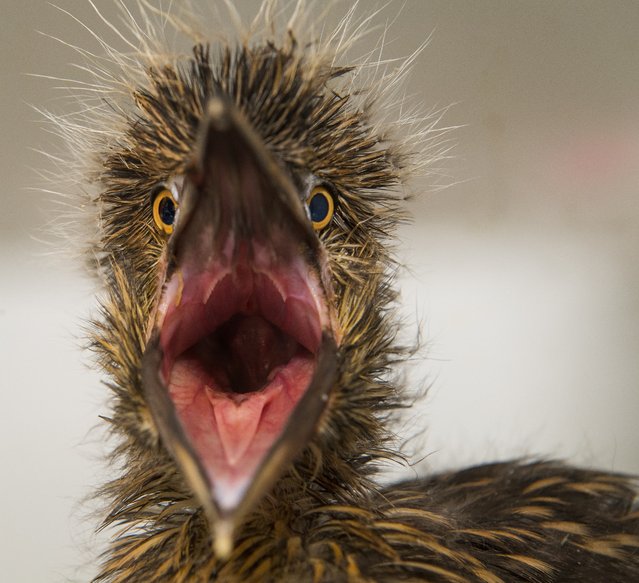
A baby Black-crowned Night Heron squawks in its incubator while being cared for at City Wildlife rescue and rehabilitation center in Washington, DC on May 31, 2017. The heron is one of several that have been brought to CW by the staff at The National Zoo over the past few years. The heron is a native bird and has made an established rookery inside the zoo grounds over a hundred years ago.  Every year at this time, some of the chicks get pushed or fall out of the nest and require human care.  Because the birds are native and not part of the Smithsonian collection, they partnered with CW to rehabilitate the herons for re-release back to the flock inside Zoo. They're reintroduced back to their flock so that they can migrate together in the Fall. The Black-crowned heron usually migrates from the DC area down to southeast North Carolina, some going as far as Jacksonville, FL in winter. The Black-crowned heron is the species of greatest conservation need in the District of Columbia because their numbers are in such rapid decline due to habitat loss. (Photo Linda Davidson/The Washington Post)

A baby Black-crowned Night Heron squawks in its incubator while being cared for at City Wildlife rescue and rehabilitation center in Washington, DC on May 31, 2017. The heron is one of several that have been brought to CW by the staff at The National Zoo over the past few years. (Photo Linda Davidson/The Washington Post)
Details
04 Jun 2017 08:04:00
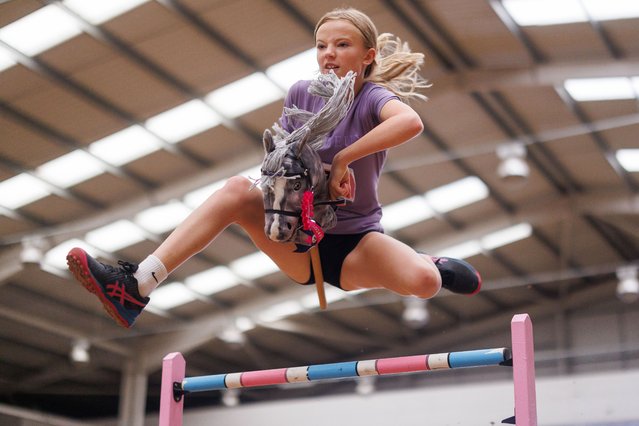
Competitors practice their moves before taking part in the UK Hobby Horse championship at Bury Farm Equestrian Centre on September 08, 2024 in Slapton, United Kingdom. While hobby horsing as a form of play has been around for centuries, the modern-day interpretation of the sport originated in Finland. Hobby horse competitions feature young enthusiasts trotting, galloping, and cantering on toy horses in various disciplines such as jumping and dressage. Its popularity has surged in recent years, especially during covid, and is growing in appeal. Young equine enthusiasts take advantage of its inclusivity, and enjoy the physical activity required, creativity and freedom of expression. The sport has also been found to help young people suffering with autism and ADHD, giving them a chance to connect with other young people with a love of horses. (Photo by Dan Kitwood/Getty Images)

Competitors practice their moves before taking part in the UK Hobby Horse championship at Bury Farm Equestrian Centre on September 08, 2024 in Slapton, United Kingdom. While hobby horsing as a form of play has been around for centuries, the modern-day interpretation of the sport originated in Finland.(Photo by Dan Kitwood/Getty Images)
Details
30 Sep 2024 04:38:00
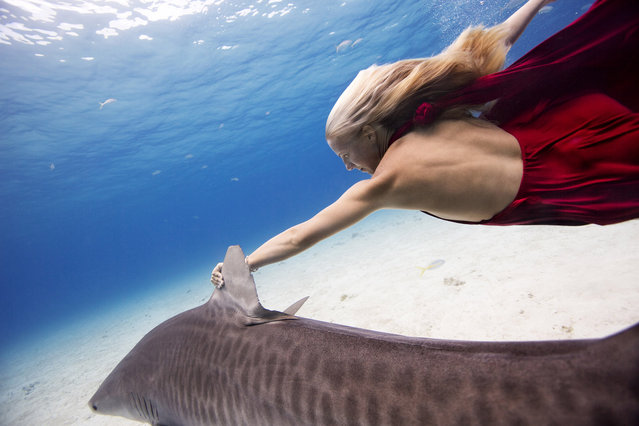
This is a photo shoot like youve never seen before  a model in glamorous dresses surrounded by sharks. However, model and shark diver Liz Parkinson decided to take the plunge and get up close and personal with some of the most revered creatures of the deep. Here: Liz swimming with Hammerheads in the Bahamas, Bimini. (Photo by Jeremy Farris/Caters News)

This is a photo shoot like youve never seen before a model in glamorous dresses surrounded by sharks. However, model and shark diver Liz Parkinson decided to take the plunge and get up close and personal with some of the most revered creatures of the deep. She was joined at the depths of the ocean by Australian photographer Jeremy Farris, who travelled around the world to capture this quite stunning collection. In some pictures, Liz is seen hitching a ride on the fins of the placid whale shark whilst in others she is being examined by the vicious tiger shark. Here: Liz swimming with Hammerheads in the Bahamas, Bimini. (Photo by Jeremy Farris/Caters News)
Details
28 Jun 2015 12:34:00
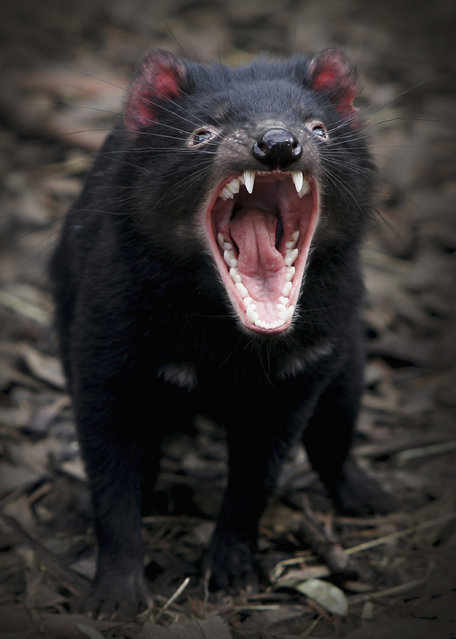
A Tasmanian Devil bears it's teeth at a quarantine facility August 31, 2005 in Hobart, Australia. The Devil, a native marsupial unique to Tasmania, is under threat from Devil Facial Tumor Disease (DFTD) which is decimating numbers throughout Tasmania. (Photo by Ian Waldie/Getty Images)

“The Tasmanian devil (Sarcophilus harrisii) is a carnivorous marsupial of the family Dasyuridae now found in the wild only in the Australian island state of Tasmania. The size of a small dog, it became the largest carnivorous marsupial in the world following the extinction of the thylacine in 1936. It is characterised by its stocky and muscular build, black fur, pungent odour, extremely loud and disturbing screech, keen sense of smell, and ferocity when feeding”. – Wikipedia. Photo: A Tasmanian Devil bears it's teeth at a quarantine facility August 31, 2005 in Hobart, Australia. (Photo by Ian Waldie/Getty Images)
Details
27 Jan 2014 09:45:00


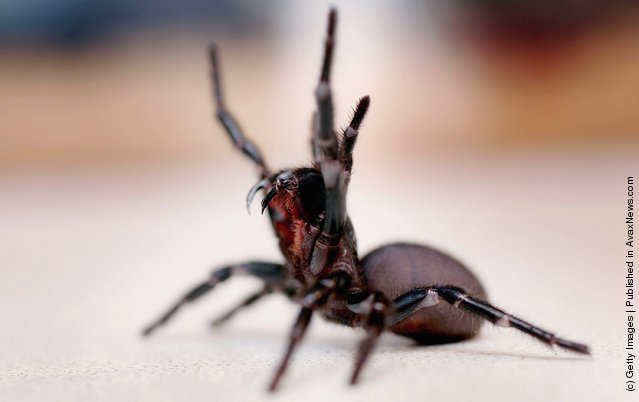
A Funnel Web spider is pictured at the Australian Reptile Park January 23, 2006 in Sydney, Australia. The Funnel Web is one of Australia's deadliest animals, with a venom that is packed with at least 40 different toxic proteins. A bite from a Funnel Web causes massive electrical over-load in the body's nervous system. Finally, fatalities occur from either heart attack or a pulmonary oedema, where the capillaries around the lungs begin to leak fluid and the patient effectively drowns. Death can come as quickly as two hours after a bite if no medical treatment is sought. Due to advances in anti-venom, there has been no death from a Funnel Web bite in Australia since 1980. Australia is home to some of the most deadly and poisonous animals on earth. (Photo by Ian Waldie/Getty Images)
Details
25 Apr 2011 07:49:00
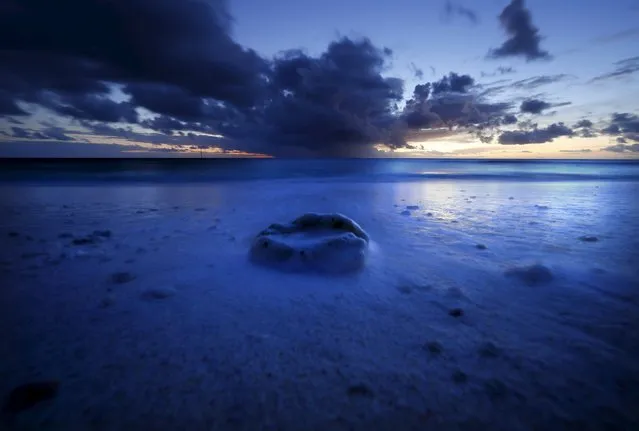
A reef shell lies on a beach as the sun sets on Lady Elliot Island located north-east of the town of Bundaberg in Queensland, Australia, June 10, 2015. (Photo by David Gray/Reuters)

A reef shell lies on a beach as the sun sets on Lady Elliot Island located north-east of the town of Bundaberg in Queensland, Australia, June 10, 2015. UNESCO World Heritage delegates recently snorkelled on Australia’s Great Barrier Reef, thousands of coral reefs, which stretch over 2,000 km off the northeast coast. Surrounded by manta rays, dolphins and reef sharks, their mission was to check the health of the world's largest living ecosystem, which brings in billions of dollars a year in tourism. Some coral has been badly damaged and animal species, including dugong and large green turtles, are threatened. UNESCO will say on Wednesday whether it will place the reef on a list of endangered World Heritage sites, a move the Australian government wants to avoid at all costs, having lobbied hard overseas. Earlier this year, UNESCO said the reef's outlook was “poor”. (Photo by David Gray/Reuters)
Details
30 Jun 2015 12:21:00