Loading...
Done
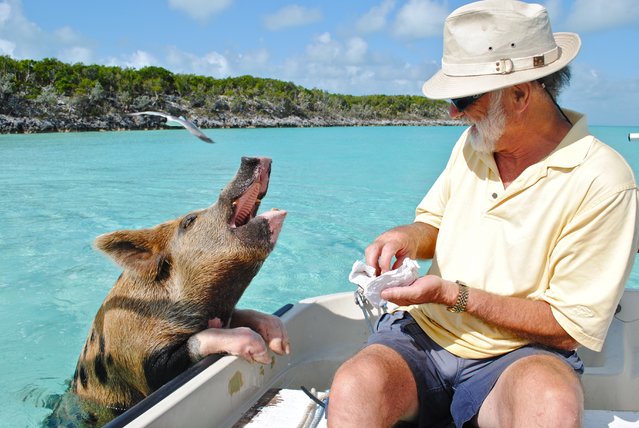
“So you're on a boat in Bahamas and then this pig swims by begging for food”. (Photo and caption by Lisa Larsen/Public Domain)

The Bahamas, the Commonwealth nation of hundreds of islands roughly the size of Connecticut and with population of just a bit over Anaheim, is known for its crystal waters and pristine beaches. This is possibly one of the world’s most beautiful havens of nature, yet people are coming here to see pigs. It is unclear when the pigs first appeared on Exuma Island or where they come from. There’s talk about a daring escape from a shipwreck, or sailors releasing the swine on purpose. In all probability, there were no pigs on this tropical paradise before European settlers came, so their mere presence is the work of human. The intriguing feat of nature, however, is that this population of pigs developed a fine aptitude for swimming. Here: “So you're on a boat in Bahamas and then this pig swims by begging for food”. (Photo and caption by Lisa Larsen/Public Domain)
Details
03 Sep 2015 11:53:00
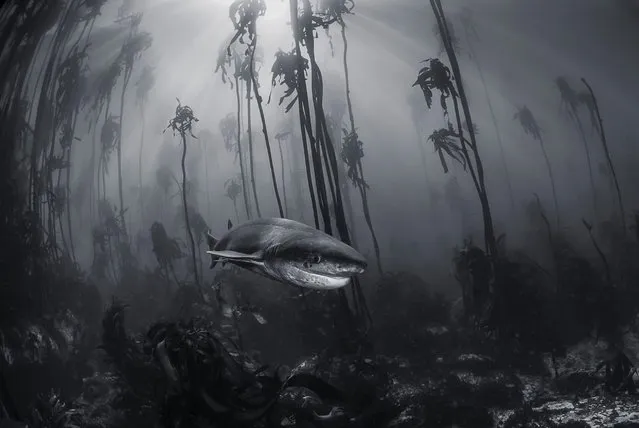
Mystical Forest. Tracey Jennings photographed this seven-gill shark in a kelp forest just off the shore of Simon's Town near Cape Town, South Africa. You don't need to travel far from cities to visit Narnia. This 7 gill shark was photographed in a kelp forest just off the shore of Simonstown near Cape Town, South Africa. (Photo by Tracey Jennings/National Geographic Travel Photographer of the Year Contest)

Mystical Forest. Tracey Jennings photographed this seven-gill shark in a kelp forest just off the shore of Simon's Town near Cape Town, South Africa. You don't need to travel far from cities to visit Narnia. This 7 gill shark was photographed in a kelp forest just off the shore of Simonstown near Cape Town, South Africa. (Photo by Tracey Jennings/National Geographic Travel Photographer of the Year Contest)
Details
24 May 2016 09:32:00
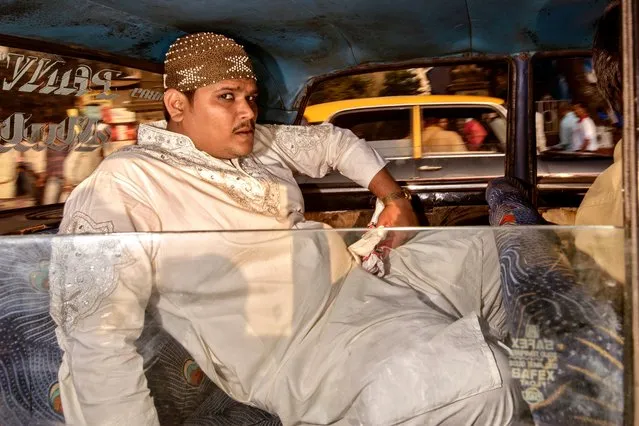
“I’m not scared of breaking the fourth wall”, Wallace has said of the photos where the subject is clearly aware of him taking the shot. “If they are looking at you in a photograph most photographers will think, oh, that’s not a good image. (But) people like to be involved and in the picture. You can see what they are thinking, see them talking”. (Photo by Dougie Wallace/The Guardian)

In Dougie Wallace’s photos of Mumbai taxis, the chatter, yelling, and constant horns of the city are almost audible. A selection of his images is on show at Gayfield Creative Spaces, Edinburgh, as part of the Retina photography festival until 30 July. For four years, the Glasgow-born Wallace focused his photos on one kind of taxi in particular: the Premier Padmini, a 1960s workhorse painted in black and yellow. Locally known as “Kaali-Peeli”, there were once more than 60,000 of them in the Indian city. But thanks to laws restricting pollution, the cars now are fast disappearing from Mumbai’s streets. (Photo by Dougie Wallace/The Guardian)
Details
13 Jul 2016 13:50:00
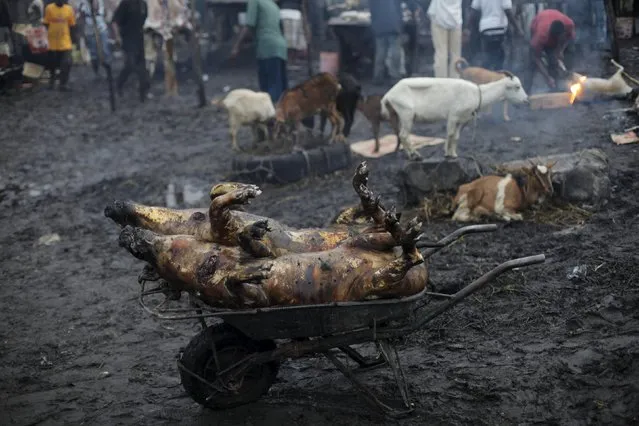
A wheelbarrow loaded with two butchered pigs is seen at La Saline slaughterhouse in Port-au-Prince, Haiti, March 19, 2015. Reuters photographer Andres Martinez Casares: “The grunts of a pig or the bleating of a goat are one thing. Then there's the sound of animals about to be killed. That's something else. If you haven't heard that before, it's quite something. It's very early in the morning when this happens, well before dawn. Day after day, it's the same toil over and over again”. (Photo by Andres Martinez Casares/Reuters)

A wheelbarrow loaded with two butchered pigs is seen at La Saline slaughterhouse in Port-au-Prince, Haiti, March 19, 2015. Reuters photographer Andres Martinez Casares: “The grunts of a pig or the bleating of a goat are one thing. Then there's the sound of animals about to be killed. That's something else. If you haven't heard that before, it's quite something... (Photo by Andres Martinez Casares/Reuters)
Details
30 Jan 2016 13:10:00
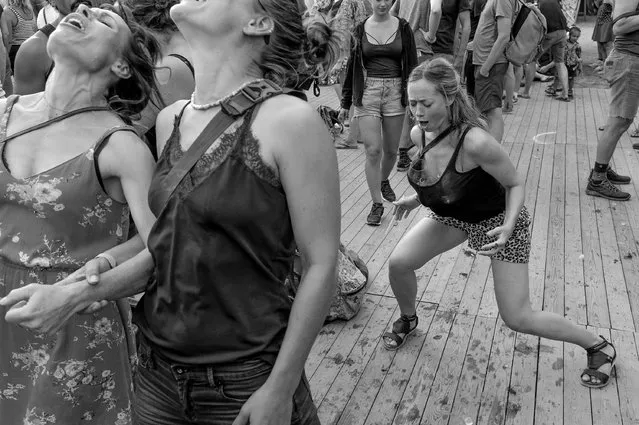
Bouwe Brouwer: Postcards from Fryslân (series finalist). “People from Fryslân are looked upon by the rest of the Netherlands as stubborn people. Going back as far as the Spanish occupation, they have a history of resisting authority. Postcards from Fryslân is still an ongoing project – hopefully a lifelong one. When it started, it represented only a collection of places that seemed interesting. Currently, the hope is to cover most of the province, as you never know in advance where the best narratives are. But still, it is all candid, unposed and in the public realm”. (Photo by Bouwe Brouwer/Street Photographers Awards 2021)

Bouwe Brouwer: Postcards from Fryslân (series finalist). “People from Fryslân are looked upon by the rest of the Netherlands as stubborn people. Going back as far as the Spanish occupation, they have a history of resisting authority. Postcards from Fryslân is still an ongoing project – hopefully a lifelong one. When it started, it represented only a collection of places that seemed interesting. Currently, the hope is to cover most of the province, as you never know in advance where the best narratives are. But still, it is all candid, unposed and in the public realm”. (Photo by Bouwe Brouwer/Street Photographers Awards 2021)
Details
17 Oct 2021 07:54:00
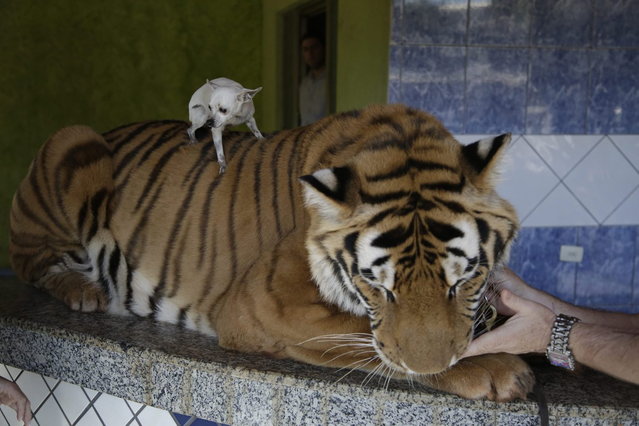
The Borges' family pet dog, Little, is placed on the back of Tom, their tiger, for a photo to be taken, in Maringa, Brazil, Friday, September 27, 2013. The Brazilian family is now locked in a legal dispute for the big cats, they have eight tigers and two lions, with federal wildlife officials working to take them away. While Borges does have a license to raise the animals, Brazilian wildlife officials say he illegally bred the cats, creating a public danger. (Photo by Renata Brito/AP Photo)

“Ary Borges and his family live in southern Brazil like most families the Borges' love animals and have an array of cats living in their home. The only difference between the cats owned by the Borges family and the cat that is cuddled up on your lap as you read this is the Borges' cats weigh over 700 pounds and could kill you just as soon as look at you. The Borges family shares their home with nine tigers, two lionesses, a chimp and a Chihuahua”. – Amanda Schiavo via Latin Times. Photo: The Borges' family pet dog, Little, is placed on the back of Tom, their tiger, for a photo to be taken, in Maringa, Brazil, Friday, September 27, 2013. (Photo by Renata Brito/AP Photo)
Details
04 Oct 2013 11:51:00
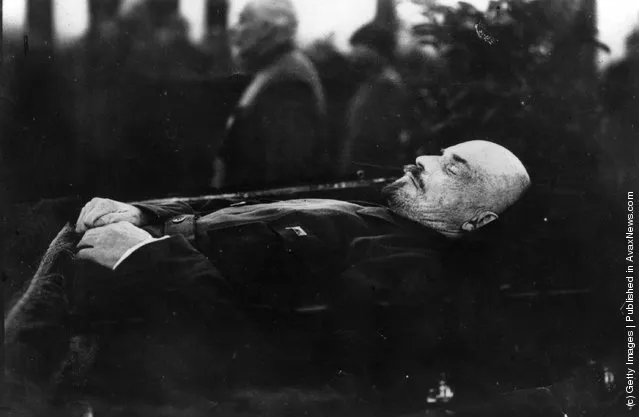
1924:  Vladimir Ilyich Lenin lying in state in the Kremlin

Photo: Vladimir Ilyich Lenin (1870 – 1924) lying in state in the Kremlin. (Photo by Hulton Archive/Getty Images). 1924

Important! For the same article in Russian language click here.

Something quite intriguing is happening within Russian-speaking internet during the last few – should you type a fully academic inquiry (at least, according to Russian academic requirements) in national search engines for "Lenin's mausoleum" – the first thing you get (even in top 10 searches) is website pages talking about black magic and occult. Website authors view this construction differently, but unconditionally agree on one thing: the mausoleum of the "leader of the world proletariat” – the essence of a magical artifact, a sort of “energy vampire”. It was built with a certain purpose: to drain the energy out of miserable Soviet citizens on one hand; and to poison the anthroposphere of one-sixth part of the earth with its vibes (the exact territory that was occupied by the former Soviet Union), depriving the Russian people of will to resist on the other hand. Complete nonsense? No doubt. Nevertheless, an intriguing one. Well, probably because some oddities do exist in mausoleum's history. These oddities are the thing we are going to discuss this time. First, let me refresh you memory on the subject.
Details
16 Oct 2011 11:27:00
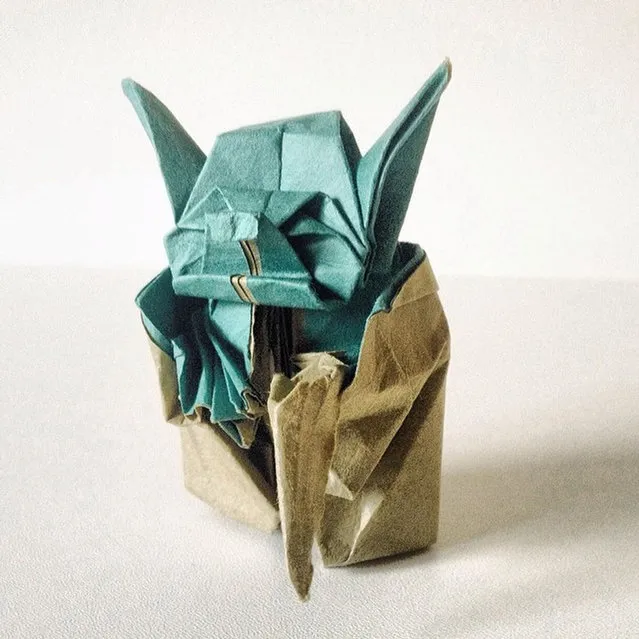
Origami By Ross Symons

As kids we have the natural desire to explore and to create. Whenever our parents would make for us a paper plane, we would become overjoyed seeing it fly across the room. However, planes are not the only thing that can be made from paper, and not only kids are fascinated by it. Some people master the art of origami and are able to create pretty much anything. You never know what’s going to come out when the artist twists and turns a piece of paper in meticulous ways. Finally, the figurine is complete, and you immediately see the striking resemblance of this piece of paper with an animal or some other creature. Ross Symons is one of those artists. He creates his figurines simply for the joy it brings him. Maybe, he uses this as a medium to enter his childhood, or maybe he has other motifs – we will never know. (Photo by Ross Symons)
Details
31 Oct 2014 12:12:00