Loading...
Done
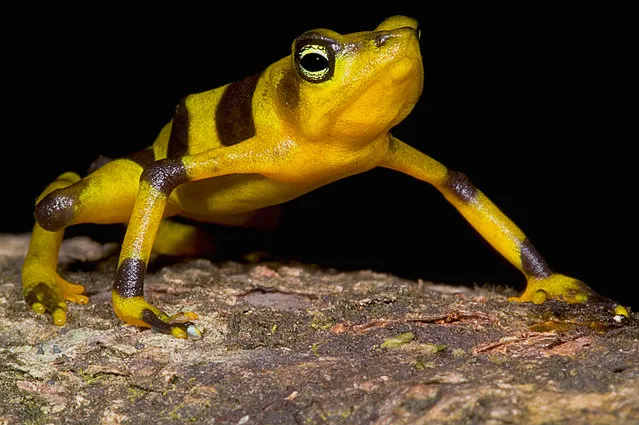
The golden harlequin toad has vanished from the wild, and only a small number live on in captivity. A fungus caused them, and many other amphibians, to die out in their home in Central America. (Photo by Danté Fenolio/The Guardian/Johns Hopkins University Press)

Wildlife photographer Danté Fenolio has headed into areas untouched by sunlight – deep seas, caves and underground – and found creatures that are exploding with colour. Here: The golden harlequin toad has vanished from the wild, and only a small number live on in captivity. A fungus caused them, and many other amphibians, to die out in their home in Central America. (Photo by Danté Fenolio/The Guardian/Johns Hopkins University Press)
Details
20 Jun 2016 12:19:00
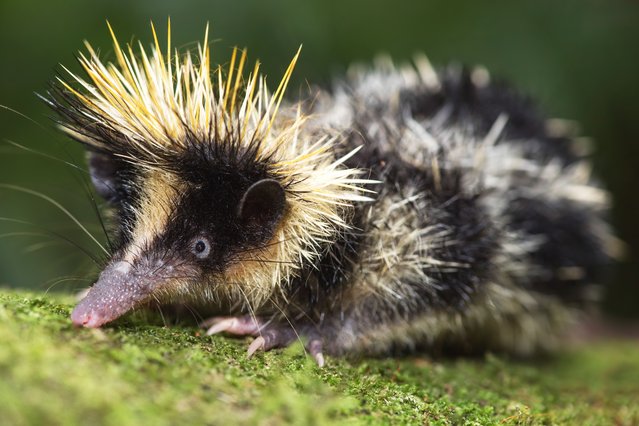
This spiky tenrec was spotted in Madagascar’s Mantadia National Park in the last decade of September 2025. Mostly nocturnal and rarely seen, it puffs out its spines when threatened. Spiky tenrecs are excellent swimmers — unlike most spiny mammals, some species of tenrec can forage in streams and rivers, using their spines for protection while hunting aquatic insects and small prey. (Photo by Dale Morris/Solent News & Photo Agency)

This spiky tenrec was spotted in Madagascar’s Mantadia National Park in the last decade of September 2025. Mostly nocturnal and rarely seen, it puffs out its spines when threatened. Spiky tenrecs are excellent swimmers — unlike most spiny mammals, some species of tenrec can forage in streams and rivers, using their spines for protection while hunting aquatic insects and small prey. (Photo by Dale Morris/Solent News & Photo Agency)
Details
05 Oct 2025 04:02:00
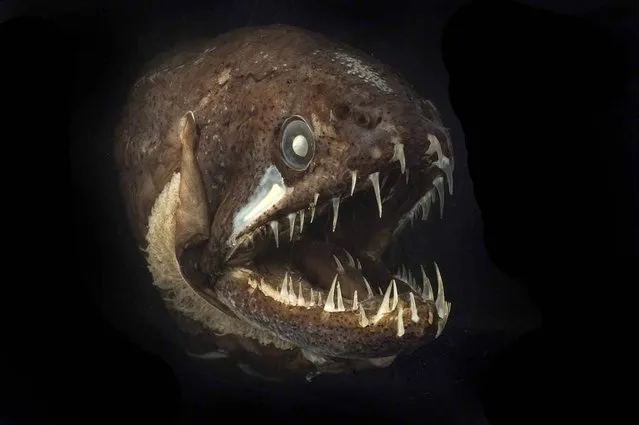
Imagine living in the sea where it is permanently dark, cold, and food is hard to find. For many animals at depth, it may be weeks to months between meals. If you find something to eat, you have to hang on to it

Imagine living in the sea where it is permanently dark, cold, and food is hard to find. For many animals at depth, it may be weeks to months between meals. If you find something to eat, you have to hang on to it. This is why so many deep-sea fishes have lots of big teeth. This dragonfish, spotted off the coast of Australia, even has teeth on its tongue. They would be terrifying animals ... if they weren’t the size of a banana. (Photo by Julian Finn/Museum Victoria)
Details
21 May 2012 12:14:00
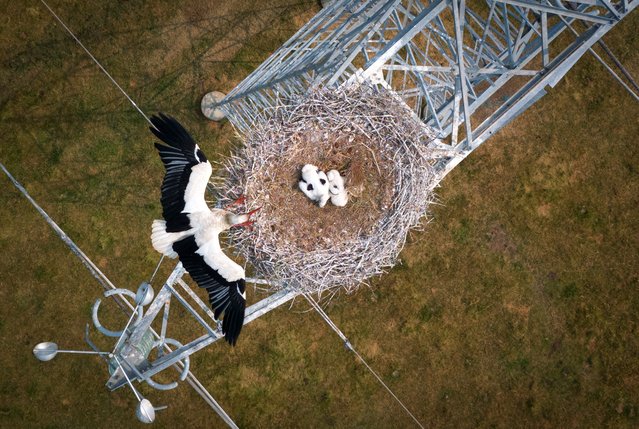
This aerial photograph shows a stork with two chicks on a nest installed on a high voltage line mast in Bouee, western France, on June 3, 2025. (Photo by Loïc Venance/AFP Photo)

This aerial photograph shows a stork with two chicks on a nest installed on a high voltage line mast in Bouee, western France, on June 3, 2025. (Photo by Loïc Venance/AFP Photo)
Details
15 Jun 2025 04:02:00
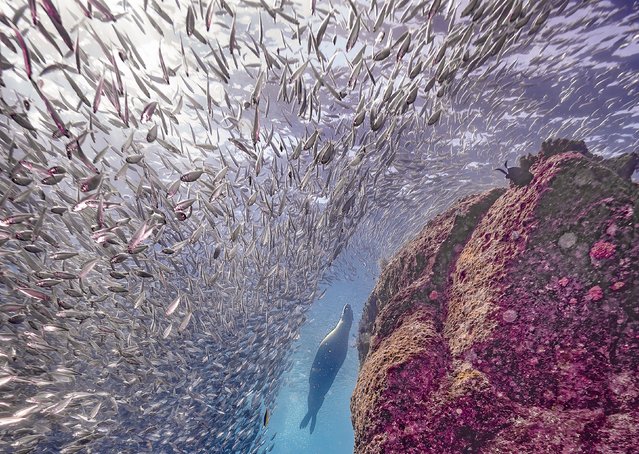
Sea lions make dinner plans in the Gulf of California early July 2024. The gulf is a primary source of sardines and anchovies, two of Mexico’s top marine resources. (Photo by Glenn Ostle/Solent News)

Sea lions make dinner plans in the Gulf of California early July 2024. The gulf is a primary source of sardines and anchovies, two of Mexico’s top marine resources. (Photo by Glenn Ostle/Solent News)
Details
04 Oct 2024 04:04:00
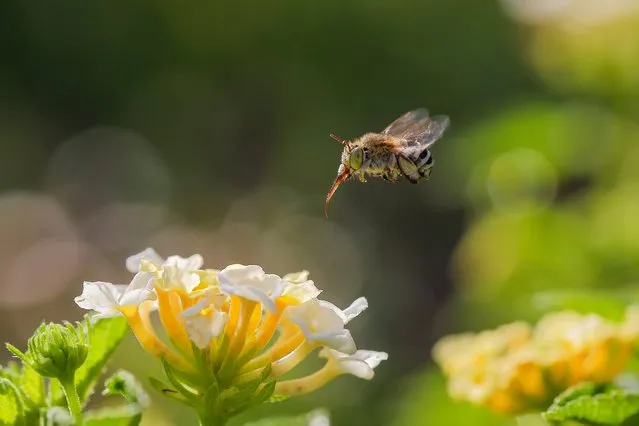
“Tasty Nature” by Dipesh Bhatt. “The blue banded bee (Amegilla cingulata) is pointing this sheath towards the flowers in preparation for sipping nectar”. Taken in Gujarat, India. (Photo by Dipesh Bhatt/2016 Royal Society of Biology Photographer of the Year competition)

“Tasty Nature” by Dipesh Bhatt. “The blue banded bee (Amegilla cingulata) is pointing this sheath towards the flowers in preparation for sipping nectar”. Taken in Gujarat, India. (Photo by Dipesh Bhatt/2016 Royal Society of Biology Photographer of the Year competition)
Details
30 Sep 2016 09:32:00
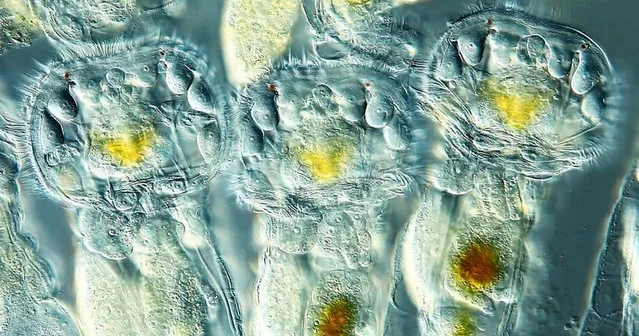
Olympus BioScapes Digital Imaging Competition 2012

Microscope images forge an extraordinary bond between science and art, said Hidenao Tsuchiya, Olympus America's Vice President and General Manager for the Scientific Equipment Group. We founded this competition to focus on the fascinating stories coming out of today's life science research laboratories. The thousands of images that people have shared with the competition over the years reflect some of the most exciting work going on in research today – work that can help shed light on the living universe and ultimately save lives. We look at BioScapes and these beautiful images as sources of education and inspiration to us and the world
Details
23 Dec 2012 15:57:00
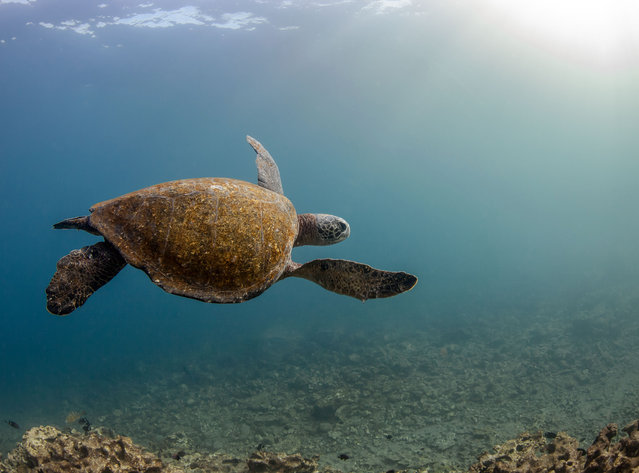
Green turtles take special care of their carapace, scraping algae off on rocks or letting cleaner fish remove parasites. Thanks to long-term protection of nesting sites, and measures to reduce the numbers caught in fishing gear, some green turtle populations are starting to recover. (Photo by Philip Hamilton/The Guardian)

Teeming with images of spectacular underwater scenes from around the world, Call of the Blue is the culmination of a five-year project by the photographer and ocean conservationist Philip Hamilton. This groundbreaking book includes contributions from acclaimed scientists and ocean “guardians”, who reveal what drove them to answer the call of the blue. (Photo by Philip Hamilton/The Guardian)
Details
23 Nov 2018 00:03:00