Loading...
Done
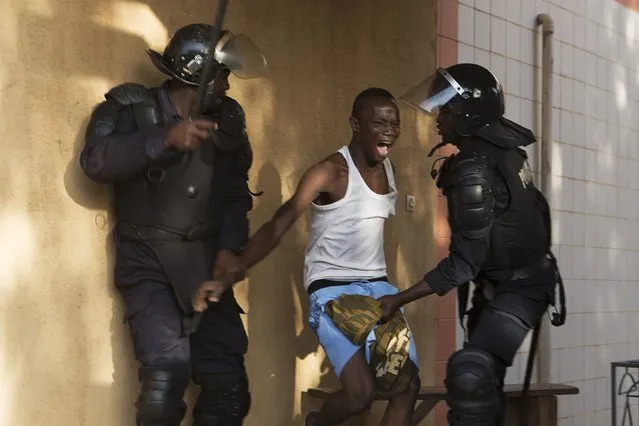
Riot police arrest an anti-government protester in Ouagadougou, capital of Burkina Faso, October 30, 2014. Thousands of protesters marched on Burkina Faso's presidential palace after burning the parliament building and ransacking state television offices on Thursday, forcing President Blaise Compaore to scrap a plan to extend his 27-year rule. (Photo by Joe Penney/Reuters)

Riot police arrest an anti-government protester in Ouagadougou, capital of Burkina Faso, October 30, 2014. Thousands of protesters marched on Burkina Faso's presidential palace after burning the parliament building and ransacking state television offices on Thursday, forcing President Blaise Compaore to scrap a plan to extend his 27-year rule. Emergency services said at least three protesters were shot dead and several others wounded by security forces when the crowd tried to storm the home of Compaore's brother. Security forces also fired live rounds and tear gas at protesters near the presidency in the Ouaga 2000 neighborhood. (Photo by Joe Penney/Reuters)
Details
02 Nov 2014 10:43:00
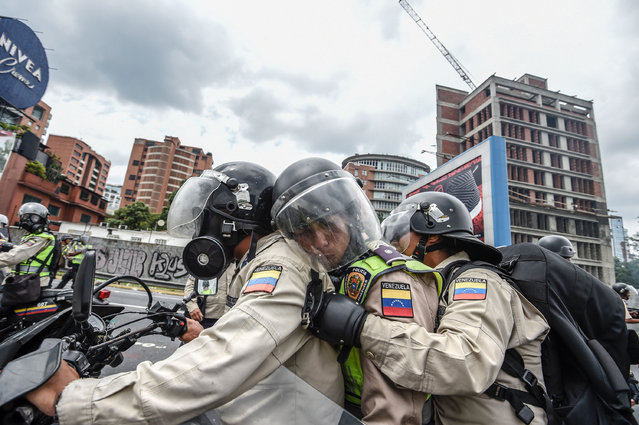
Riot police officers in position to crack down on demonstrators during a protest against Venezuelan President Nicolas Maduro, in Caracas on April 20, 2017. (Photo by Juan Barreto/AFP Photo)

Riot police officers in position to crack down on demonstrators during a protest against Venezuelan President Nicolas Maduro, in Caracas on April 20, 2017. Venezuelan riot police fired tear gas Thursday at groups of protesters seeking to oust President Nicolas Maduro, who have vowed new mass marches after a day of deadly unrest. Police in western Caracas broke up scores of opposition protesters trying to join a larger march, though there was no immediate repeat of Wednesday's violent clashes, which left three people dead. (Photo by Juan Barreto/AFP Photo)
Details
22 Apr 2017 08:56:00
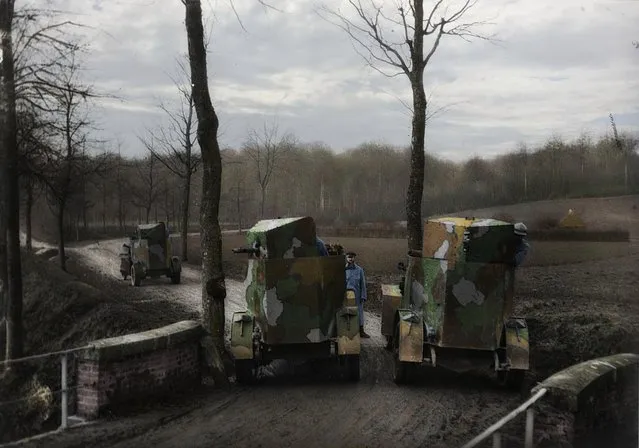
The expertly colourised shots were brought to life by French bank technician, Frédéric Duriez (51). The images were provided by the Valois collection which belongs to the BDIC. “By colourising these photos, I reduce the time that separates us today from this conflict”, said Frédéric. “A black and white photo does not attract the attention of young people, if you colour it, then people will look at it with curiosity. After this, we see the greater the misery and distress of these French fighters”. The total number of casualties in WW1 was more that 38 million. By the end of the war, over eight-million men had been called up to fight in the French army. France suffered 4.2 million casualties during the war with 1.3 million people dead. Here: Car cannon sections in firing position, Auxi-le-Château. (Photo by Frédéric Duriez/BDIC/Mediadrumworld.com)

The expertly colourised shots were brought to life by French bank technician, Frédéric Duriez (51). The images were provided by the Valois collection which belongs to the BDIC. “By colourising these photos, I reduce the time that separates us today from this conflict”, said Frédéric. Here: Car cannon sections in firing position, Auxi-le-Château. (Photo by Frédéric Duriez/BDIC/Mediadrumworld.com)
Details
03 May 2017 08:41:00
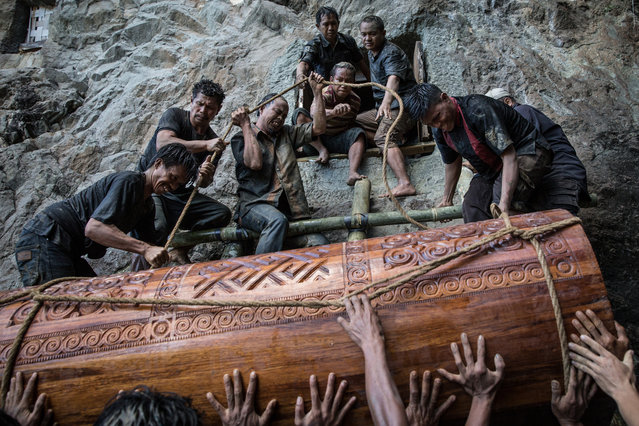
It is said that Torajans are people who “live to die”. For this Indonesian ethnic group, funerals are such extravagant events that they sometimes attract tourists. Families can postpone burials years (and the deceased are considered sick and hosted at home until the funeral) until the family can raise enough money and gather as many relatives as possible. And then it’s a jubilant multiday social event with a parade, dances and animal sacrifices. Agung Parameswara photographed these funerary practices when he traveled to South Sulawesi province, where the Torajans live. But often, their funeral isn’t the last time the dead are seen. In August, crypts are opened, coffins are slid back out and bodies delicately unsheathed. This tender ritual is known as Ma’Nene, which is customarily performed every few years. (Photo by Agung Parameswara/The Washington Post)

It is said that Torajans are people who “live to die”. For this Indonesian ethnic group, funerals are such extravagant events that they sometimes attract tourists. Families can postpone burials years (and the deceased are considered sick and hosted at home until the funeral) until the family can raise enough money and gather as many relatives as possible. And then it’s a jubilant multiday social event with a parade, dances and animal sacrifices. Agung Parameswara photographed these funerary practices when he traveled to South Sulawesi province, where the Torajans live. (Photo by Agung Parameswara/The Washington Post)
Details
06 Oct 2016 09:15:00
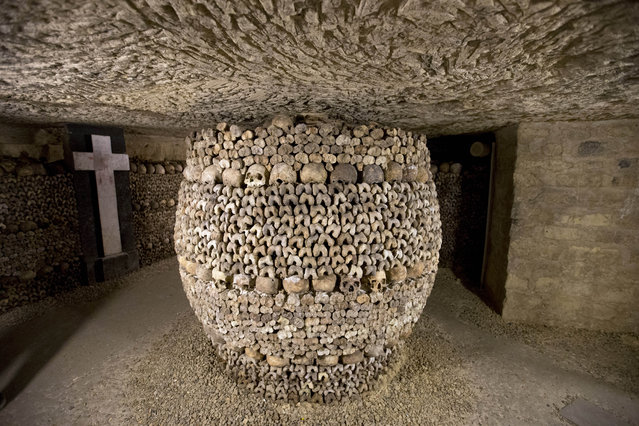
In this photo taken Tuesday, October 14, 2014, skulls and bones are stacked at the Catacombs in Paris, France. (Photo by Francois Mori/AP Photo)

In this photo taken Tuesday, October 14, 2014, skulls and bones are stacked at the Catacombs in Paris, France. The subterranean tunnels, stretching 2 kilometers (1.24 miles), cradle the bones of some 6 million Parisians from centuries past and once gave refuge to smugglers. The site used to close at 5 p.m., but is now staying open until 8 p.m. The change is mainly aimed at allowing more people to visit and reducing long lines, since it can only hold a limited number of people at a time and visits can't be reserved in advance. (Photo by Francois Mori/AP Photo)
Details
17 Oct 2014 13:27:00
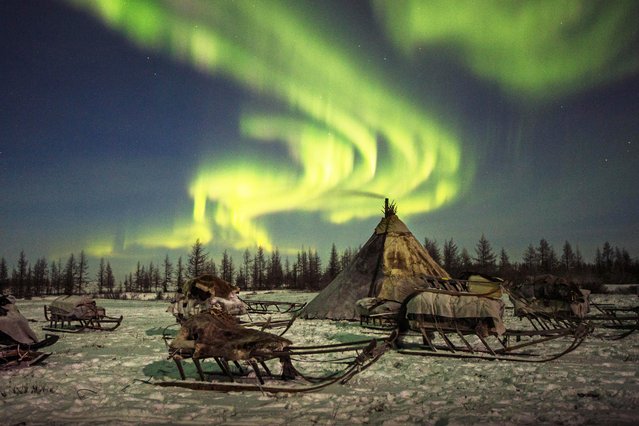
An empty camp is shown beneath a colourful sky in Siberia, December 2016. (Photo by Timothy Allen/Barcroft Productions)

A British photographer has captured life at the “edge of the world”. Timothy Allen, best known for his work on BBC's Human Planet, trekked through the freezing Siberian wilderness for 16 days as he joined part of an 800km migration of reindeer in the Yamal-Nenets region – a name that roughly translates to “edge of the world”. The stunning pictures feature the nomadic Nenets tribe, who drink blood to survive in -45°C temperatures. Timothy's epic journey, which will be revealed in an eight-minute documentary on Animal Planet USA, saw him travel across the bleak terrain of the frozen Ob River with the Nenets people in December last year. Here: An empty camp is shown beneath a colourful sky in Siberia, December 2016. (Photo by Timothy Allen/Barcroft Productions)
Details
19 Sep 2017 07:48:00
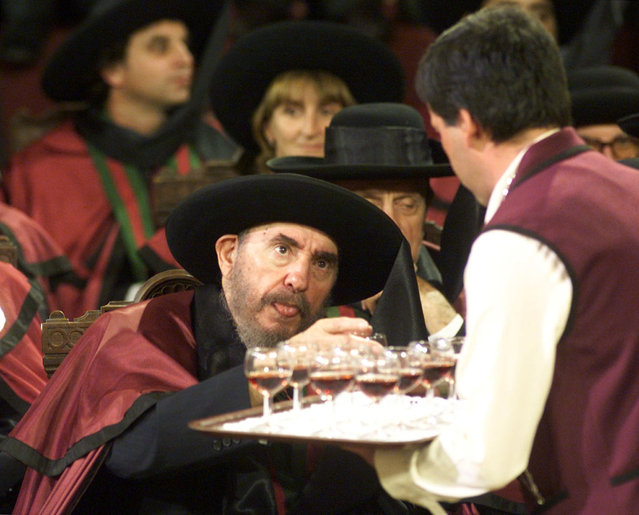
Cuban President takes a glass during a ceremony in the Oporto Bourse where he and other Ibero-American leaders were made members of the Port Wine Brotherhood in Portugal, October 1998. (Photo by Desmond Boylan/Reuters)

Desmond Boylan, a photographer who covered war and conflict across the world before dedicating his life to documenting the daily joys and tribulations of life in Cuba for Reuters and The Associated Press, died suddenly while on assignment on Saturday, December 29, 2018 afternoon in Havana. Here: Cuban President takes a glass during a ceremony in the Oporto Bourse where he and other Ibero-American leaders were made members of the Port Wine Brotherhood in Portugal, October 1998. (Photo by Desmond Boylan/Reuters)
Details
12 Jan 2019 00:01:00
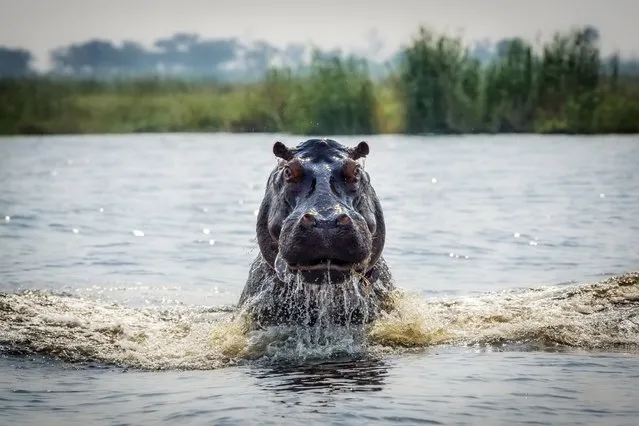
“Hippo Chase”. As we approached the camp the Selinda Reserve of northern Botswana our boat passed by a hippo resting in the water. I turned around to look back at the boat's wake and saw the hippo charging after us! The hippo must've been tired from an all-nighter because he was angry. (Photo and caption by Curtis Simmons/National Geographic Photo Contest)

“Hippo Chase”. As we approached the camp the Selinda Reserve of northern Botswana our boat passed by a hippo resting in the water. I turned around to look back at the boat's wake and saw the hippo charging after us! The hippo must've been tired from an all-nighter because he was angry. He rose way up out of the water three times trying to chase our boat! He was coming at us with such force that he created a wake of his own. Photo location: Selinda Reserve of northern Botswana. (Photo and caption by Curtis Simmons/National Geographic Photo Contest)
Details
06 Nov 2014 08:59:00