Loading...
Done
A woman wears a mask while carrying a dog in the street on January 22, 2020 in Wuhan, Hubei province, China. A new infectious coronavirus known as “2019-nCoV” was discovered in Wuhan as the number of cases rose to over 400 in mainland China. Health officials stepped up efforts to contain the spread of the pneumonia-like disease which medicals experts confirmed can be passed from human to human. The death toll has reached 17 people as the Wuhan government issued regulations today that residents must wear masks in public places. Cases have been reported in other countries including the United States, Thailand, Japan, Taiwan, and South Korea. (Photo by Getty Images/China Stringer Network)

A woman wears a mask while carrying a dog in the street on January 22, 2020 in Wuhan, Hubei province, China. A new infectious coronavirus known as “2019-nCoV” was discovered in Wuhan as the number of cases rose to over 400 in mainland China. Health officials stepped up efforts to contain the spread of the pneumonia-like disease which medicals experts confirmed can be passed from human to human. The death toll has reached 17 people as the Wuhan government issued regulations today that residents must wear masks in public places. Cases have been reported in other countries including the United States, Thailand, Japan, Taiwan, and South Korea. (Photo by Getty Images/China Stringer Network)
Details
31 Dec 2020 00:01:00
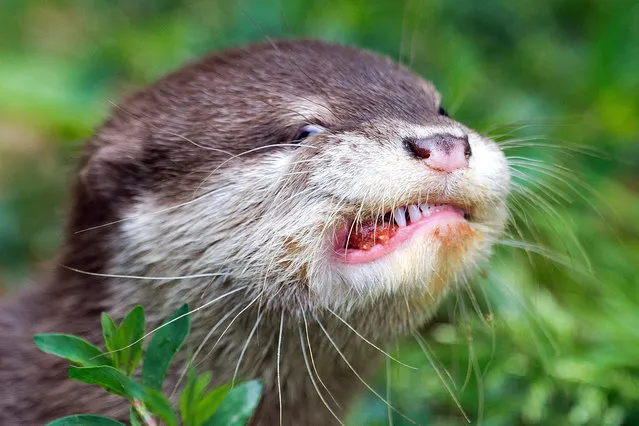
One of three young oriental small-clawed otters eats a meatball on June 18, 2015 in a zoo in Dresden, eastern Germany. The oriental small-clawed otter female Fussi gave birth to 3 healthy pups. Its pups now leave their burrow to explore the environment. (Photo by Arno Burgi/AFP Photo/DPA)

One of three young oriental small-clawed otters eats a meatball on June 18, 2015 in a zoo in Dresden, eastern Germany. The oriental small-clawed otter female Fussi gave birth to 3 healthy pups. Its pups now leave their burrow to explore the environment. (Photo by Arno Burgi/AFP Photo/DPA)
Details
29 Jun 2015 12:27:00
Spectacular images offering insight into the lives of the Huaorani people in the Ecuadorian Amazon have been revealed showing how they use traditional methods to hunt monkeys for food. The stunning pictures were taken by conservation photographer Pete Oxford from Torquay, Devon in the Ecuadorian Amazon. “The Huaorani Indians are a forest people highly in tune with their environment. Many are now totally acculturated since the 1950s by missionaries”, said Pete. “Today they face radical change to their culture to the proximity of oil exploration within their territory and the Yasuni National Park and Biosphere Reserve, they are vastly changed. Some still live very traditionally and for this shoot, through my Huaorani friend, a direct relative of those photographed he wanted to depict them as close to their original culture as possible. They still largely hunt with blow pipes and spears eating a lot of monkeys and peccaries”. The Huaorani are also known as the Waorani, Waodani or the Waos and are native Amerindians. Their lands are located between the Curaray and Napo rivers and speak the Huaorani language. Pete says that during his visit he was welcomed into the group and hopes that ancient cultures can be saved. Here: The tribe were seen celebrating after a hunter returned to camp with a wild pig. (Photo by Pete Oxford/Mediadrumworld.com)

Spectacular images offering insight into the lives of the Huaorani people in the Ecuadorian Amazon have been revealed showing how they use traditional methods to hunt monkeys for food. The stunning pictures were taken by conservation photographer Pete Oxford from Torquay, Devon in the Ecuadorian Amazon. Here: The tribe were seen celebrating after a hunter returned to camp with a wild pig. (Photo by Pete Oxford/Mediadrumworld.com)
Details
20 Jan 2017 07:58:00
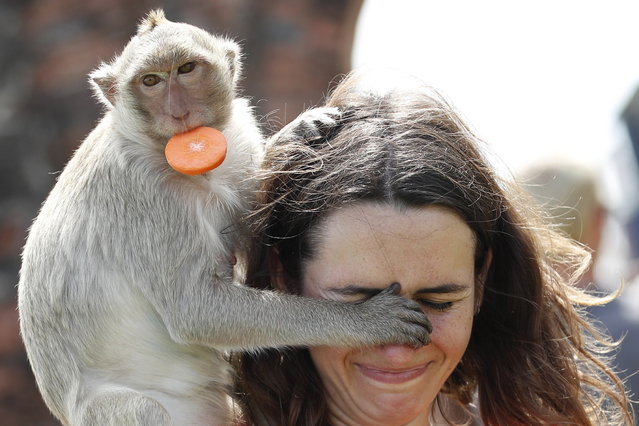
A monkey is being fed by a foreign tourist during the annual Monkey Banquet at Phra Prang Sam Yod ancient temple in Lopburi, some 180km from Bangkok, central Thailand, 24 November 2024. The annual gala has been organized since 1989 by Lopburi's entrepreneur Yongyuth Kitwatananusont, offering all-you-can-eat fruits, vegetables, and desserts for monkeys to honor the long-tailed macaques to attract tourists to visit the town to promote tourism. According to the Wildlife Department, more than 2,000 urban monkeys were captured in 2024 by authorities to control the monkey population after the growing complaints of residents that the macaques maraud food, frequently confront residents, causing accidents as well as their properties, assets, and the ancient city to be overrun and damaged by the monkeys. (Photo by Rungroj Yongrit/EPA)

A monkey is being fed by a foreign tourist during the annual Monkey Banquet at Phra Prang Sam Yod ancient temple in Lopburi, some 180km from Bangkok, central Thailand, 24 November 2024. The annual gala has been organized since 1989 by Lopburi's entrepreneur Yongyuth Kitwatananusont, offering all-you-can-eat fruits, vegetables, and desserts for monkeys to honor the long-tailed macaques to attract tourists to visit the town to promote tourism. (Photo by Rungroj Yongrit/EPA)
Details
08 Dec 2024 04:22:00
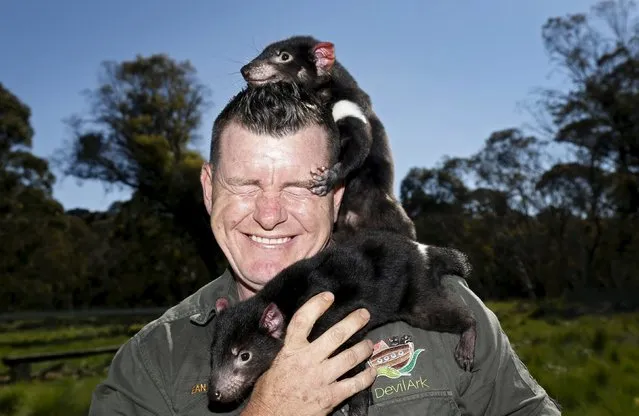
Devil Ark manager Dean Reid reacts as Tasmanian Devil joeys climb on him before the first shipment of healthy and genetically diverse devils to the island state of Tasmania leave the Devil Ark sanctuary in Barrington Tops on Australia's mainland, November 17, 2015. The largest group so far of disease-free Tasmanian devils has been released in the wild, as part of plans to save the carnivorous marsupials from a cancer threatening them with extinction. (Photo by Jason Reed/Reuters)

Devil Ark manager Dean Reid reacts as Tasmanian Devil joeys climb on him before the first shipment of healthy and genetically diverse devils to the island state of Tasmania leave the Devil Ark sanctuary in Barrington Tops on Australia's mainland, November 17, 2015. The largest group so far of disease-free Tasmanian devils has been released in the wild, as part of plans to save the carnivorous marsupials from a cancer threatening them with extinction. (Photo by Jason Reed/Reuters)
Details
21 Nov 2015 08:05:00
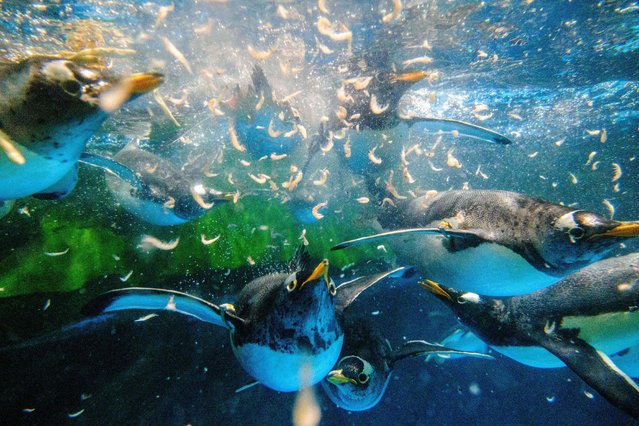
This picture taken on May 4, 2020 shows gentoo penguins chasing krill during feeding time in their enclosure at the Ocean Park theme park, which is currently closed due to the COVID-19 novel coronavirus, in Hong Kong. Save for an absence of gawping crowds, life for the penguins of Hong Kong's Ocean Park has been much the same during the coronavirus pandemic – but their carers have worked long shifts to keep the monochrome troupe healthy. (Photo by Anthony Wallace/AFP Photo)

This picture taken on May 4, 2020 shows gentoo penguins chasing krill during feeding time in their enclosure at the Ocean Park theme park, which is currently closed due to the COVID-19 novel coronavirus, in Hong Kong. Save for an absence of gawping crowds, life for the penguins of Hong Kong's Ocean Park has been much the same during the coronavirus pandemic – but their carers have worked long shifts to keep the monochrome troupe healthy. (Photo by Anthony Wallace/AFP Photo)
Details
17 May 2020 00:01:00
A dog owner feeds her dog during a dinner for dogs event ahead of the Lunar New Year at Kong Shan Yunnan Bistro restaurant in Shanghai, China, on January 25, 2025. (Photo by Go Nakamura/Reuters)

A dog owner feeds her dog during a dinner for dogs event ahead of the Lunar New Year at Kong Shan Yunnan Bistro restaurant in Shanghai, China, on January 25, 2025. (Photo by Go Nakamura/Reuters)
Details
09 Feb 2025 04:21:00
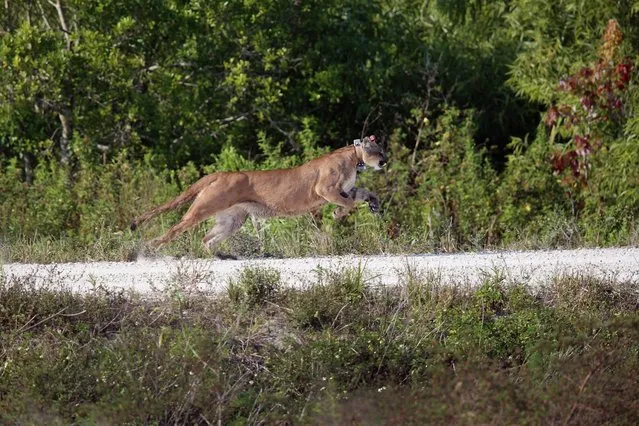
A 2-year-old Florida panther is released into the wild by the Florida Fish and Wildlife Conservation Commission (FWC) on April 3, 2013 in West Palm Beach, Florida. The panther and its sister had been raised at the White Oak Conservation Center since they were 5 months old. The FWC rescued the two panthers as kittens in September 2011 in northern Collier County after their mother was found dead. The panther is healthy and has grown to a size that should prepare him for life in the wild. (Photo by Joe Raedle)

A 2-year-old Florida panther is released into the wild by the Florida Fish and Wildlife Conservation Commission (FWC) on April 3, 2013 in West Palm Beach, Florida. The panther and its sister had been raised at the White Oak Conservation Center since they were 5 months old. The FWC rescued the two panthers as kittens in September 2011 in northern Collier County after their mother was found dead. The panther is healthy and has grown to a size that should prepare him for life in the wild. (Photo by Joe Raedle)
Details
07 Apr 2013 07:34:00