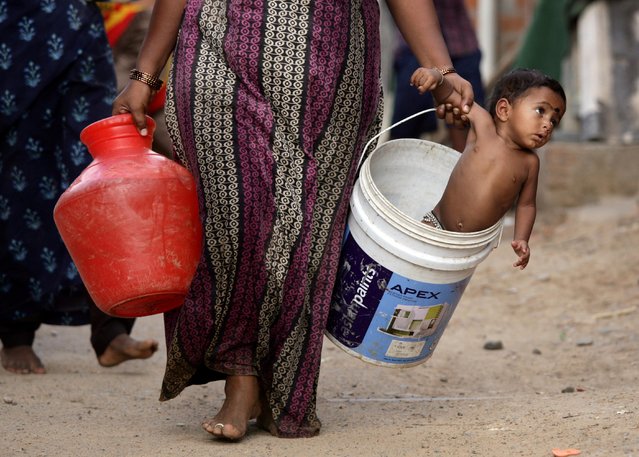
A woman carries her son in a bucket after collecting water from a municipal water tanker on the outskirts of Chennai, India, July 4, 2019. (Photo by P. Ravikumar/Reuters)
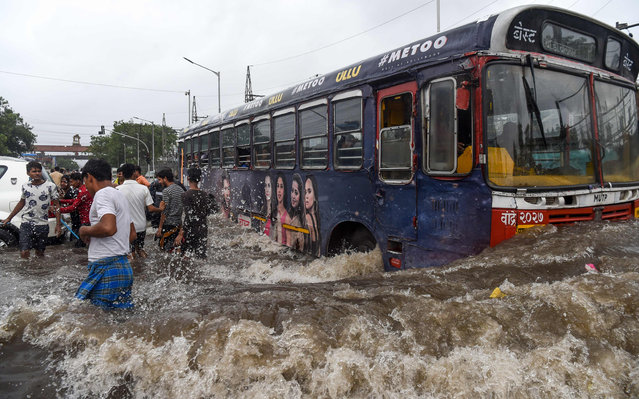
A public bus makes its way on a flooded road after heavy monsoon rains in Mumbai, India on August 4, 2019. India receives its monsoon rains from June to September. (Photo by Indranil Mukherjee/AFP Photo)
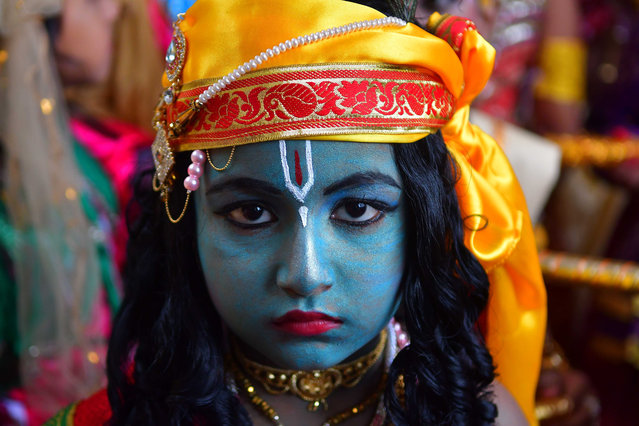
A girl dresses up as the Hindu deity Krishna to celebrate Janmashtami, his birthday in Agartala, India on August 26, 2019. (Photo by Abhisek Saha/Barcroft Media)
A Hindu devotee offers prayers at the Sangam, the confluence of three rivers – the Ganges, the Yamuna and the mythical Saraswati, to take a ritualistic bath during Makar Sankranti festival that falls during the annual traditional fair of Magh Mela festival, one of the most sacred pilgrimages in Hinduism, in Prayagraj, India. Friday, January 14, 2022. (Photo by Rajesh Kumar Singh/AP Photo)
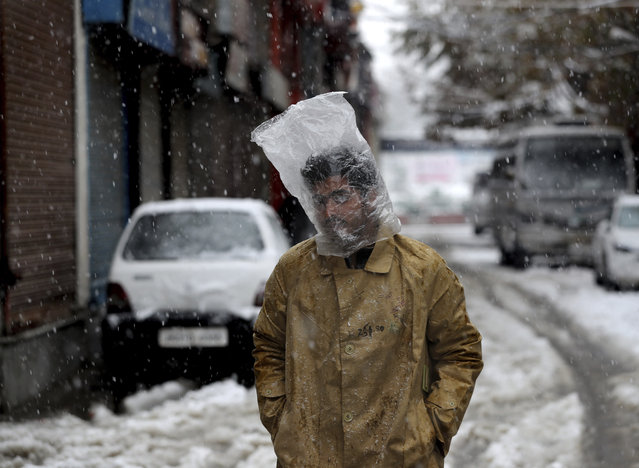
A Kashmiri man cover his head with plastic bag as it snows in Srinagar, Indian controlled Kashmir, Thursday, November 7, 2019. The region received its first snow on Wednesday, bringing temperatures down drastically and affecting air and vehicular traffic. (Photo by Mukhtar Khan/AP Photo)
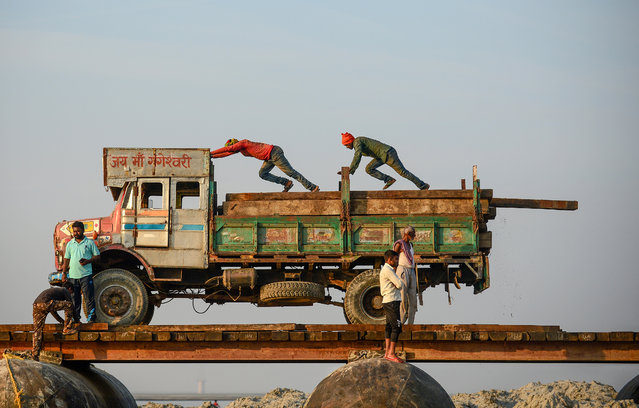
Labourers push wooden boards before carrying them to construct a temporary pontoon bridge over the Ganges river for the upcoming Hindu festival of Magh Mela in Allahabad on November 24, 2019. The Magh Mela is held every year on the banks of Triveni Sangam – the confluence of the three great rivers Ganga, Yamuna and the mystical Saraswati – in Allahabad during the Hindu month of Magh which corresponds to mid January – mid February. (Photo by Sanjay Kanojia/AFP Photo)
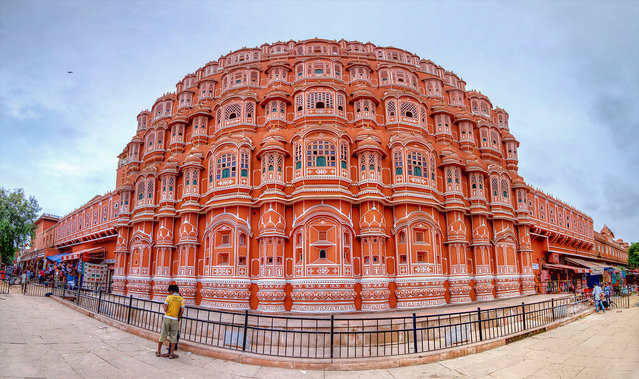
Hawa Mahal, which translates as the Palace of Winds, was built in 1799 by Maharaja Sawai Pratap Singh. The design of the palace was created by Shreyansh Jain to resemble the crown of Krishna. The design of this unique five-story building is akin to a honeycomb. The main purpose of this building was to allow royal ladies to watch the street below while remaining unseen, since during those times they had a strict code of dressing, which meant covering their faces. The palace was designed to produce the Venturi effect, which created natural air conditioning and kept the interior relatively cool during hot summers.