Loading...
Done
Street vendosr prepare grilled pigs to sell for the Chinese New Year celebrations at a market in Phnom Penh, Cambodia, 11 February 2021. Chinese people around the world celebrate the Lunar New Year, also known as the Spring Festival, which marks the year of the Ox. (Photo by Kith Serey/EPA/EFE)

Street vendosr prepare grilled pigs to sell for the Chinese New Year celebrations at a market in Phnom Penh, Cambodia, 11 February 2021. Chinese people around the world celebrate the Lunar New Year, also known as the Spring Festival, which marks the year of the Ox. (Photo by Kith Serey/EPA/EFE)
Details
12 Feb 2021 10:08:00
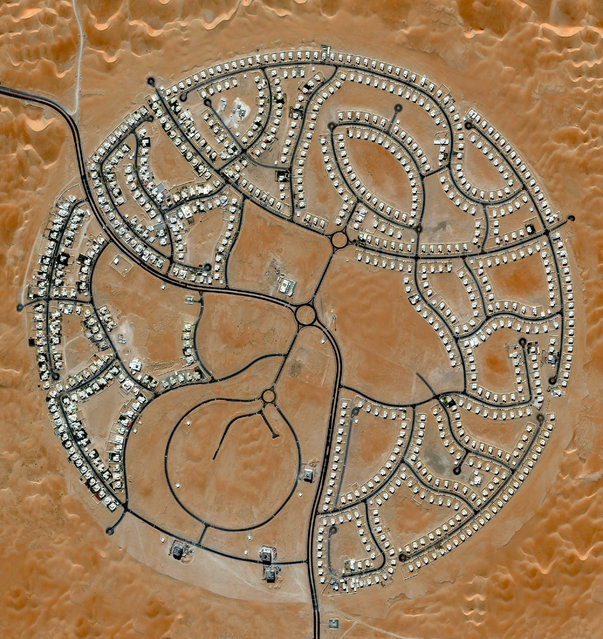
The villas of Marabe Al Dhafra in Abu Dhabi, United Arab Emirates are home to approximately 2,000 people. Located in one of the hottest regions of the world, the record high temperature here is 49.2C° (120.6F°). (Photo by Benjamin Grant/Penguin Random House)

The villas of Marabe Al Dhafra in Abu Dhabi, United Arab Emirates are home to approximately 2,000 people. Located in one of the hottest regions of the world, the record high temperature here is 49.2C° (120.6F°). (Photo by Benjamin Grant/Penguin Random House)
Details
21 Sep 2016 10:04:00
A child of a migrant worker drinks water as his mother holds him while waiting in a queue for transport to reach to a railway station to board a train to their home state of northern Uttar Pradesh, after a limited reopening of India's giant rail network following a nearly seven-week lockdown to slow the spreading of the coronavirus disease (COVID-19), in Ahmedabad, India, May 15, 2020. (Photo by Amit Dave/Reuters)

A child of a migrant worker drinks water as his mother holds him while waiting in a queue for transport to reach to a railway station to board a train to their home state of northern Uttar Pradesh, after a limited reopening of India's giant rail network following a nearly seven-week lockdown to slow the spreading of the coronavirus disease (COVID-19), in Ahmedabad, India, May 15, 2020. (Photo by Amit Dave/Reuters)
Details
23 May 2020 00:01:00
Richard Coleby of Polaris falls over his quad into muddy waters during day one of the HydroGarden Weston Beach Race on October 14, 2017 in Weston-Super-Mare, England. (Photo by Michael Steele/Getty Images)

Richard Coleby of Polaris falls over his quad into muddy waters during day one of the HydroGarden Weston Beach Race on October 14, 2017 in Weston-Super-Mare, England. (Photo by Michael Steele/Getty Images)
Details
17 Oct 2017 06:14:00
A glasses-free Toshiba 55-inch 3-D 4x full HD TV shows the movie, 'Coraline' at the 2012 International Consumer Electronics Show

A glasses-free Toshiba 55-inch 3-D 4x full HD TV shows the movie, “Coraline” at the 2012 International Consumer Electronics Show at the Las Vegas Convention Center January 11, 2012 in Las Vegas, Nevada. The TVs are scheduled to be available this year and will come with embedded cameras with facial recognition capability so depending on where you are sitting, the set will adjust the viewing point for the best 3-D experience. (Photo by Ethan Miller/Getty Images)
Details
14 Jan 2012 12:01:00
A man tries on a face mask with his portrait printed on it, amid the spread of the coronavirus disease (COVID-19), at a photo studio in Gandhinagar, India, May 27, 2020. (Photo by Amit Dave/Reuters)

A man tries on a face mask with his portrait printed on it, amid the spread of the coronavirus disease (COVID-19), at a photo studio in Gandhinagar, India, May 27, 2020. (Photo by Amit Dave/Reuters)
Details
04 Jun 2020 00:03:00
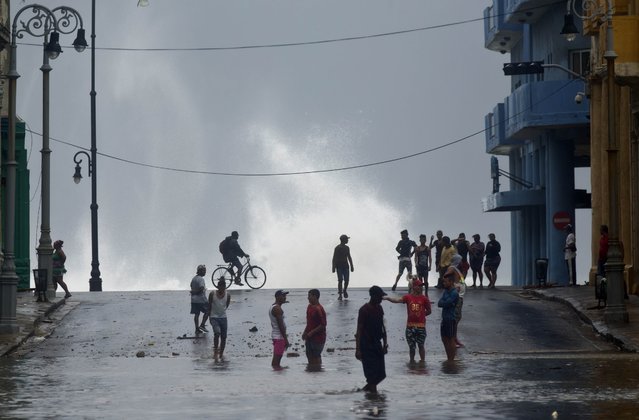
Residents watch the ocean waves crash into the water front, after the passage of Hurricane Irma, in Cuba, Sunday, September 10, 2017. (Photo by Ramon Espinosa/AP Photo)

Residents watch the ocean waves crash into the water front, after the passage of Hurricane Irma, in Cuba, Sunday, September 10, 2017. (Photo by Ramon Espinosa/AP Photo)
Details
13 Sep 2017 06:54:00
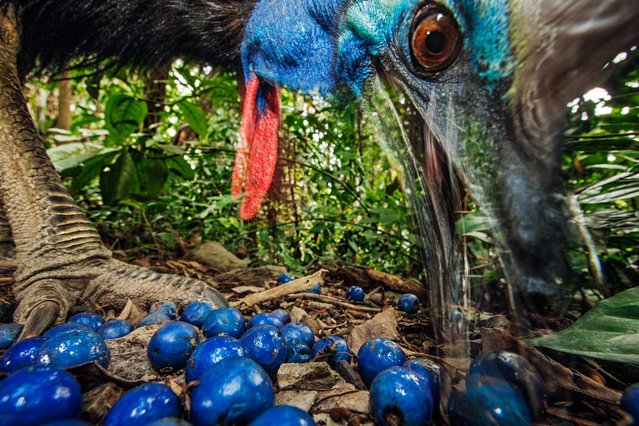
“Cassowaries are large, flightless birds related to emus and (more distantly) to ostriches, rheas, and kiwis”, writes Olivia Judson in the September issue of National Geographic magazine. (Photo by Christian Ziegler/National Geographic)

“Cassowaries are large, flightless birds related to emus and (more distantly) to ostriches, rheas, and kiwis”, writes Olivia Judson in the September issue of National Geographic magazine. How large? People-size: Adult males stand well over five foot five and top 110 pounds. Females are even taller, and can weigh more than 160 pounds. Dangerous when roused, they’re shy and peaceable when left alone. But even birds this big and tough are prey to habitat loss. The dense New Guinea and Australia rain forests where they live have dwindled. Today cassowaries might number 1,500 to 2,000. And because they help shape those same forests – by moving seeds from one place to another – “if they vanish”, Judson writes, “the structure of the forest would gradually change” too. (Photo by Christian Ziegler/National Geographic)

Details
06 Jan 2014 12:21:00