Loading...
Done
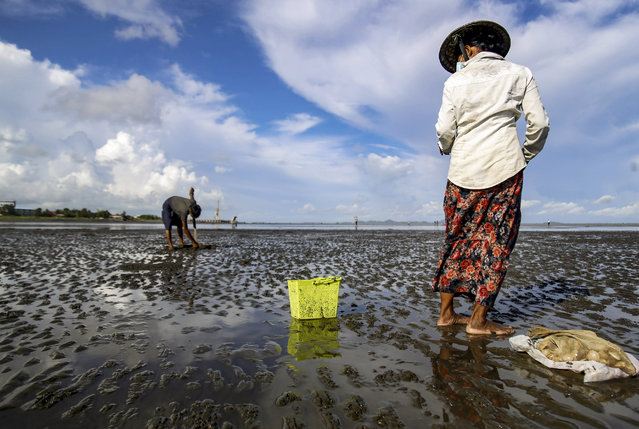
People search for shells on a beach in Sittwe, Rakhine State, Myanmar, 17 September 2020. International Coastal Cleanup Day is observed annually on the third Saturday of September and will occur on 19 September this year. The day was established to encourage global efforts to clean up garbage on beaches and coastal areas and raise awareness on protecting the world's oceans and waterways. According to a report released by the US-based nonprofit environmental advocacy group Ocean Conservancy on 08 September 2020, plastic food packaging topped the list of most common items found in beach trash. Close to five million food wrappers were collected in a single day during the International Coastal Cleanup Day in 2019. An approximate 11 million metric tons of plastic enters the ocean every year according to a 2016 analysis, affecting more than 800 marine species and causing contamination to human food chains and drinking water. (Photo by Nyunt Win/EPA/EFE/Rex Features/Shutterstock)

People search for shells on a beach in Sittwe, Rakhine State, Myanmar, 17 September 2020. International Coastal Cleanup Day is observed annually on the third Saturday of September and will occur on 19 September this year. (Photo by Nyunt Win/EPA/EFE/Rex Features/Shutterstock)
Details
24 Oct 2020 00:05:00
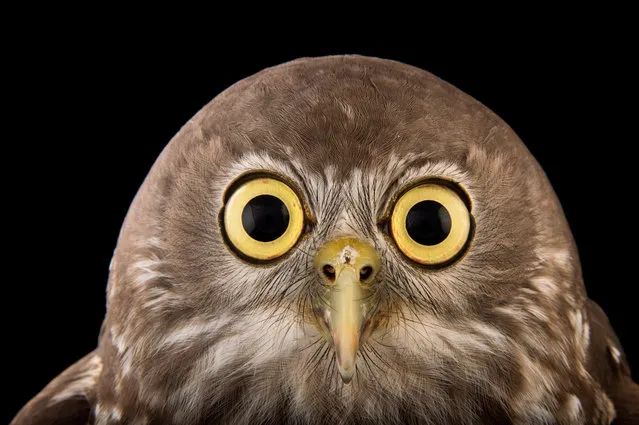
The National Geographic Photo Ark is a travelling exhibition of photographer Joel Sartore’s quest to create a photo archive of biodiversity around the world. So far, Sartore has captured studio portraits of more than 6,000 species – a number that he hopes to double. On 1 July, the ark will open at Melbourne zoo – the first time it has been exhibited in the southern hemisphere. More than 50 portraits will be on display, including many of Australian endangered animals being protected by programs at the zoo itself. These captions have been edited from text supplied by Melbourne zoo. Here: Barking owl. So-named because its call sounds like a barking dog, these birds are native to Australia, Indonesia and Papua New Guinea. In Victoria they are listed as an endangered species, and in 2003 there were estimated to be fewer than 50 breeding pairs. The main threat to the species in Victoria is loss of habitat, especially large trees with hollows in which they can nest and on which many of their prey depend. Apart from a bark, they may utter a chilling scream when they feel threatened. (Photo by Joel Sartore/National Geographic Photo Ark/The Guardian)

The National Geographic Photo Ark is a travelling exhibition of photographer Joel Sartore’s quest to create a photo archive of biodiversity around the world. So far, Sartore has captured studio portraits of more than 6,000 species – a number that he hopes to double. On 1 July, the ark will open at Melbourne zoo – the first time it has been exhibited in the southern hemisphere. More than 50 portraits will be on display, including many of Australian endangered animals being protected by programs at the zoo itself. These captions have been edited from text supplied by Melbourne zoo. Here: Barking owl. (Photo by Joel Sartore/National Geographic Photo Ark/The Guardian)
Details
01 Jul 2017 07:45:00
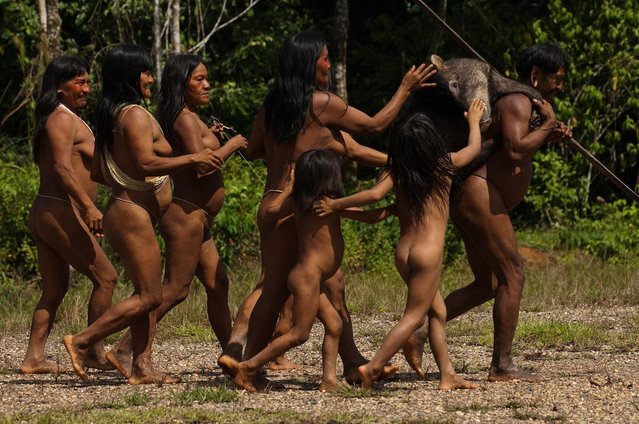
Spectacular images offering insight into the lives of the Huaorani people in the Ecuadorian Amazon have been revealed showing how they use traditional methods to hunt monkeys for food. The stunning pictures were taken by conservation photographer Pete Oxford from Torquay, Devon in the Ecuadorian Amazon. “The Huaorani Indians are a forest people highly in tune with their environment. Many are now totally acculturated since the 1950s by missionaries”, said Pete. “Today they face radical change to their culture to the proximity of oil exploration within their territory and the Yasuni National Park and Biosphere Reserve, they are vastly changed. Some still live very traditionally and for this shoot, through my Huaorani friend, a direct relative of those photographed he wanted to depict them as close to their original culture as possible. They still largely hunt with blow pipes and spears eating a lot of monkeys and peccaries”. The Huaorani are also known as the Waorani, Waodani or the Waos and are native Amerindians. Their lands are located between the Curaray and Napo rivers and speak the Huaorani language. Pete says that during his visit he was welcomed into the group and hopes that ancient cultures can be saved. Here: The tribe were seen celebrating after a hunter returned to camp with a wild pig. (Photo by Pete Oxford/Mediadrumworld.com)

Spectacular images offering insight into the lives of the Huaorani people in the Ecuadorian Amazon have been revealed showing how they use traditional methods to hunt monkeys for food. The stunning pictures were taken by conservation photographer Pete Oxford from Torquay, Devon in the Ecuadorian Amazon. Here: The tribe were seen celebrating after a hunter returned to camp with a wild pig. (Photo by Pete Oxford/Mediadrumworld.com)
Details
20 Jan 2017 07:58:00
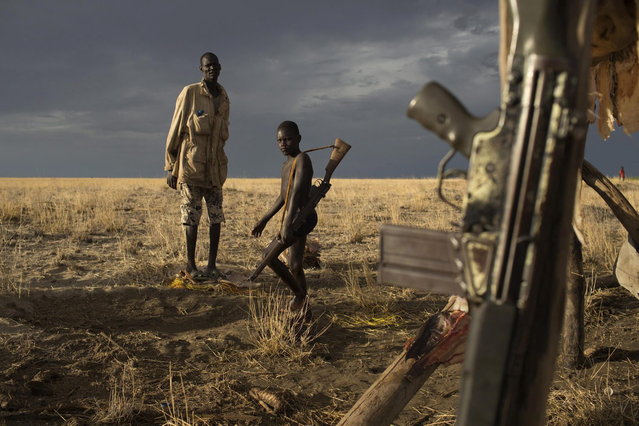
A Turkana man and a boy carrying a gun look on as a G3 battle rifle hangs from a structure used to dry fish at a fishing camp on the shores of Lake Turkana, some kilometres from Todonyang near the Kenya-Ethiopia border in northwestern Kenya October 12, 2013. (Photo by Siegfried Modola/Reuters)

A Turkana man and a boy carrying a gun look on as a G3 battle rifle hangs from a structure used to dry fish at a fishing camp on the shores of Lake Turkana, some kilometres from Todonyang near the Kenya-Ethiopia border in northwestern Kenya October 12, 2013The Turkana are traditionally nomadic pastoralists, but they have seen the pasture that they need to feed their herds suffer from recurring droughts and many have turned to fishing. However, Lake Turkana is overfished, and scarcity of food and pastureland is fuelling long-standing conflict with Ethiopian indigenous Dhaasanac, who have seen grazing grounds squeezed by large-scale government agricultural schemes in southern Ethiopia. The Dhaasanac now venture ever deeper into Kenyan territory in search of fish and grass, clashing with neighbours. Fighting between the communities has a long history, but the conflict has become ever more fatal as automatic weapons from other regional conflicts seep into the area. While the Turkana region is short of basics like grass and ground-water, it contains other resources including oil reserves and massive, newly discovered underground aquifers. (Photo by Siegfried Modola/Reuters)

Details
05 Dec 2013 12:08:00
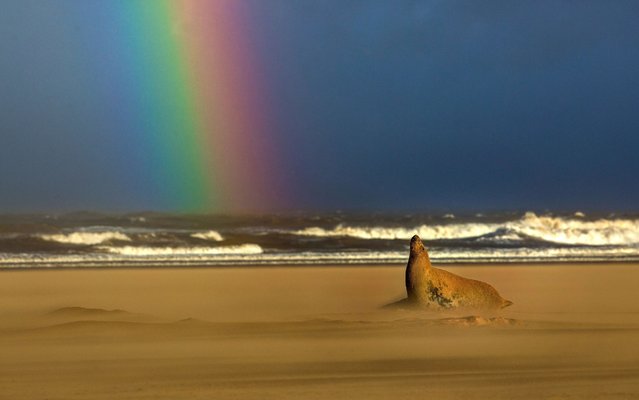
A grey seal basks under a rainbow on a beach on the Lincolnshire coast, England on November 21, 2017. (Photo by Sean Weekly/Caters News Agency)

A grey seal basks under a rainbow on a beach on the Lincolnshire coast, England on November 21, 2017. (Photo by Sean Weekly/Caters News Agency)
Details
05 Jul 2018 00:01:00
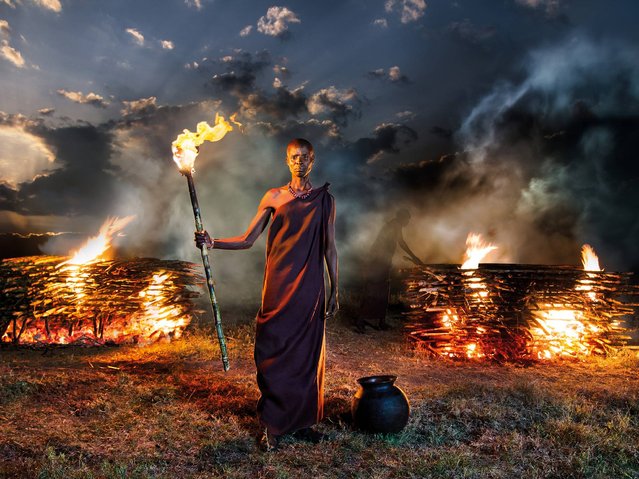
“The Salt of the Presidium”. Andrew Wanyonyi Sikanga is a salt producer in Nabuyole, western Kenya, who produces salt from an aquatic plant. (Photo by Steve McCurry/2015 Lavazza Calendar)

Extraordinary tales of everyday heroism have been illustrated beautifully by renowned US photographer Steve McCurry in the new 2015 Lavazza Calendar. The calendar which has been created in collaboration with the Slow Food movement, features twelve breathtaking pictures, capturing the spirit, strength and humanity of the Earth Defenders – women and men who protect their land and projects in Africa with passion and bravery. The proceeds from sales of the calendar and all donations will be contributed entirely to create 10,000 food gardens in African schools and villages by the end of 2016. (Photo by Steve McCurry/2015 Lavazza Calendar)
Details
27 Oct 2014 12:08:00
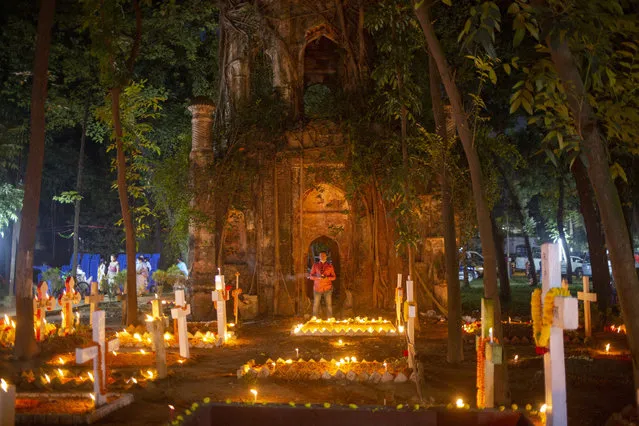
Burning candles illuminate graves as a Bangladeshi man observes a contemplative moment on All Souls' Day at the Dhaka Christian Cemetery at Wari in Dhaka, Bangladesh, 02 November 2021. People on All Saints Day and All Souls Day pay respect to deceased relatives and loved ones by placing flowers on their tombs or maintaining their graves and lighting candles. (Photo by Monirul Alam/EPA/EFE)

Burning candles illuminate graves as a Bangladeshi man observes a contemplative moment on All Souls' Day at the Dhaka Christian Cemetery at Wari in Dhaka, Bangladesh, 02 November 2021. People on All Saints Day and All Souls Day pay respect to deceased relatives and loved ones by placing flowers on their tombs or maintaining their graves and lighting candles. (Photo by Monirul Alam/EPA/EFE)
Details
20 Nov 2021 07:48:00
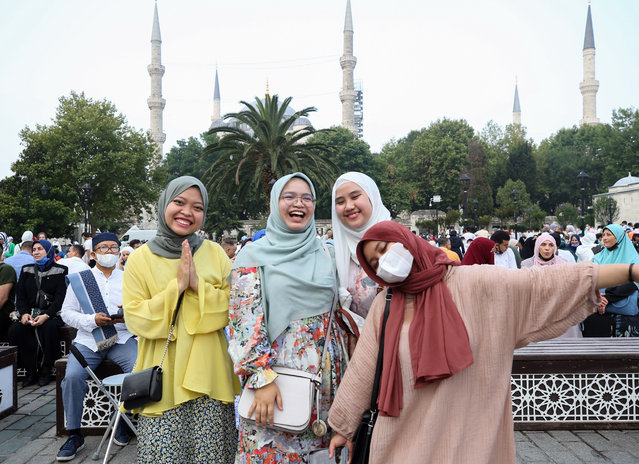
Muslims greet each other at Sultanahmet Square after performing Eid al-Adha prayer at Hagia Sophia Grand Mosque in Istanbul, Turkey on July 20, 2021. (Photo by Mehmet Murat Onel/Anadolu Agency via Getty Images)

Muslims greet each other at Sultanahmet Square after performing Eid al-Adha prayer at Hagia Sophia Grand Mosque in Istanbul, Turkey on July 20, 2021. (Photo by Mehmet Murat Onel/Anadolu Agency via Getty Images)
Details
24 Jul 2021 08:23:00