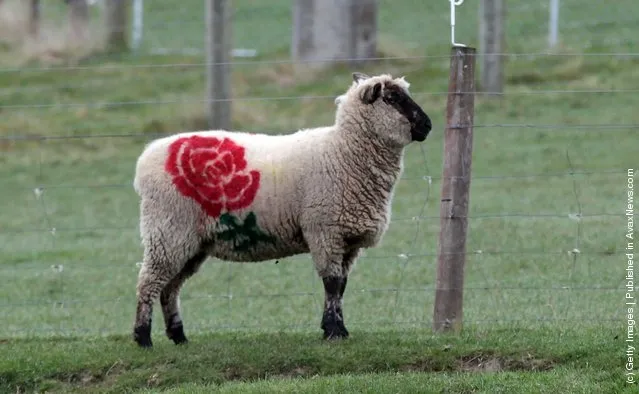
A sheep, painted in the colours of World Cup participating country England looks on on September 11, 2011 in Dunedin, New Zealand. (Photo by David Rogers/Getty Images)
A boy sells balloons in front of a closed market as the government reduces market business hours after new cases of COVID-19 were reported across the country in Peshawar, Pakistan, 03 August 2021. Countries around the world are taking increased measures to stem the widespread of the COVID-19 disease. (Photo by Arshad Arbab/EPA/EFE)
A poster depicts a disinfection worker in North Korea on May 23, 2022. The COVID outbreak in the isolated country, confirmed about two weeks ago, has stoked concerns about a lack of vaccines and medical supplies, while experts said a nationwide lockdown could deepen a food crisis in the country of 25 million. (Photo by KCNA via Reuters)
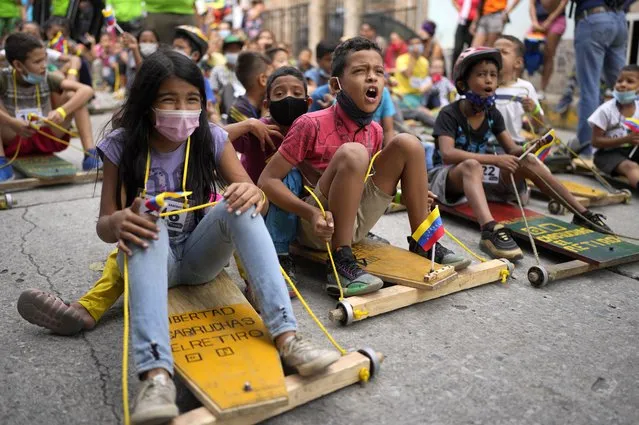
Children enjoy and participate in a traditional street race of “carruchas”, the name for makeshift wooden cars in Caracas, Venezuela, Saturday, December 18, 2021. Children enjoyed the race marking 10 years of persevering this tradition. (Photo by Ariana Cubillos/AP Photo)
A girl, named Tata and aged 8, wears a Red Army uniform-styled dress during the celebrations of Victory Day, which marks the 78th anniversary of the victory over Nazi Germany in World War Two, in Moscow, Russia on May 9, 2023. (Photo by Shamil Zhumatov/Reuters)
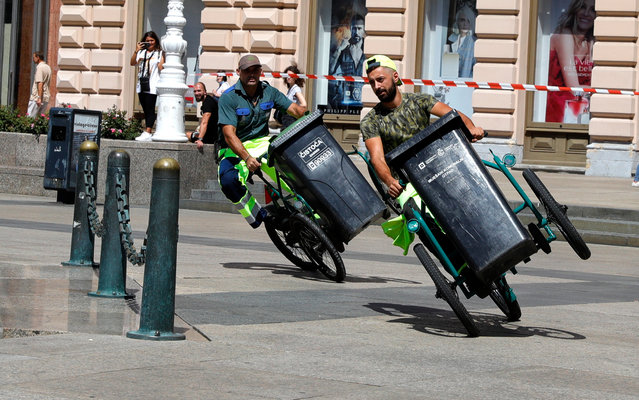
Garbage men race on their tricycles along the track during the garbage men bicycle race at Ban Jelacic square in Zagreb, Croatia, 19 August 2020. Zagreb's authorities organised a street festival named “Cest is the best” despite the coronavirus pandemic in Croatia with some 219 infected people. (Photo by Antonio Bat/EPA/EFE)
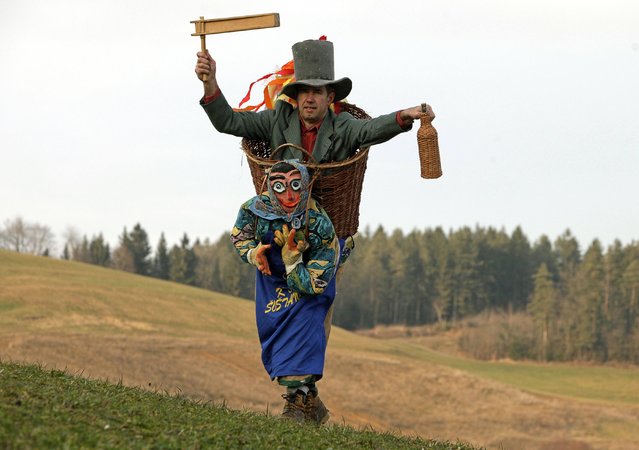
A man wearing a native costume named “Woman Carrying Husband” poses ahead of the Carnival in Sostanj January 15, 2015. Slovenians and members of various ethnological groups celebrate the annual carnival, also known locally as Pust, by wearing traditional masks and costumes to symbolically “chase away” the winter. Prust runs from February 7 to 17 this year. (Photo by Srdjan Zivulovic/Reuters)
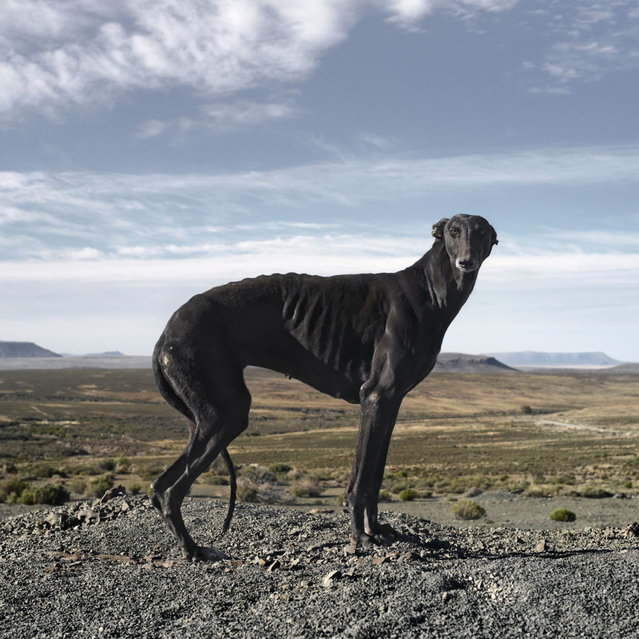
“The Africanis is a landrace of South African dogs. It is believed to be of ancient origin, directly descended from hounds and pariah dogs of ancient Africa, introduced into the Nile Valley from the Levant. The Swahili name for the breed is umbwa wa ki-shenzi meaning common or mongrel or “traditional dog”. Africanis is also an umbrella name for all the aboriginal dogs in southern Africa”. – Wikipedia. Photo: Africanis 18. Murraysburg, Western Cape, May 10, 2010. (Photo by Daniel Naudé)