Loading...
Done
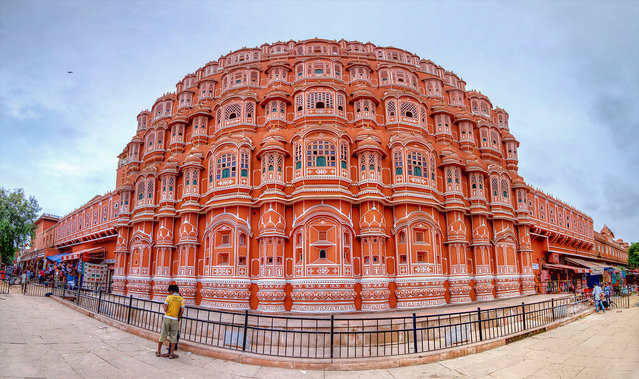
Hawa Mahal India

Hawa Mahal, which translates as the Palace of Winds, was built in 1799 by Maharaja Sawai Pratap Singh. The design of the palace was created by Shreyansh Jain to resemble the crown of Krishna. The design of this unique five-story building is akin to a honeycomb. The main purpose of this building was to allow royal ladies to watch the street below while remaining unseen, since during those times they had a strict code of dressing, which meant covering their faces. The palace was designed to produce the Venturi effect, which created natural air conditioning and kept the interior relatively cool during hot summers.
Details
22 Nov 2014 13:22:00
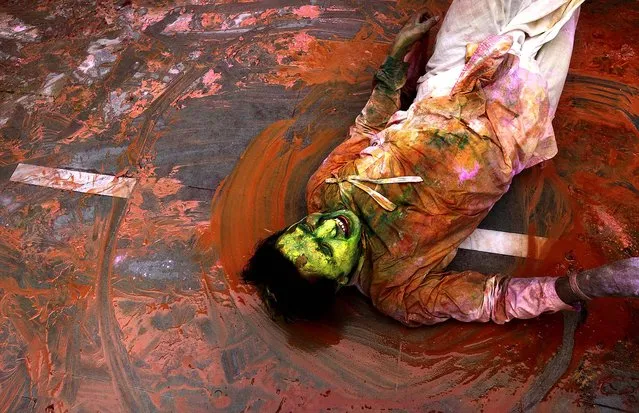
A devotee participates in Holi celebrations at the Nandagram temple, on March 22, 2013. (Photo by Manish Swarup/Associated Press)

A devotee participates in Holi celebrations at the Nandagram temple, on March 22, 2013. (Photo by Manish Swarup/Associated Press)
Details
24 Mar 2013 13:07:00
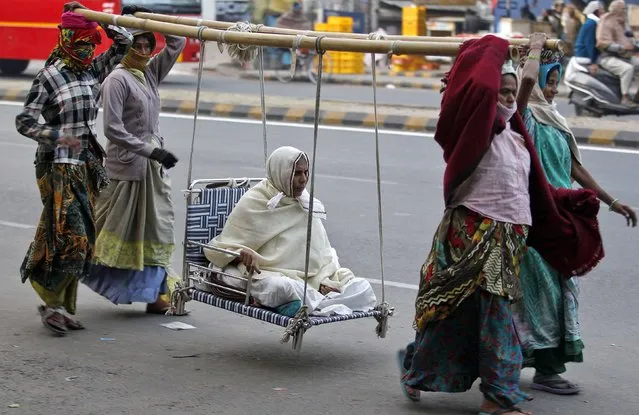
Female porters carry a holy woman belonging to the Jain community through a street to collect food from local residents living in nearby areas, during early morning in the western Indian city of Ahmedabad December 19, 2014. (Photo by Amit Dave/Reuters)

Female porters carry a holy woman belonging to the Jain community through a street to collect food from local residents living in nearby areas, during early morning in the western Indian city of Ahmedabad December 19, 2014. (Photo by Amit Dave/Reuters)
Details
24 Dec 2014 13:29:00
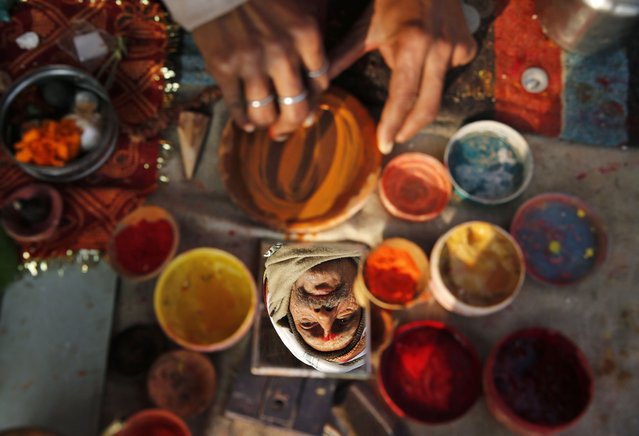
A Hindu holy man is reflected on a mirror as he prepares a bowl of vermillion powder for devotees near “Sangam”, the confluence of holy rivers of Ganges, Yamuna and the mythical Saraswati, during the annual traditional fair of Magh Mela in Allahabad, in the northern Indian state of Uttar Pradesh, India, Tuesday, January 6, 2015. (Photo by Rajesh Kumar Singh/AP Photo)

A Hindu holy man is reflected on a mirror as he prepares a bowl of vermillion powder for devotees near “Sangam”, the confluence of holy rivers of Ganges, Yamuna and the mythical Saraswati, during the annual traditional fair of Magh Mela in Allahabad, in the northern Indian state of Uttar Pradesh, India, Tuesday, January 6, 2015. Hundreds of thousands of devout Hindus are expected to take holy dips at the confluence during the astronomically auspicious period of over 45 days celebrated as Magh Mela. (Photo by Rajesh Kumar Singh/AP Photo)
Details
07 Jan 2015 13:41:00
Print Ad by Ogilvy India

Comfort Blue Fabric Conditioner: "Good Soak, Dark Meets Son" Print Ad by Ogilvy India
Details
19 Aug 2013 12:44:00
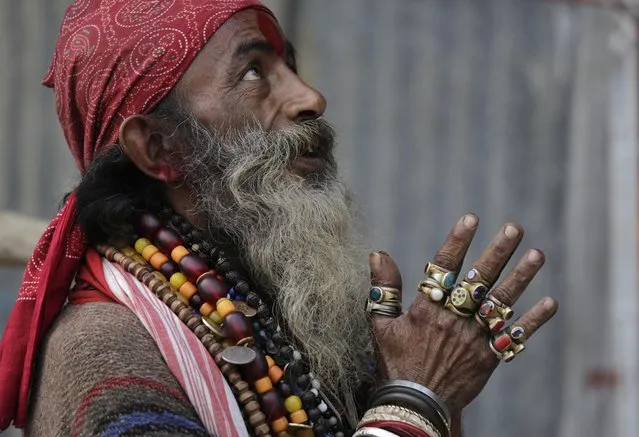
A Hindu holy man on his way to the annual holy dip at Gangasagar, gestures towards a visitor as he rests at a transit camp in Kolkata, India, Wednesday, January 6, 2016. (Photo by Bikas Das/AP Photo)

A Hindu holy man on his way to the annual holy dip at Gangasagar, gestures towards a visitor as he rests at a transit camp in Kolkata, India, Wednesday, January 6, 2016. Thousands of Hindu pilgrims are expected to take the annual holy dip at Gangasagar, where the Ganges River reaches the Bay of Bengal, on the auspicious Makar Sankranti festival day that falls on Jan.14. (Photo by Bikas Das/AP Photo)
Details
10 Jan 2016 08:06:00
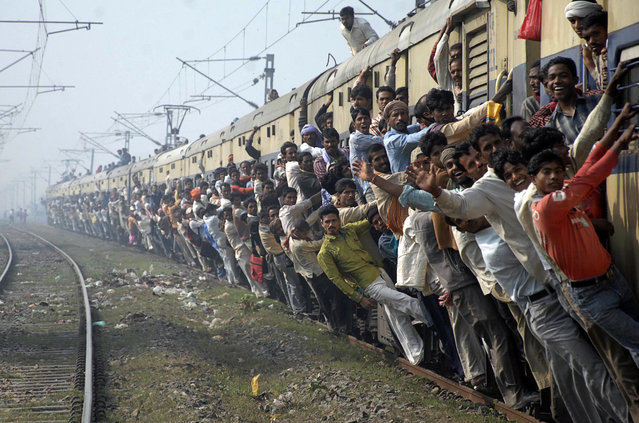
Passengers travel in an overcrowded train in the eastern Indian city of Patna, February 23, 2010. (Photo by Krishna Murari Kishan/Reuters)

Passengers travel in an overcrowded train in the eastern Indian city of Patna, February 23, 2010. (Photo by Krishna Murari Kishan/Reuters)
Details
26 Feb 2016 10:20:00
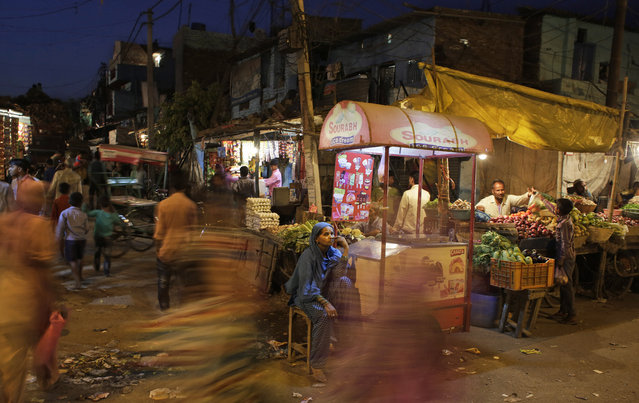
A roadside ice-cream vendor waits for customers at a market in New Delhi, India, April 7, 2016. The Indian economy is characterized by the existence of a vast majority of informal or unorganized labor employment. (Photo by Altaf Qadri/AP Photo)

A roadside ice-cream vendor waits for customers at a market in New Delhi, India, April 7, 2016. The Indian economy is characterized by the existence of a vast majority of informal or unorganized labor employment. (Photo by Altaf Qadri/AP Photo)
Details
10 Apr 2016 10:34:00