Loading...
Done
The National Geographic Photo Ark is a travelling exhibition of photographer Joel Sartore’s quest to create a photo archive of biodiversity around the world. So far, Sartore has captured studio portraits of more than 6,000 species – a number that he hopes to double. On 1 July, the ark will open at Melbourne zoo – the first time it has been exhibited in the southern hemisphere. More than 50 portraits will be on display, including many of Australian endangered animals being protected by programs at the zoo itself. These captions have been edited from text supplied by Melbourne zoo. Here: Barking owl. So-named because its call sounds like a barking dog, these birds are native to Australia, Indonesia and Papua New Guinea. In Victoria they are listed as an endangered species, and in 2003 there were estimated to be fewer than 50 breeding pairs. The main threat to the species in Victoria is loss of habitat, especially large trees with hollows in which they can nest and on which many of their prey depend. Apart from a bark, they may utter a chilling scream when they feel threatened. (Photo by Joel Sartore/National Geographic Photo Ark/The Guardian)

The National Geographic Photo Ark is a travelling exhibition of photographer Joel Sartore’s quest to create a photo archive of biodiversity around the world. So far, Sartore has captured studio portraits of more than 6,000 species – a number that he hopes to double. On 1 July, the ark will open at Melbourne zoo – the first time it has been exhibited in the southern hemisphere. More than 50 portraits will be on display, including many of Australian endangered animals being protected by programs at the zoo itself. These captions have been edited from text supplied by Melbourne zoo. Here: Barking owl. (Photo by Joel Sartore/National Geographic Photo Ark/The Guardian)
Details
01 Jul 2017 07:45:00
A wide-angle view shows the ascent of the shuttle Challenger on January 28, 1986. In the seconds after ignition, the rocket engines' hot blast began the process of destruction. (Photo by NASA)

A wide-angle view shows the ascent of the shuttle Challenger on January 28, 1986. In the seconds after ignition, the rocket engines' hot blast began the process of destruction. (Photo by NASA)
Details
28 Jan 2016 12:28:00
Festival crowd enjoying the weather on Day 1 of Reading Festival on August 25, 2017 in Reading, England. (Photo by Dean Fardell/Barcroft Images)

Festival crowd enjoying the weather on Day 1 of Reading Festival on August 25, 2017 in Reading, England. (Photo by Dean Fardell/Barcroft Images)
Details
26 Aug 2017 08:31:00
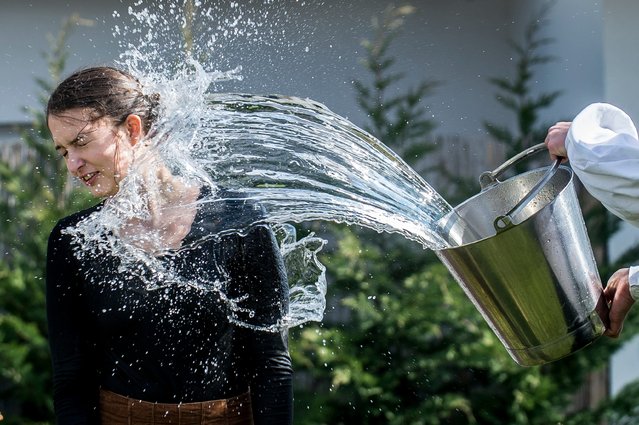
Members of the Mayossa folk dance group pour water on a young woman in Kiskunmajsa, Hungary on April 2, 2018. According to an old Hungarian tradition, celebrated for several hundred years, young men pour water on young women, who in exchange present their sprinklers with beautifully colored eggs on Easter Monday. (Photo by Sandor Ujvari/EPA/EFE/Rex Features/Shutterstock)

Members of the Mayossa folk dance group pour water on a young woman in Kiskunmajsa, Hungary on April 2, 2018. According to an old Hungarian tradition, celebrated for several hundred years, young men pour water on young women, who in exchange present their sprinklers with beautifully colored eggs on Easter Monday. (Photo by Sandor Ujvari/EPA/EFE/Rex Features/Shutterstock)
Details
08 Apr 2018 07:48:00
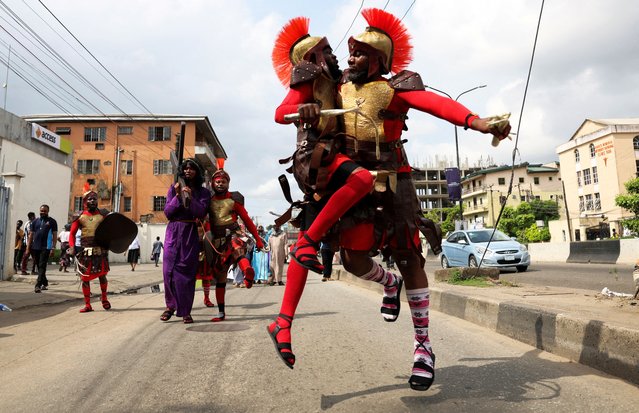
Members of St. Dominic Catholic Church take part in a re-enactment of the crucifixion of Jesus Christ, on Good Friday in Yaba, Lagos, Nigeria, on April 18, 2025. (Photo by Sodiq Adelakun/Reuters)

Members of St. Dominic Catholic Church take part in a re-enactment of the crucifixion of Jesus Christ, on Good Friday in Yaba, Lagos, Nigeria, on April 18, 2025. (Photo by Sodiq Adelakun/Reuters)
Details
09 May 2025 03:45:00
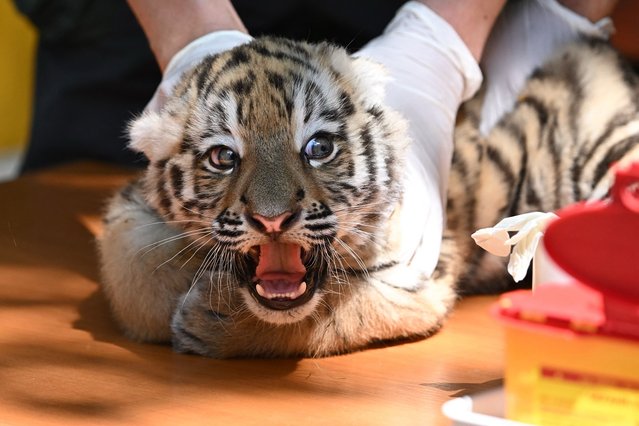
One of the Siberian tiger twins, born on April 13, 2025, is presented to the press at the Budapest zoo and botanic garden, on June 12, 2025 during their first veterinary examination. (Photo by Attila Kisbenedek/AFP Photo)

One of the Siberian tiger twins, born on April 13, 2025, is presented to the press at the Budapest zoo and botanic garden, on June 12, 2025 during their first veterinary examination. (Photo by Attila Kisbenedek/AFP Photo)
Details
22 Jun 2025 02:07:00
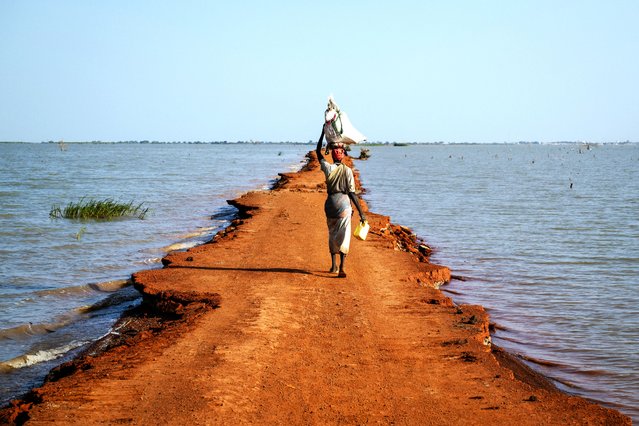
A woman carries a heavy load on her head while walking along the narrow Kilo ZeroKilo 30 road near Bentiu in Unity State, South Sudan, on November 6, 2025. The eroded and flood-affected road compels residents to travel long distances on foot to access supplies in Bentiu and Rubkona. (Photo by Rian Cope/AFP Photo)

A woman carries a heavy load on her head while walking along the narrow Kilo ZeroKilo 30 road near Bentiu in Unity State, South Sudan, on November 6, 2025. The eroded and flood-affected road compels residents to travel long distances on foot to access supplies in Bentiu and Rubkona. (Photo by Rian Cope/AFP Photo)
Details
28 Nov 2025 04:21:00
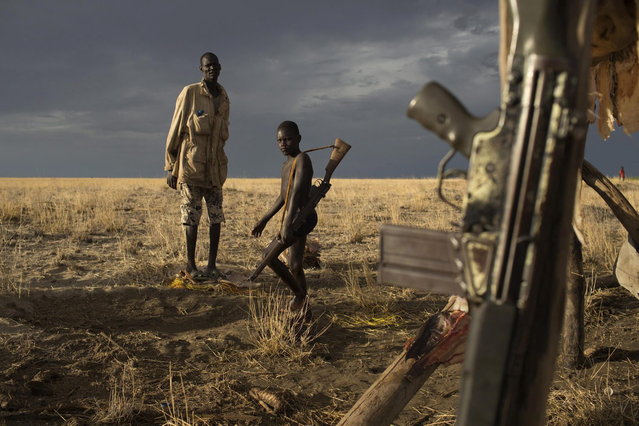
A Turkana man and a boy carrying a gun look on as a G3 battle rifle hangs from a structure used to dry fish at a fishing camp on the shores of Lake Turkana, some kilometres from Todonyang near the Kenya-Ethiopia border in northwestern Kenya October 12, 2013. (Photo by Siegfried Modola/Reuters)

A Turkana man and a boy carrying a gun look on as a G3 battle rifle hangs from a structure used to dry fish at a fishing camp on the shores of Lake Turkana, some kilometres from Todonyang near the Kenya-Ethiopia border in northwestern Kenya October 12, 2013The Turkana are traditionally nomadic pastoralists, but they have seen the pasture that they need to feed their herds suffer from recurring droughts and many have turned to fishing. However, Lake Turkana is overfished, and scarcity of food and pastureland is fuelling long-standing conflict with Ethiopian indigenous Dhaasanac, who have seen grazing grounds squeezed by large-scale government agricultural schemes in southern Ethiopia. The Dhaasanac now venture ever deeper into Kenyan territory in search of fish and grass, clashing with neighbours. Fighting between the communities has a long history, but the conflict has become ever more fatal as automatic weapons from other regional conflicts seep into the area. While the Turkana region is short of basics like grass and ground-water, it contains other resources including oil reserves and massive, newly discovered underground aquifers. (Photo by Siegfried Modola/Reuters)
Details
05 Dec 2013 12:08:00