Loading...
Done
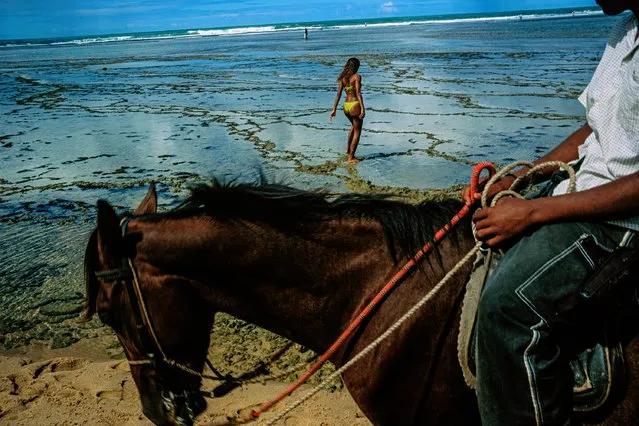
Praia du Forte, Bahia. “This was the lead picture for a National Geographic story on Bahia, because it was both mysterious as well as a “geography” picture showing where the slaves arrived from Nigeria. Beach pictures seem like they should be easy to take, but for me they are actually quite difficult. Too easy to fall into cliche. When I saw the kid coming on the horse, I quickly ran to see if I could make something with a woman in a bikini that was not a bikini shot”. (Photo by David Alan Harvey/The Guardian)

Praia du Forte, Bahia. “This was the lead picture for a National Geographic story on Bahia, because it was both mysterious as well as a “geography” picture showing where the slaves arrived from Nigeria. Beach pictures seem like they should be easy to take, but for me they are actually quite difficult. Too easy to fall into cliche. When I saw the kid coming on the horse, I quickly ran to see if I could make something with a woman in a bikini that was not a bikini shot”. (Photo by David Alan Harvey/The Guardian)
Details
20 Aug 2016 11:35:00
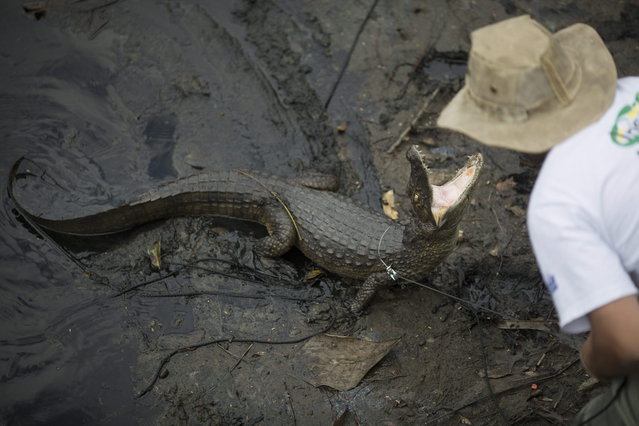
In this October 14, 2013 photo, ecology professor Ricardo Freitas catches a broad-snouted caiman to examine, then release back into the water channel in the affluent Recreio dos Bandeirantes suburb of Rio de Janeiro, Brazil. (Photo by Felipe Dana/AP Photo)

In this October 14, 2013 photo, ecology professor Ricardo Freitas catches a broad-snouted caiman to examine, then release back into the water channel in the affluent Recreio dos Bandeirantes suburb of Rio de Janeiro, Brazil. Caimans are like tanks, a very old species with a remarkable capacity for renovation that allows them to survive under extreme conditions where others couldn't, said Freitas, who runs the Instituto Jacare, or the Caiman Institute, which aims to protect the reptiles. (Photo by Felipe Dana/AP Photo)
Details
18 Oct 2013 09:05:00
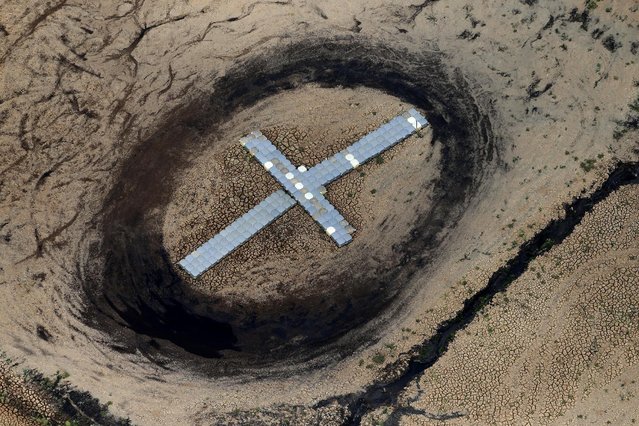
Pontoons, which were previously used as a floating jetty, are seen on the cracked ground of the Atibainha dam, part of the Cantareira reservoir, during a drought in Nazare Paulista, Sao Paulo state February 12, 2015. (Photo by Paulo Whitaker/Reuters)

Pontoons, which were previously used as a floating jetty, are seen on the cracked ground of the Atibainha dam, part of the Cantareira reservoir, during a drought in Nazare Paulista, Sao Paulo state February 12, 2015. Brazil's worst drought in 80 years has left the Cantareira system, that provides greater Sao Paulo with most of its water, with the lowest water level on record. Brazil's economy is already expected to post zero growth this year. Worse yet, since Brazil depends on hydroelectric dams for about three quarters of its electricity, power shortages are also possible due to the drought, federal officials have said. (Photo by Paulo Whitaker/Reuters)
Details
15 Feb 2015 14:19:00
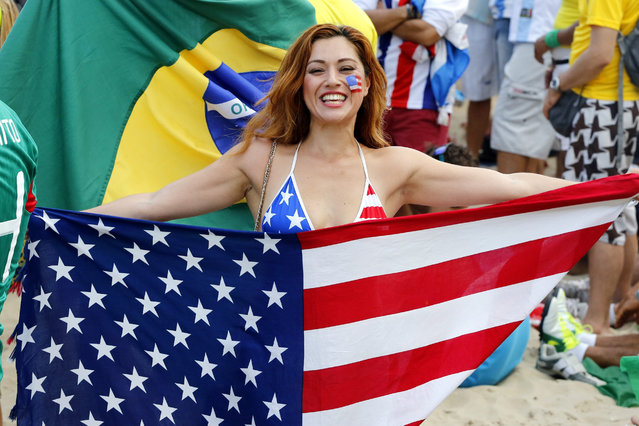
A US soccer fan cheers during the FIFA World Cup 2014 group A preliminary round match between Brazil and Croatia at the FIFA Fan Fest in Copacabana, Rio de Janeiro, Brazil, 12 June 2014. Brazil won 3-1. The FIFA World Cup 2014 will take place in Brazil from 12 June to 13 July 2014. (Photo by Abedin Taherkenareh/EPA)

A US soccer fan cheers during the FIFA World Cup 2014 group A preliminary round match between Brazil and Croatia at the FIFA Fan Fest in Copacabana, Rio de Janeiro, Brazil, 12 June 2014. Brazil won 3-1. The FIFA World Cup 2014 will take place in Brazil from 12 June to 13 July 2014. (Photo by Abedin Taherkenareh/EPA)
Details
18 Jun 2014 13:08:00
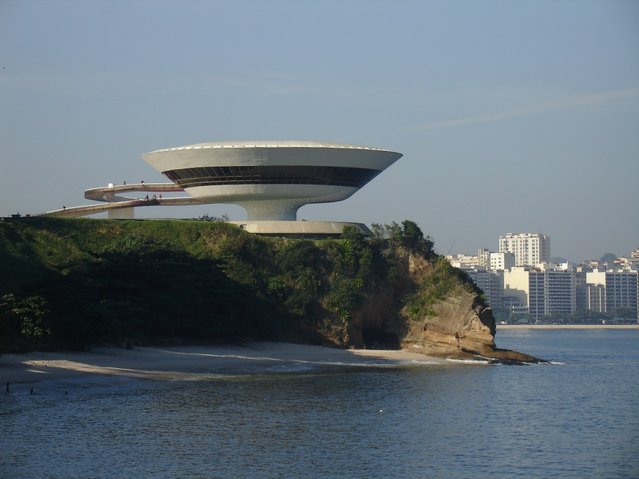
Niterói Contemporary Art Museum

The Niterói Contemporary Art Museum (Museu de Arte Contemporânea de Niterói — MAC) is situated in the city of Niterói, Rio de Janeiro, Brazil, and is one of the city’s main landmarks. It was completed in 1996.
Details
13 Aug 2013 10:18:00
Revelers celebrate during fireworks marking the start of the New Year on Copacabana beach on January 1, 2017 in Rio de Janeiro, Brazil. Brazilian revelers traditionally dress in white to honor the New Year's holiday along with the Brazilian Goddess of the Sea- Iemanja. (Photo by Mario Tama/Getty Images)

Revelers celebrate during fireworks marking the start of the New Year on Copacabana beach on January 1, 2017 in Rio de Janeiro, Brazil. Brazilian revelers traditionally dress in white to honor the New Year's holiday along with the Brazilian Goddess of the Sea- Iemanja. (Photo by Mario Tama/Getty Images)
Details
01 Jan 2017 13:04:00
Revelers celebrate during fireworks marking the start of the New Year on Copacabana beach on January 1, 2017 in Rio de Janeiro, Brazil. (Photo by Mario Tama/Getty Images)

Revelers celebrate during fireworks marking the start of the New Year on Copacabana beach on January 1, 2017 in Rio de Janeiro, Brazil. Brazilian revelers traditionally dress in white to honor the New Year's holiday along with the Brazilian Goddess of the Sea- Iemanja. (Photo by Mario Tama/Getty Images)
Details
02 Jan 2017 12:59:00
Pregnant revelers dance during a street pre-carnival party by the “Cordao do Boitata” Block, in Rio de Janeiro, Brazil, Sunday, February 12, 2023. Revelers are taking to the streets for the open-air block parties, leading up to Carnival's official Feb. 17th opening. (Photo by Bruna Prado/AP Photo)

Pregnant revelers dance during a street pre-carnival party by the “Cordao do Boitata” Block, in Rio de Janeiro, Brazil, Sunday, February 12, 2023. Revelers are taking to the streets for the open-air block parties, leading up to Carnival's official Feb. 17th opening. (Photo by Bruna Prado/AP Photo)
Details
27 Feb 2023 05:20:00